
Museums
€
Museu da Horta
Horta
Explore the Scrimshaw Museum in Horta, home to a world-class collection of whale ivory art. Situated above the legendary Peter Cafe Sport, it offers a sophisticated look at the Azores' maritime heritage and whaling history.
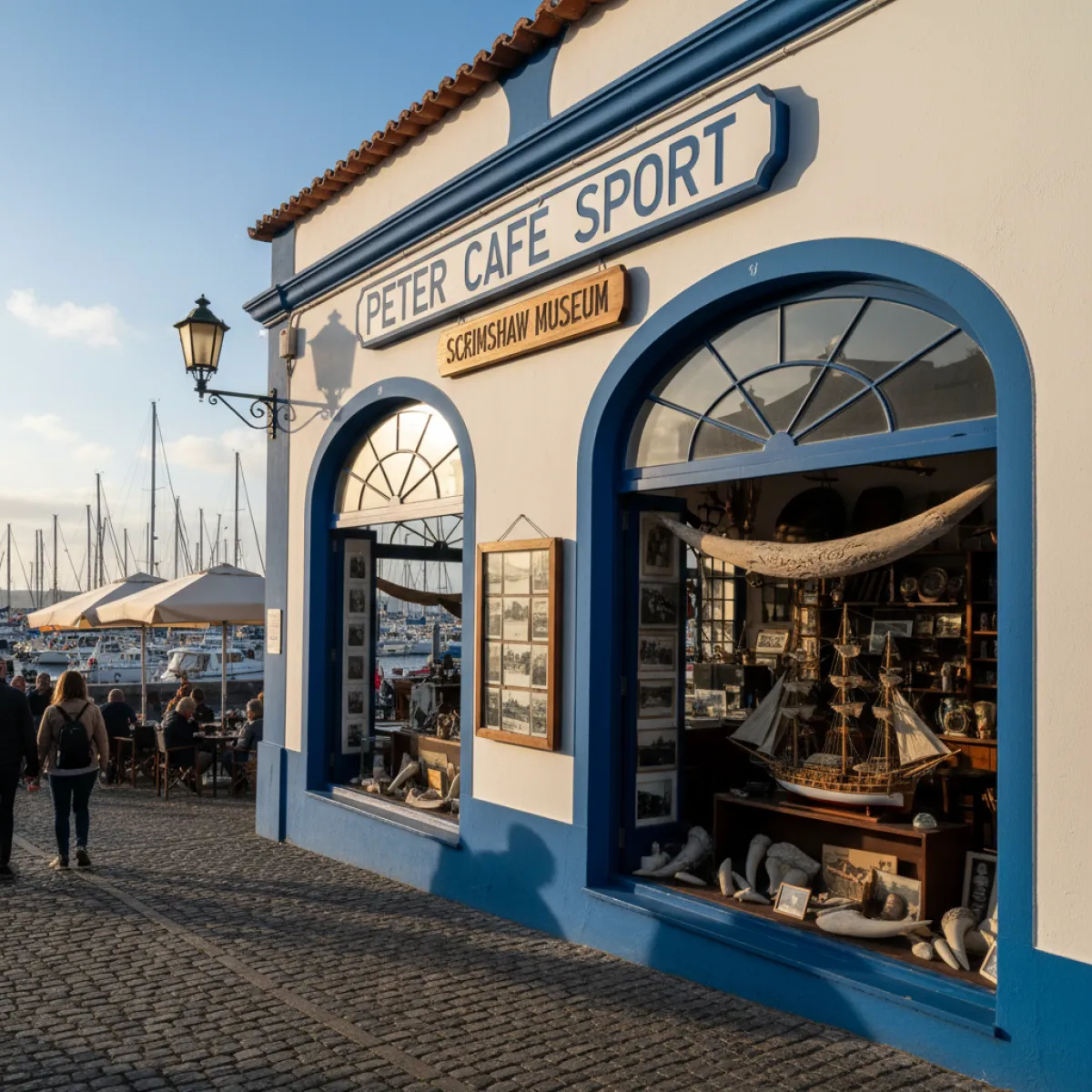
In the harbor of Horta, on Faial Island, time is measured by the tides and the arrival of sailing yachts crossing the vast Atlantic. At the heart of this maritime hub stands Peter Cafe Sport, an institution that goes far beyond the traditional definition of a bar. As explored in our guide 24 Hours in Horta: Cosmopolitan Soul in the Heart of the Atlantic, this establishment is the vital pulse where sailors, explorers, and locals converge. Yet, tucked away on the upper floor of this storied building lies one of the Azores' most profound cultural treasures: the Scrimshaw Museum.
Opened in 1986 by José Azevedo, famously known as "Peter", this museum houses a private collection of whale ivory and bone art that ranks among the most significant in the world. It serves as a quiet witness to an era when whaling was the cornerstone of the island's economy, showcasing how the byproducts of a grueling industry were transformed into objects of incredible delicacy and artistic merit.
Scrimshaw refers to the traditional craft of engraving or carving on whale teeth or bones, a practice popularized by whalers during long, monotonous stints at sea. In the Azores, this evolved from a simple pastime into a sophisticated art form. Unlike the 19th-century American whalers who often used crude tools, Azorean artisans refined the technique, using fine steel needles and pigments to create intricate, photorealistic scenes on the ivory surfaces.
Stepping into the museum, the atmosphere shifts from the boisterous energy of the cafe below to a space of silent reverence. Dark wood display cases protect hundreds of pieces that chronicle the island's heritage. The collection ranges from whole sperm whale teeth, meticulously engraved with portraits and nautical charts, to functional items like canes, knives, and household tools, all carved with a precision that defies the material's legendary hardness.
Peter’s collection is as personal as it is vast. Each piece was either acquired by or gifted to the Azevedo family over decades, with many telling specific stories of the ships that anchored in Horta. A standout highlight is a piece dedicated to President John F. Kennedy, reflecting the deep-rooted historical ties between the Azores and the American East Coast, where many Faialense emigrants sought a new life, often taking their scrimshaw skills with them.
The engravings frequently depict the whaling trade: the swift *botes baleeiros*, the dramatic confrontation between man and beast, and the unmistakable silhouette of Mount Guia. While the island has long since traded harpoons for cameras in its thriving whale-watching industry, the museum plays a fundamental role in preserving this anthropological memory, honoring the craft and courage of the men who once braved the ocean for survival.
Climbing the wooden staircase of Peter Cafe Sport feels like entering a different dimension. While the ground floor hums with conversations in a dozen languages and the clinking of gin glasses, the first floor offers the quietude necessary to appreciate the finer details. While it is not a traditional viewpoint like those featured in Atlantic Vantage: The Finest Rooftops and Panoramic Views in Horta, the museum's upper windows offer a unique frame of the Horta marina, allowing visitors to watch the masts of visiting yachts sway while contemplating the maritime art that preceded them.
For those visiting the museum, the experience is incomplete without a stop at the cafe below. What to order? The legendary "Gin do Mar," Peter’s signature gin and tonic, paired with a slice of their famous chocolate cake. It is the quintessential ritual for any traveler looking to absorb the true spirit of Horta.
The Scrimshaw Museum is located on Rua José Azevedo "Peter," right on Horta’s waterfront. For those already in the city, it is easily reached by foot along the Avenida Marginal, the city's main pedestrian thoroughfare. Sailors will find it just steps from the marina’s pontoons. For those driving from other parts of Faial, there are parking areas nearby, though walking remains the best way to experience the area, particularly for viewing the colorful murals left by sailors on the marina walls.
Entrance to the museum costs a modest fee, typically between €3 and €5, providing exceptional value given the rarity of the items. Please be aware that as this is a private collection with priceless artifacts, photography may be restricted in certain sections. No advance reservation is required, but visiting during the morning or late afternoon is recommended to avoid the busiest times at the cafe, ensuring a more peaceful ascent to the gallery.
The Scrimshaw Museum is more than just an art gallery; it is the historical heart of a city that has always looked toward the horizon. It is a fundamental stop for anyone wishing to understand the soul of Faial and the resilience of a people who transformed the trials of the sea into eternal beauty.