Whale Watching in Horta During Semana do Mar
August in Horta means Semana do Mar, but it is also the best month to see sperm whales. Head out with Azores Experiences from the marina, from 70€, and learn why the land-based lookouts find the whales before the boat does.
Whales off Horta in the thick of Semana do Mar
There is a stretch of the year when Horta stops being a town and becomes an event. It is the first ten days of August, when Semana do Mar, Portugal's biggest nautical festival, takes over the marina, the sailboats and the streets, with regattas in the morning and concerts at night. In 2025 it ran from August 1 to 10, and the 2026 edition should follow the same calendar. Confirm the dates directly with the organisers. What many people who come for the music do not realise is that August is also the best month of the year to head out to sea and watch sperm whales. That is the experience worth slotting in between a swim at Porto Pim and a drink at Peter's.
The operator I recommend is Azores Experiences, a local company based right on Horta's marina. They run cetacean watching every day from March 1 to October 31, with two departures daily. In August the sea is calm, the daylight is long, and the odds are firmly in your favour: the sighting rate across the Azores sits near 98%.
Why Faial is different
The reason is geographic and simple. The channel between Faial and Pico is deep, very deep, and that depth reaches almost to the shore. It means sperm whales, open-ocean animals that dive hundreds of metres chasing squid, show up here just a few miles from the marina. You do not need to sail two hours to reach the animals, as you do in other places. You leave the bay and within twenty to thirty minutes you are in good water.
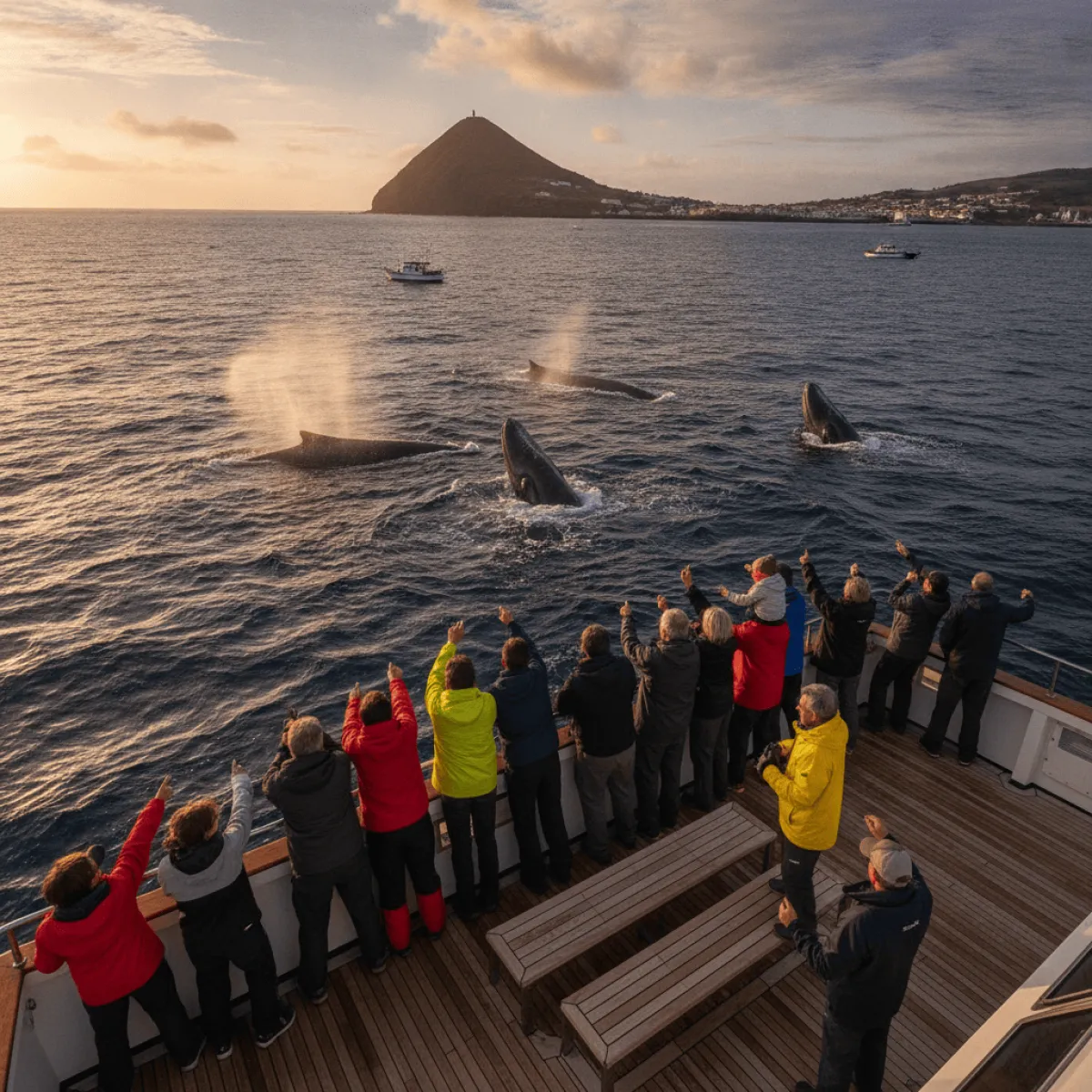
August is prime sperm whale season. It is the archipelago's signature species and can be seen year-round, but in summer the females and juveniles gather in groups and rest at the surface between dives. On top of that you get common, spotted and bottlenose dolphins, often in large groups with calves that come to the boat and ride the bow. With luck, a passing sei or baleen whale turns up.
What the trip involves, step by step
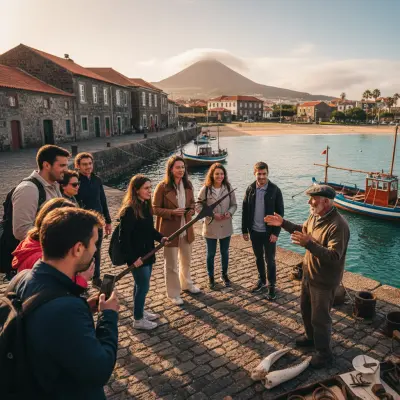
The meeting point is the Edifício das Atividades Marítimo-Turísticas da Horta, Unit B-1, on the marina by Cais de Santa Cruz. Aim to arrive ten minutes early. It always starts with a briefing on land: the biologist or guide explains which species might appear, how to behave on board, and the role of the lookouts.
Here is the detail that surprised me most the first time: the whales are not found from the boat. They are found from land. The Azores keep the tradition of the vigias, former whaling lookouts who today, instead of aiming harpoons, aim binoculars from clifftop stations high on the island. It is the vigia who spots the distant blow and radios the position to the skipper. That is why the boats head almost straight to the animals. It is worth understanding this link to the island's whaling past, which makes more sense after a visit to the Fábrica da Baleia do Porto Pim or the Scrimshaw Museum at Peter Cafe Sport.
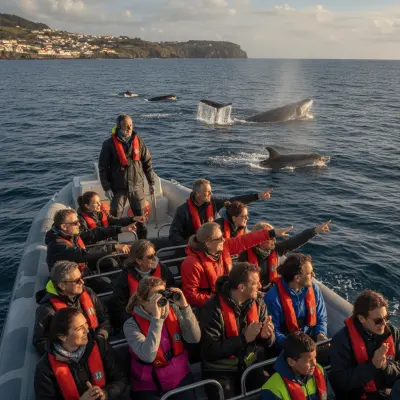
The boat is a fast rigid inflatable. You are given a waterproof jacket and trousers and a lifejacket, all included. The trip lasts between three and four hours. There is live commentary during the sightings, and the guide cuts the engine at a distance that respects the animals. When a sperm whale lifts its tail before diving, the whole boat falls silent. That is the best moment, no question.
Prices and booking
Azores Experiences prices start at 80€ per adult on a solo trip, drop to 75€ per person in groups of four to nine, and 70€ per person from ten upwards. Children aged 6 to 12 pay 45€ and under-5s go free. A minimum of four adults is needed for the trip to run; if that number is not reached, they will contact you to reschedule.
- Operator: Azores Experiences
- Website: azoresexperiences.com
- Email: [email protected]
- Phone: +351 965 650 452
- Meeting point: Edifício das Atividades Marítimo-Turísticas, Unit B-1, Horta Marina
- Included: briefing, boat trip, waterproofs, lifejacket and insurance
During Semana do Mar the marina is packed and departures sell out fast. Book a few days ahead, do not gamble on a last-minute spot. Of the two daily departures, take the morning one: the sea is smoother, the light on the water is cleaner, and fewer people are competing for the same slot.
What to wear and bring
Even in August, the wind in the channel is cool. Wear a jumper under the waterproof, the sea always shaves a few degrees off the temperature on land. Hat, sunglasses and sunscreen are essential, the glare off the water is strong. Closed shoes you do not mind getting wet. If you get seasick easily, take the tablet before boarding, not after, and fix your eyes on the horizon. A camera with a decent lens helps, but resist the urge to watch everything through the screen: sperm whales deserve your own eyes.
Getting there and what to do nearby
If you stay in town, you walk. The marina is the heart of Horta and almost everything is ten minutes away. For a base close by, there are options like the Internacional Azores Boutique, a short stroll from the quay. Before or after the sea, the Museu da Horta gives you the cultural context of the island, and once evening falls the town changes, as I cover in the guide to wine and petiscos in Horta after dark.
Going out to watch whales during Semana do Mar is the perfect contrast. In the morning, the quiet of the open sea and the blow of a sperm whale. At night, the full stage and the crammed marina. Few places in the world hand you both on the same day, and Horta does.