Where to Swim in Angra do Heroísmo: Volcanic Pools
Spoiler: there are no river beaches in Angra do Heroísmo. What there is: volcanic lava pools with aquarium-clear water. From Silveira to Biscoitos, plus where to eat limpets and try Terceira's alcatra.
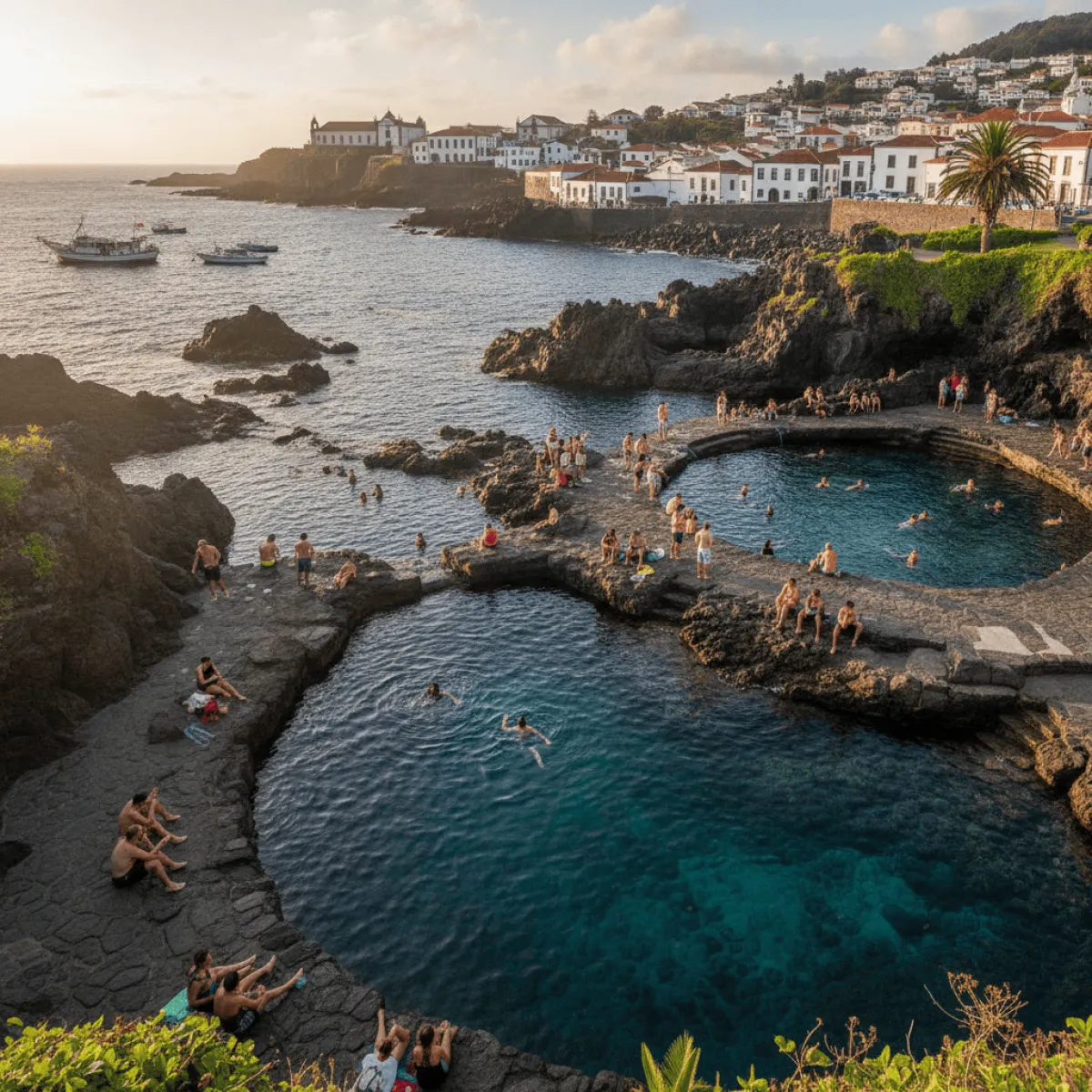
Let me be straight with you from the start: if you came looking for river beaches in Angra do Heroísmo, you are going to leave disappointed. There are no rivers here with white sandy banks, no calm reservoirs where children splash under an inland sun. We are on a volcanic island more than 1,500 kilometres from the mainland, and the water here does not run down from the mountains, it rises from the Atlantic. What Terceira has, and has in abundance, are natural pools carved into the lava: pools of clear saltwater sheltered from the swell by walls of black basalt that the sea has shaped over thousands of years. Forget the idea of a river beach. In Angra, you swim in the rock.
And honestly, it is better. There is no sand to stick to your towel, no treacherous undertow, and the water has that aquarium clarity you only find where the bottom is dark, clean stone. I have spent several summers exploring these pools and I have strong opinions about which ones are worth the drive and which you can skip. Here is my personal map.
Silveira: the closest swim to the city
If you are staying in the historic centre and have no car, Silveira is your lifeline. It sits just south of the city, a few minutes by taxi or a decent walk along the coast, and it is the favourite bathing spot of the locals for precisely that reason: it is the city's back garden. Concrete platforms over the rock make getting into the water easy, there are metal ladders for those who do not fancy jumping, and by late afternoon it fills with townsfolk coming for one last dip before dinner.
My advice: go in the morning, before 11am. After that, at the peak of August, the space on the platforms turns into a towel war. The water stays fresh all year, hovering between 20 and 22 degrees in summer, so do not expect the Caribbean. Expect something more bracing and infinitely cleaner.
Negrito and São Mateus: lava, seafood and fishing boats
Heading west towards São Mateus da Calheta, the busiest fishing port on the island, you reach the bathing complex at Negrito, with natural pools set among lava formations that look as if they cooled yesterday. It is one of the most photogenic spots on the coast: black rock, turquoise water and, in the distance, colourful boats slipping in and out of the harbour.
Negrito's great advantage is pairing a swim with lunch. São Mateus lives off the sea, and you eat the freshest fish and shellfish on Terceira here, often caught that very morning. I will not invent the names of restaurants I do not know in detail, but the rule is simple: sit where you see locals at the table and ask what the boat brought in today. Grilled limpets with garlic and lemon, gooseneck barnacles if you are lucky, and a fish broth that warms you up after the cold water. Check opening times locally, because a lot of São Mateus closes early outside the high season.
Porto Martins and Cabo da Praia: the eastern side
On the other side of the island, east of Angra, lie Porto Martins and the Cabo da Praia area. Porto Martins has one of the most pleasant bathing zones for families, with shallow, sheltered pools that are ideal for those bringing small children or who simply dislike depth. It is less spectacular than Negrito but safer and quieter.
Cabo da Praia deserves a paragraph of its own, and not exactly for the swimming. The old quarry has become a coastal lagoon of shallow water that has turned into the best birdwatching spot in the Azores. Sandpipers, waders and rare migratory birds stop here, and this is where the island's best nature experience happens. I recommend without reservation the Cabo da Praia birdwatching expedition with ComunicAir: you go with binoculars, a guide who can tell a dunlin from a sandpiper at 200 metres, and you come away realising that the Azores are far more than cows and cheese. Do this on a low-tide morning, when the mud exposes the birds' food and the show is at its best.
Biscoitos: the cathedral of natural pools
If you only have time for one place, make the trip up to Biscoitos, on the northern tip of the island. It is the most famous natural pool complex on Terceira and it lives up to the reputation. The pools open up between towers of black basalt and the sea, and on days with swell the spectacle of waves crashing against the walls while you swim in calm water is something you do not forget. There are several pools of different depths, decent facilities and, in summer, a service bar.
Use the trip to discover the area's winemaking tradition. Biscoitos produces verdelho wine in stone enclosures, those low walls that protect the vines from the salty wind, and there is a small wine museum worth the stop if the subject interests you. Check the opening hours locally before you go.
Where to eat after the swim
All this swimming builds an appetite, and this is where Angra truly shines. Back in town, my firm recommendation is O Forno, in the historic centre of Angra. It is the kind of place where you eat serious Terceira food, no frills, with portions that respect anyone who has spent the morning in the water. Book if you go in August, because it fills up.
But if there is one thing you absolutely must do on Terceira, it is try alcatra. It is the island's signature dish: beef slow-braised in a clay pot with wine, local pepper, clove and bacon for hours, until the meat falls apart at the touch of a fork. Instead of eating it absent-mindedly at some random restaurant, I suggest you learn to make it with your own hands: the hands-on alcatra cooking class in Terceira puts you at the pot, in the kitchen, understanding why every family on the island swears theirs is the right recipe. I always leave these things knowing far more about a place than I would from any museum.
When the sea is rough: the cultural plan B
Let us be realistic: not every day on Terceira is a swimming day. The Atlantic has a temper, and there are mornings when the swell closes the natural pools and pushes you back onto land. On those days, Angra do Heroísmo, a UNESCO World Heritage city, is an extraordinary place to walk.
Start at the Museum of Angra do Heroísmo, housed in the former convent of São Francisco. It is the best place to understand why this city exists: for centuries it was the port where the ships sailing the India and Brazil routes stopped, a compulsory halt in the middle of the Atlantic. The collection tells that story of crossing worlds with clarity, and the building itself, with its baroque church attached, is worth the entry alone.
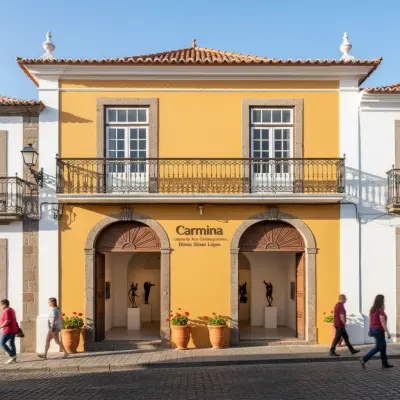
For those curious about military history, the Manuel Coelho Baptista de Lima Military History Centre explains how the island's strategic position turned it into a fortress in the middle of the ocean, with cannons, armour and the memory of the battles fought over this patch of ground. And for those who prefer art to the present, the Carmina contemporary art gallery, dedicated to Dimas Simas Lopes, shows that Terceira does not live on tradition alone. It is a quick stop but one that recalibrates the idea you have of the Azores.
How to get there and how to get around
You fly into Lajes Airport, on Terceira itself, with direct connections from Lisbon and Porto and, in summer, from several European and North American cities. From there, be honest with yourself: to do the natural pool circuit, you need a car. Public transport exists, but it was not designed for someone who wants to catch Silveira in the morning, lunch in São Mateus and swim at Biscoitos in the afternoon. Rent a car right at the airport; the island is small and you can cross it end to end in under an hour.
As for costs, the good news is that most natural pools have free entry. You pay for parking in some places in summer and little else. Bring water shoes: the basalt is beautiful but sharp, and the sea urchins do not forgive bare feet. Bring sunscreen too, because the Atlantic wind is deceptive and burns without warning.
More Azores to explore
If Terceira has won you over and you are thinking of island-hopping, it is worth planning carefully. Faial and Pico are a short flight or a ferry away, and the town of Horta is one of the most cosmopolitan in the archipelago: I recommend the 24 hours in Horta itinerary and, to close the day at sunset, the guide to the finest rooftops and panoramic views in Horta. And if your return flight routes through São Miguel, set aside at least one meal for the gastronomic trek through Ponta Delgada, where the Furnas stew, cooked in the heat of the earth, is an experience all its own.
But that is for another trip. For now, stick with Terceira, throw yourself into the water at Biscoitos at daybreak, eat limpets in São Mateus and end the day with a pot of alcatra. River beaches you will not have. You will have something better: the Atlantic tamed into pools of lava, and an island that refuses to be just another summer destination.