A Franciscan convent full of Atlantic history
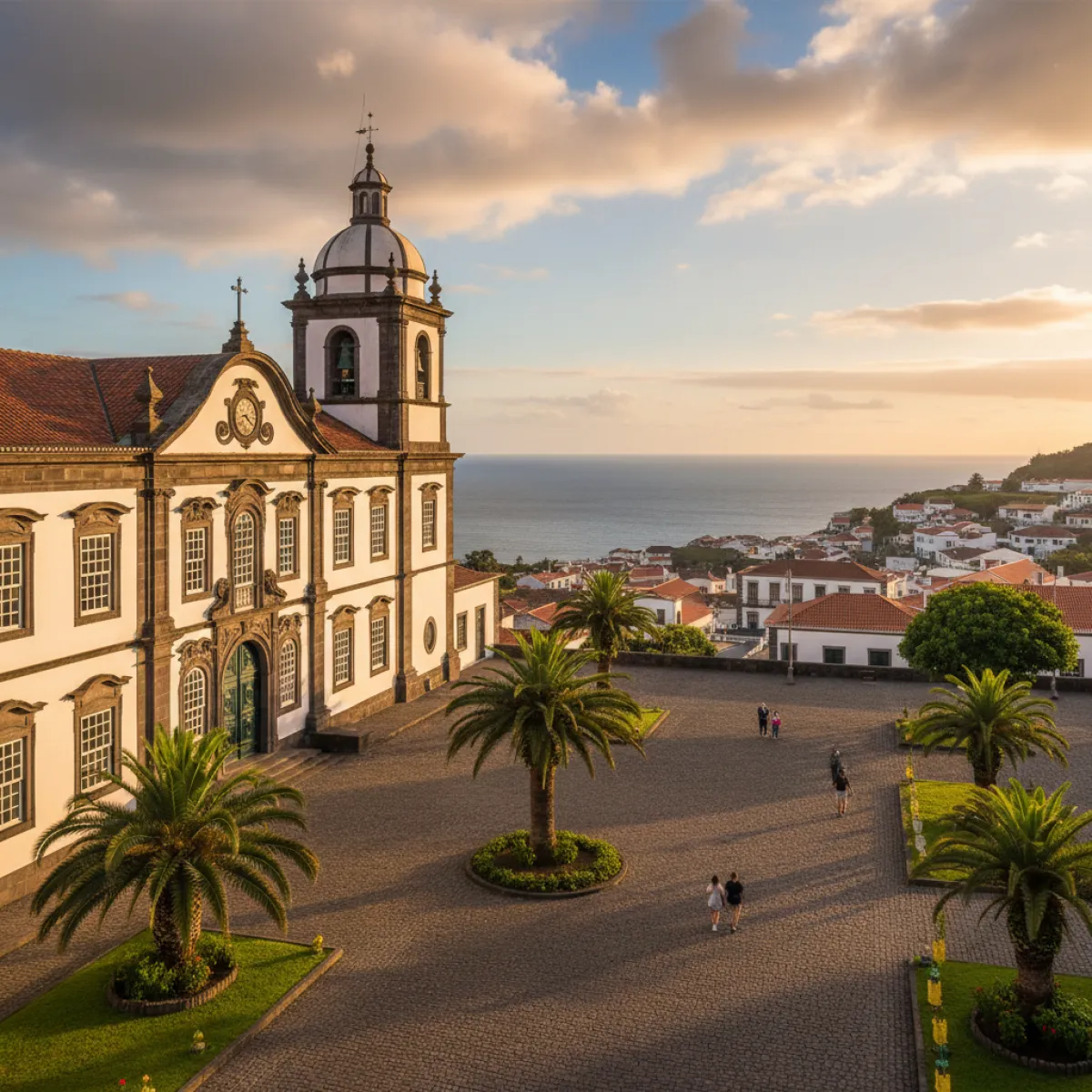
The Convento de São Francisco in Angra do Heroísmo spent centuries being useful in different ways: a Franciscan friary, a military barracks, a warehouse. Since 1969 it has housed the Museu de Angra do Heroísmo, and it is fair to say that no other space in the Azores packs as much regional history under one roof. This is not a quick museum. It is the kind of place you walk into thinking thirty minutes will do, and walk out two hours later with your head spinning.
It sits on Ladeira de São Francisco, a sloping street that climbs from the historic centre. If you are already exploring the UNESCO urbanism of Angra, the convent falls naturally along the way. On foot from Praça Velha, it takes less than ten minutes uphill. There is parking nearby, but Angra's centre is compact enough to walk.
What you will find inside
The museum is encyclopaedic in the old-fashioned sense. Its permanent exhibitions cover the history of the Azores and the wider Atlantic, from the earliest settlers through to the twentieth century. Entire rooms are given over to ceramics, documenting the trade routes that connected the Azores to mainland Portugal and colonial ports. The furniture collection is striking: seventeenth and eighteenth-century chairs and chests that show how the Azorean elite lived. The numismatics section is more interesting than it sounds, telling the economic story of the archipelago through the coins that circulated there.
Then there are the musical instruments. This section catches almost everyone off guard. The viola da terra, the iconic Azorean string instrument, appears in various forms and periods, and even if you have never heard of it, you leave understanding how central music was to island community life.
The building itself deserves your attention. The convent cloister, with its arches and darkened stone, is one of the finest examples of conventual architecture in the Azores. Do not just look at the display cases. Look up at the stonework, at how the light enters.
Practical details
Admission is in the € range, which is practically symbolic for what you get. For current opening hours, check the official website or call +351 295 240 800, as schedules can change with the season. Give yourself at least ninety minutes.
No reservations needed, no dress code. Cards are accepted, but carrying some cash is never a bad idea in the Azores. Most exhibit descriptions are in Portuguese, which can be limiting for non-speakers. Browsing the museum's website beforehand helps add context.
A tip: go in the morning, when it is quieter and the cloister light is at its best. When you come out, walk downhill and find lunch in the centre. If you want to know where the locals actually eat in Angra, we have a guide for that. Or head to O Forno, which is nearby and handles post-museum hunger well.
Who this museum is for
Anyone who wants to understand the Azores beyond the crater lakes and hydrangeas. This is the place that explains why Angra was the capital, why the Azores were an essential waypoint in the Atlantic, and why this small city has an outsized history. If you happen to be in Angra during one of the traditional festivals, the museum gives you the background that turns spectacle into understanding.
It is not an interactive museum. There are no touchscreens, no immersive experiences. It is an old-school museum with glass cases, labels, and quiet. Honestly, that is exactly what it should be.