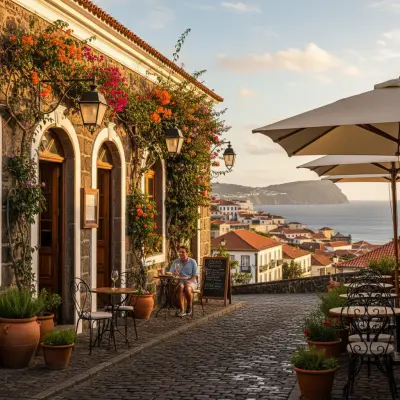
Angra do Heroísmo: Where Locals Actually Eat
Forget the laminated menus taped to the door. In Angra do Heroísmo, the real Terceirense table happens in places where alcatra arrives in the clay pot it was cooked in and Queijadas da Dona Amélia are still eaten warm. A guide to eating like the locals.
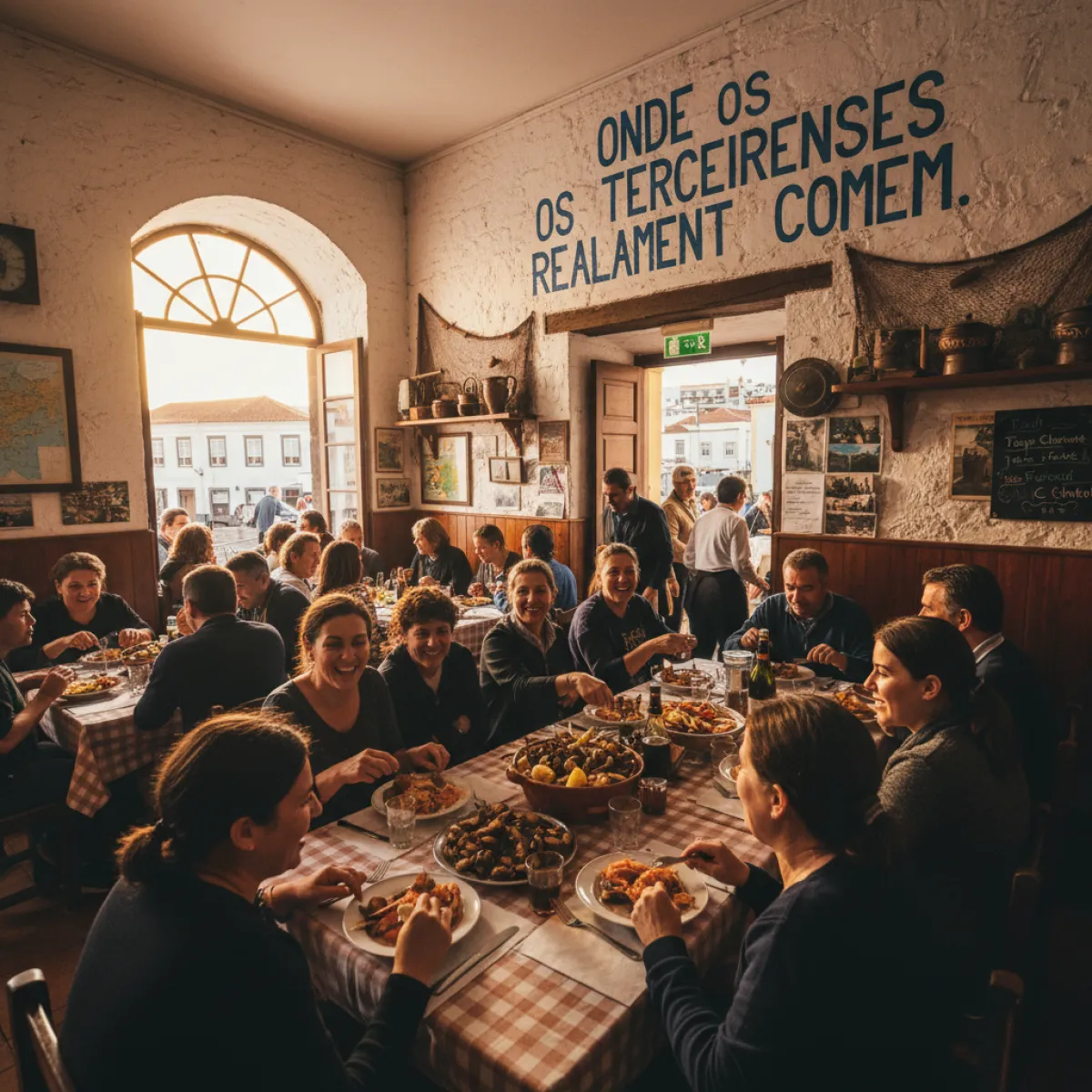
There's an easy way to spot tourist restaurants in Angra do Heroísmo: they're the ones with laminated photos of the menu taped to the door. Nothing wrong with them, the food might even be decent, but that's not where the locals spend their Sunday lunch money. The real Angra table happens in unassuming places where house wine comes in clay jugs and the menu changes based on what the sea and the pastures decided that day.
This is exactly what makes Terceira different from the other Azorean islands. Here, the food isn't just good, it's an identity statement. Alcatra isn't a dish. It's practically a declaration of principles.
Alcatra: The Dish That Defines the Island
If there's one thing you need to eat in Angra, it's alcatra. This isn't a suggestion, it's a gastronomic obligation. Beef rump slow-cooked in a clay pot with red wine, onion, garlic, cloves, and allspice for hours, until the meat falls apart at the slightest touch. Served with massa sovada, yes, sweet bread, which you tear apart and soak in the rich, dark sauce until it's completely drenched. The combination sounds strange on paper. In your mouth, it makes perfect sense.
Alcatra dates back to around 1450, probably inspired by the chanfana that early settlers brought from the Beiras region on the mainland. Over centuries, the recipe adapted to what the island offered: cattle raised on impossibly green pastures, local vinho de cheiro, and clay pots from Terceira's potters. Every family has their version, every grandmother swears hers is the best, and nobody is entirely wrong.
If you want to go beyond tasting and actually learn the craft, the traditional alcatra cooking experience in Terceira gets you into the kitchen with your hands in the clay pot, literally.
A Canadinha: The Local Canteen
Ask ten Angra residents where they'd eat on a regular workday, and half would say A Canadinha. You recognise the type the moment you walk in: paper tablecloths, TV on in the corner, a handful of old men arguing about football at the bar, and portions that could feed two.
A Canadinha is probably the cheapest restaurant in Angra for the quality it delivers. The menu leans heavily toward meat, bifanas, pork chops, stews, and everything arrives in quantities designed to fuel agricultural workers. This isn't chef's cuisine. It's cooking by people who've known what they're doing for decades and don't need to impress anyone. The alcatra here is among the best in town, served unceremoniously in the same clay pot it was cooked in.
Go for weekday lunch. On evenings and weekends, more tourists show up and the atmosphere shifts. If the table next to you is speaking Portuguese with that distinctive Terceirense lilt, you're in the right place.
Tasca das Tias: The Modern Exception
At Rua de São João 117, Tasca das Tias is the restaurant that proves tradition and modernity don't cancel each other out. It opened in 2014 in a formerly empty storefront, created by a group of friends who simply decided to cook for people. The décor is contemporary, wood, enormous photographs of historical city figures, but the kitchen treats Azorean ingredients with genuine respect.
The focus here is seafood: grilled limpets, Santo Cristo clams (a kind of gastronomic currency in the Azores, having access to these clams is a status symbol), octopus salad, tuna steak. Limpets, if you haven't tried them, are an Azorean rite of passage: small, briny, grilled with butter and garlic, eaten by prying the flesh from the shell with your teeth. It's not elegant. It's extraordinary.
A warning: book ahead. Especially for dinner, the wait can stretch to an hour. If you show up without a reservation, go early, by 7pm you'll have better odds.
Beira Mar: When the Sea Decides
About fifteen minutes by car from Angra, in the fishing village of São Mateus, Beira Mar is the fish restaurant locals save for special occasions, or for lazy Sundays when a long lunch overlooking the harbour sounds right. The décor is plain, almost spartan, and that's precisely what makes it credible: nobody's trying to impress you with interior design.
What matters here is what arrives on your plate. Grilled fish of the day, whatever's available, which varies with the tide and the fishermen's luck. Fish skewers are a specialty. For starters, barnacles, limpets, and when lobster's in, it's a celebration. Prices climb once you get into shellfish, as you'd expect, but grilled fish with boiled potatoes and salad is an honest meal at a fair cost. Check locally for current prices and hours before making the trip, it's a small village and the rhythm is set by the ocean, not by Google.
O Forno: Where Dona Amélia Still Reigns
You can't talk about eating in Angra without talking about sweets. And you can't talk about sweets without talking about O Forno, quite possibly the most famous establishment on Terceira for anyone with a sweet tooth and an appreciation for history.
The star is the Queijada da Dona Amélia. The backstory: in 1901, Queen Amélia visited Terceira and was presented with these pastries. She liked them so much the name stuck. They're dense, slightly moist, made with eggs, cane honey, cinnamon, cornflour, and raisins, with a touch of molasses that gives them a flavour vaguely reminiscent of gingerbread. Dusted with powdered sugar. One or two is plenty, they're rich and intense.
Go in the morning. Some argue the freshly baked ones are superior, and while I think they're good at any hour, eating them still warm with a strong coffee is hard to beat.
Caneta: The Detour Worth Making
In the north of the island, far from the historic centre, Caneta is the restaurant for people who take meat seriously. The Dias family raises their own cattle, which changes everything: the quality of the raw material is evident in every bite. The alcatra here is excellent, but the real revelation is the aged Black Angus skewers. If you're thinking Black Angus in the Azores sounds unlikely, it is. And that's why it works. Cattle raised on Azorean pastures, in that cool, humid climate, develop a texture and flavour you'll notice immediately.
This isn't a walk-in-from-the-street place, it's out of the way if you're staying in Angra. But if you're exploring the island by car (and you should be), plan your lunch here. It's the kind of meal you'll remember weeks later.
What to Drink
Azorean wine is a discovery for most visitors. Terceira doesn't have the winemaking tradition of Pico, but that doesn't mean there's nothing to drink. Ask for the house wine, usually a local vinho de cheiro, fruity and light, perfect for cutting through heavy dishes like alcatra. At more modern spots like Tasca das Tias, the wine list already includes quality Azorean labels, notably from Pico and Graciosa.
As for beer, Especial is the local brew. It's not extraordinary, but it's cold and honest, and ordering one at an Angra bar is practically an act of integration.
Beyond the Table
If Azorean gastronomy has whetted your appetite for more, know that each island has its own identity at the table. In Ponta Delgada, the gastronomic trek through the city reveals an entirely different scene, more cosmopolitan but equally rooted in local produce. And if you're planning to hop over to Faial, our guide to 24 hours in Horta offers another Atlantic perspective, another table.
Back on Terceira, between meals, there's more to do than digest. A birdwatching expedition at Cabo da Praia is a surprisingly good way to burn off calories and discover a side of the island most people ignore entirely.
Practical Rules for Eating in Angra
- Lunch service at most restaurants runs from noon to 2:30pm. Arrive close to noon for the best selection and seating.
- For dinner, 7pm is early and 8:30pm is late. Peak time is around 8pm.
- Book whenever possible. Restaurants are small and the island has fewer options than you'd think.
- Don't be afraid to ask your server what they recommend, at the more local spots, the written menu is often incomplete. There are daily specials that never make it onto the card.
- Cards are accepted at most restaurants in the centre, but bring cash for the smaller, more traditional spots.
Angra do Heroísmo isn't a destination dining city. You won't find Michelin stars or twelve-course tasting menus. What you'll find is better: people cooking the way their grandmothers cooked, with ingredients that came from the pasture next door or the sea out front, and an honesty at the table that's increasingly rare. Sit down, order the alcatra, trust the woman running the kitchen, and let Terceira feed you the way it feeds its own.