A City Shaped by the Wind: The UNESCO World Heritage Urbanism of Angra do Heroísmo
Discover the Renaissance rigor and Atlantic resilience of Angra do Heroísmo, Europe's first transatlantic city. A deep dive into UNESCO urbanism, the mastery of alcatra, and the wild nature of Terceira Island.
The Labyrinth of Order in the Heart of the Atlantic
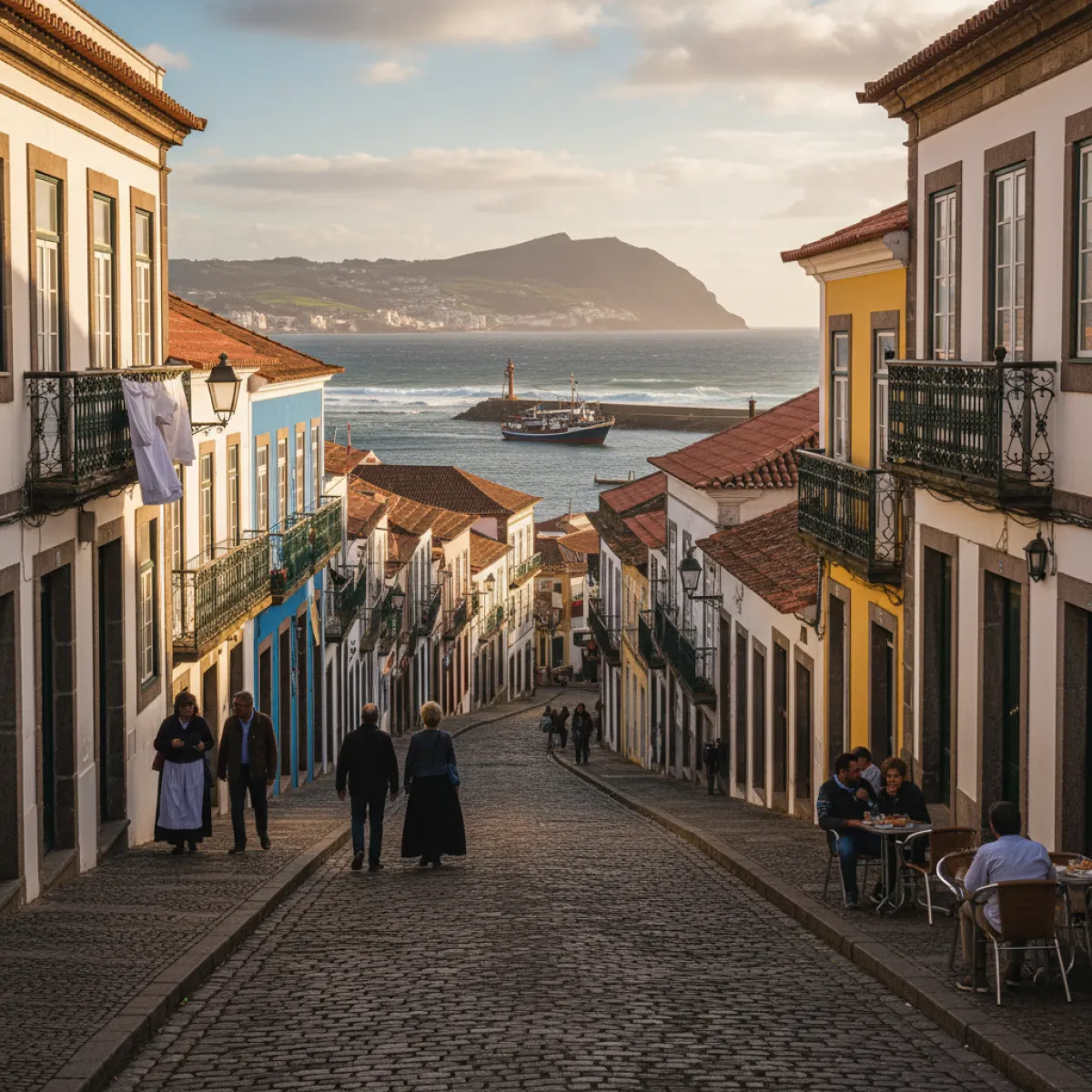
Arriving in Angra do Heroísmo is, first and foremost, an exercise in orientation. Amidst the untamable vastness of the North Atlantic, where weather is a variable suggestion and the sea an absolute presence, the historical capital of Terceira emerges as a geometric miracle. It is not merely a settlement that grew organically around a bay; Angra is the result of a deliberate Renaissance vision, an orthogonal grid that defied volcanic slopes to create the first great transatlantic city. Here, urbanism served not just for habitation, but to organize the known world. For centuries, fleets from India, Brazil, and the Americas waited in these waters for the right winds, turning this small bay into the center of gravity for global empires.
The city's structure, classified by UNESCO in 1983, is a masterclass in resilience. Following the devastating 1980 earthquake, many predicted the end of Angra’s architectural integrity. What followed was one of the most exemplary reconstructions in European history, where the original design was preserved with almost devotional rigor. Walking down Rua Direita or Rua da Sé is to understand that human scale was respected, even when the ambition was monumental. The colorful facades, ranging from ochre and Azorean blue to pristine white, are not merely decorative; they are markers of identity resisting the erosion of salt spray and time.
The Geometry of Power and Faith
Angra’s urbanism is dominated by two fundamental axes: defense and spirituality. On one side, Monte Brasil, an extinct volcano that embraces the bay, serves as a natural sentinel. Within it lies the Fortress of São João Baptista, one of the world's largest Philippine-era fortifications, its walls stretching for miles, once guarding the gold of the Americas. On the other side, the houses climb toward the Sé Cathedral, a building that impresses not through excessive ornamentation, but through its solid, imposing mass, capable of anchoring the city against Atlantic gales.
The intelligence of Angra's urban design reveals itself in the details: the slope of the streets for rainwater drainage, the width of arteries designed for the movement of goods, and the strategic placement of squares. The Praça Velha remains the city’s drawing room, where the Portuguese pavement (calçada) draws patterns that reflect the dramatic, gray light that often blankets the island. It is here that one feels the pulse of a community that, despite its isolation, was never provincial. Angra has always kept its eyes on the horizon, a trait shared with other maritime hubs in the region, as one can discover by exploring 24 Hours in Horta: Cosmopolitan Soul in the Heart of the Atlantic, another city living in symbiosis with the ocean.
Alcatra and the Weight of Tradition
To truly understand Angra, one must sit at the table. Terceira’s gastronomy is inseparable from its agrarian history and the patience required to tame the elements. The dish that defines the island is Alcatra. Far from being just a cut of beef, it is a slow-cooking ritual in unglazed clay pots, where wine, lard, and spices meld over hours in a wood-fired oven. This is not fast food; it is a meal that demands anticipation.
For those wishing to go beyond simple tasting, The Mastery of Alcatra: A Hands-on Traditional Cooking Class in Terceira provides the necessary context on why this dish is the social pillar of the Holy Spirit Festivals. The flavor is deep, earthy, and strangely sophisticated in its simplicity. It is the perfect counterpoint to the lightness of the fish and seafood abundant on the Azorean coast, offering a robustness required when the southwest wind begins to blow with force. This gastronomic density is a hallmark of the archipelago, comparable to the sophistication found on other islands, as documented in The Volcanic Plate: A Gastronomic Trek through Ponta Delgada, where earth and fire dictate the kitchen's rules.
Nature at the City Gates
While central Angra is a triumph of human hands, nature reclaims its space just minutes away. Monte Brasil offers trails that allow for an aerial view of the city, revealing the harmony between the urban fabric and the coastline. But it is on the maritime fringe that biodiversity manifests most exuberantly. Terceira is a crucial stopover for migratory birds crossing the ocean, making it a premier destination for conscious nature tourism.
One of the most rewarding activities outside the urban core is Birdwatching in Terceira: The Cabo da Praia Expedition with ComunicAir. At Cabo da Praia, just a few miles from Angra, the industrial and port landscape surprisingly coexists with wetlands where rare species can be spotted. It is a reminder that, on these islands, civilization and wilderness are separated by a thin, almost invisible border.
Logistics and Planning: The Traveler’s Guide
Visiting Angra do Heroísmo requires a specific pace. Forget overloaded itineraries. Luxury here is slow observation. The climate is temperate but unpredictable; fog can roll in mid-morning and give way to radiant sunshine by 2 PM. Technical, layered clothing is essential.
- When to go: June to September offer the longest days and the famous Sanjoaninas, the largest secular festivals in the Azores. However, the shoulder season (May and October) allows for a quieter, more authentic experience.
- Where to eat: Beyond alcatra, seek out fresh fish at Beira Mar (in São Mateus, 10 minutes from Angra) or explore the city center’s tascas to try grilled limpets with Afonso sauce.
- Budget: Angra remains surprisingly affordable. A high-quality dinner at a top restaurant costs between €25 and €40 per person. Accommodation in restored manor houses ranges from €100 to €180 per night.
- Transport: Within the historic center, your legs are the only viable means of transport. To explore the island, renting a car is mandatory, as the public transport network does not suit the pace of the independent traveler.
Angra do Heroísmo is not an open-air museum; it is a living lesson in how culture can adapt to the most demanding geography. It is a city that knew how to be cosmopolitan when the world was vast and dangerous, and today it maintains that discreet elegance of one who has seen every fleet pass and survived every tremor. In an increasingly homogeneous world, the rigor of its streets and the strength of its traditions are a sanctuary of authenticity in the middle of the ocean.
