The Other Ribeira Grande: Beyond the Ponta Delgada Crowds
São Miguel's second town has the best baroque in the Azores and almost no queues. From the eight-arch bridge to the warm pools of Caldeira Velha and the black sand of Santa Bárbara, this is the Ribeira Grande the tour coaches ignore.
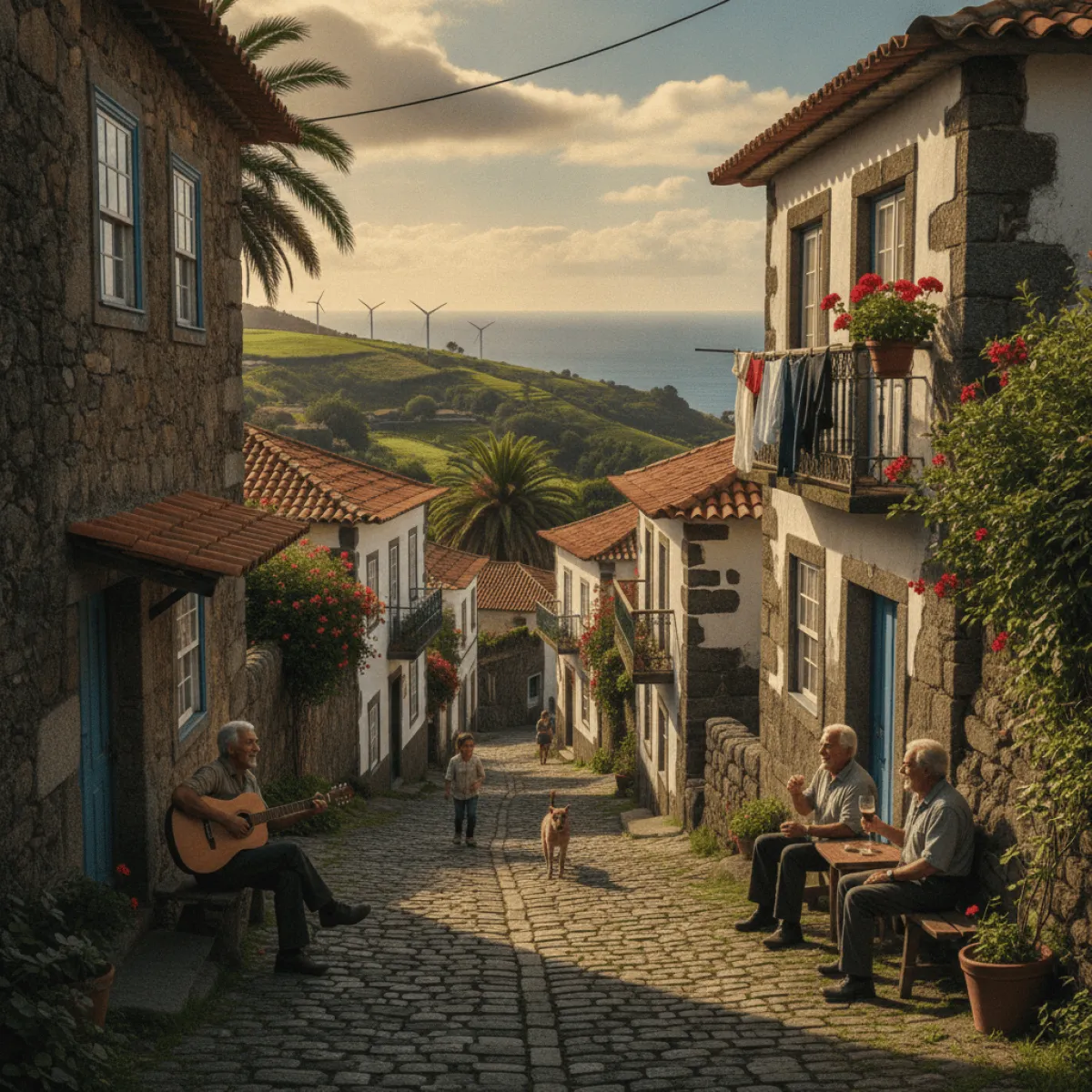
Almost nobody stops in Ribeira Grande. The airport shuttle dumps visitors in Ponta Delgada, they photograph the city gates, make the obligatory pilgrimage to Sete Cidades and Lagoa do Fogo, and head back to the hotel. Ribeira Grande, the second largest town on São Miguel, sits twenty minutes up the north coast and exists, in most people's minds, only as a name on a road sign. What a mistake.
Let me be blunt: Ribeira Grande has the finest cluster of baroque architecture in the Azores and almost no queues. While half the planet jostles on the staircases of Ponta Delgada, here you can have an entire church to yourself at ten on a Tuesday morning. This town was not built for the cruise-ship crowd, and that is precisely why it is worth your time.
Start with the river that splits the town in two
The name does not lie: there really is a big stream. The watercourse runs down from the mountains and cuts the town in half, crossed by the Ponte dos Oito Arcos, an eighteenth-century bridge of black volcanic stone that is the town's unofficial postcard. Go in late afternoon, when low light hits the dark stone and the whitewashed houses along the banks. It costs nothing, it is the best spot to grasp the scale of the place, and you will rarely find more than one or two other people doing the same.
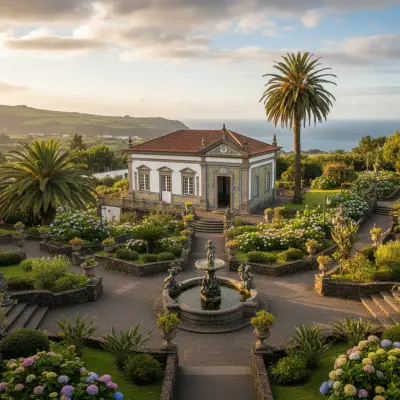
A few steps away is the Jardim Municipal de Ribeira Grande, a nineteenth-century garden with a bandstand, hydrangeas going full throttle in summer, and big trees that throw proper shade. This is not a magazine garden, it is a town garden, the kind where pensioners play cards and kids chase pigeons. Sit on a bench, let half an hour pass. It is free and it teaches you more about local life than any paid attraction.
The baroque nobody comes to see
Climb up to the Church of Nossa Senhora da Estrela, at the top of the staircase. The facade is exuberant, the interior carries gilded woodwork and tiles, and the terrace out front offers a clean view over red roofs to the Atlantic. Notice the worked stone: black basalt against white lime, a contrast that repeats across the whole town and is the real architectural signature of the place.
Walk down Rua de São Vicente and through the old town hall district afterwards. The Theatro Ribeiragrandense, a small early twentieth-century theatre, is worth the detour for the facade alone. This is a town for walking without a map, turning corners at random. You can cover the entire historic centre in an afternoon, and I promise you will not hit any tripod traffic.
Where to eat without the traps
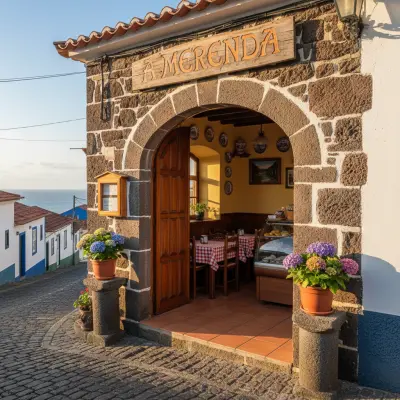
This is where a lot of people get it wrong. Ponta Delgada has too many tourist restaurants; in Ribeira Grande you eat home cooking. My pick is A Merenda, an honest table where the fish depends on what came off the boat and the soup changes with the day. Do not expect foam on anything or plates playing at Michelin. Expect generous portions, unhurried service, and the feeling of eating where locals eat at lunch.
If you are an Azorean food obsessive, it pays to grasp the island's bigger picture. Cozido das Furnas, slow-cooked in volcanic ground heat, is São Miguel's flagship dish, and there is a whole culture of volcano-rooted cooking that runs everywhere. For a deeper dive into that logic, read our gastronomic trek through Ponta Delgada before planning your meals. Eating in the Azores means understanding geology on a plate.
Europe's oldest tea grows right next door
Here is a fact that rattles the English: the only commercially grown tea in Europe rises on São Miguel's north coast, and the Gorreana factory, near Ribeira Grande, has been running without interruption since 1883. The machinery is Victorian, entry is free, and you can walk the plantations that terrace down toward the sea. Neighbouring Porto Formoso completes the picture. It is one of those places where you taste green and black tea made a hundred metres from where you are sitting.
Go in the morning, wear comfortable shoes for the paths between the rows of Camellia sinensis, and leave time to get lost in the terraces. We have organised everything you need to know in this deep dive into the Gorreana and Porto Formoso estates, with the detail the leaflets leave out. It is the stop that, on its own, justifies coming to this side of the island.
The thermal pool the tour packages cannot fill
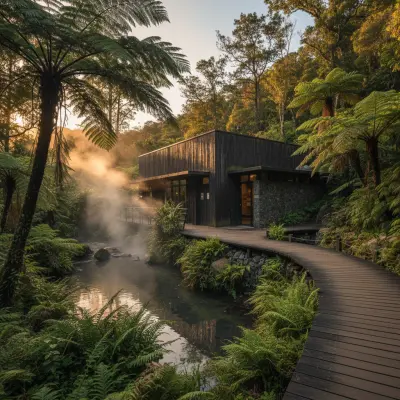
Everyone knows Furnas. Almost nobody knows Caldeira Velha, and that is exactly the advantage. The Centro de Interpretação Ambiental da Caldeira Velha sits on the slope of Pico da Barrosa, on the road up to Lagoa do Fogo, and protects a set of warm geothermal pools and a waterfall amid giant ferns that look straight out of the Jurassic. Entry is controlled by timed slots and capacity, precisely so it does not become the human soup of Furnas. Check opening times and tickets locally before you drive up, because numbers are capped.
Bring a towel, flip-flops, and an old swimsuit, because the water has iron and stains. Go right at opening or at the end of the day to dodge the coaches. The combination of steaming water, dense vegetation, and silence broken only by the waterfall is the best thing you can do on São Miguel without an hour's drive.
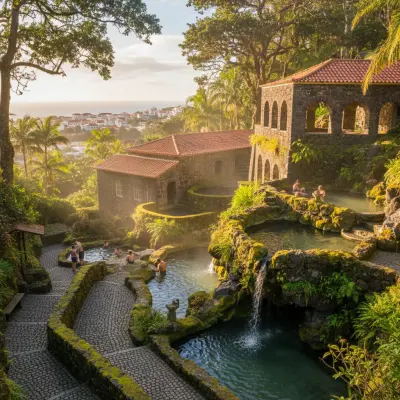
In the town itself there are also the Termas das Caldeiras da Ribeira Grande, a small historic thermal complex fed by hot springs at the foot of the mountains. It is another scale entirely, more intimate and less spectacular than Caldeira Velha, but that is exactly where its charm lies. For anyone who wants to understand the Azorean bond with hot water, this is where that relationship happens on the doorstep, with no staging.
Black sand and waves: the other beach
A few minutes from the centre lies Santa Bárbara beach, a stretch of black volcanic sand that is the best surf spot on the island. This is not a towel-and-parasol beach; the Atlantic here does not mess around, there are currents, and most visitors do not even know it exists. But if you carry a board, or want a lesson, this is the place. The magic is in catching the first session before sunrise, the dark sand still cold and the sea left to the locals.
If you have never surfed, there is no better introduction than this dawn session on the black sands of Santa Bárbara, with instructors who know every sandbank. Even if you never get in the water, go and watch the sea break against the black sand early in the morning. It is free and it is unforgettable.
How to get there and when to go
From Ponta Delgada it is roughly twenty minutes by car on the expressway, or on the coast road, which is prettier and takes twice as long, and is worth it. There are public buses linking the two towns, but on São Miguel freedom is the rental car: the tea plantations, Caldeira Velha, and Santa Bárbara are all a short hop apart and you cannot chain them by public transport without losing the day.
As for season: May, June, and September are the sweet spot. The hydrangeas are in flower, the sea is still good for surf, and there is none of the August crush. Azorean weather changes hour by hour, so always carry a windbreaker even if the morning is sunny. That is not a cliché, it is Atlantic meteorology.
One final piece of advice: do not try to do Ribeira Grande as a one-hour stop on the way to something else. Give it a whole morning, lunch included, and finish in the warm water of Caldeira Velha or the waves of Santa Bárbara. And if you still have appetite for another island in the archipelago, neighbouring Faial offers a fascinating contrast: read our guide to 24 hours in Horta and the rundown of the finest rooftops and panoramic views in Horta to see how different two islands a few kilometres apart can be. Ribeira Grande is the side of São Miguel that asks for calm. Give it that calm and it gives plenty back.