Europe’s Tea Frontier: A Deep Dive into the Gorreana and Porto Formoso Estates
Explore Europe's only tea plantations in a fascinating journey through the Gorreana and Porto Formoso estates. Discover century-old production secrets and enjoy tastings overlooking the Atlantic.
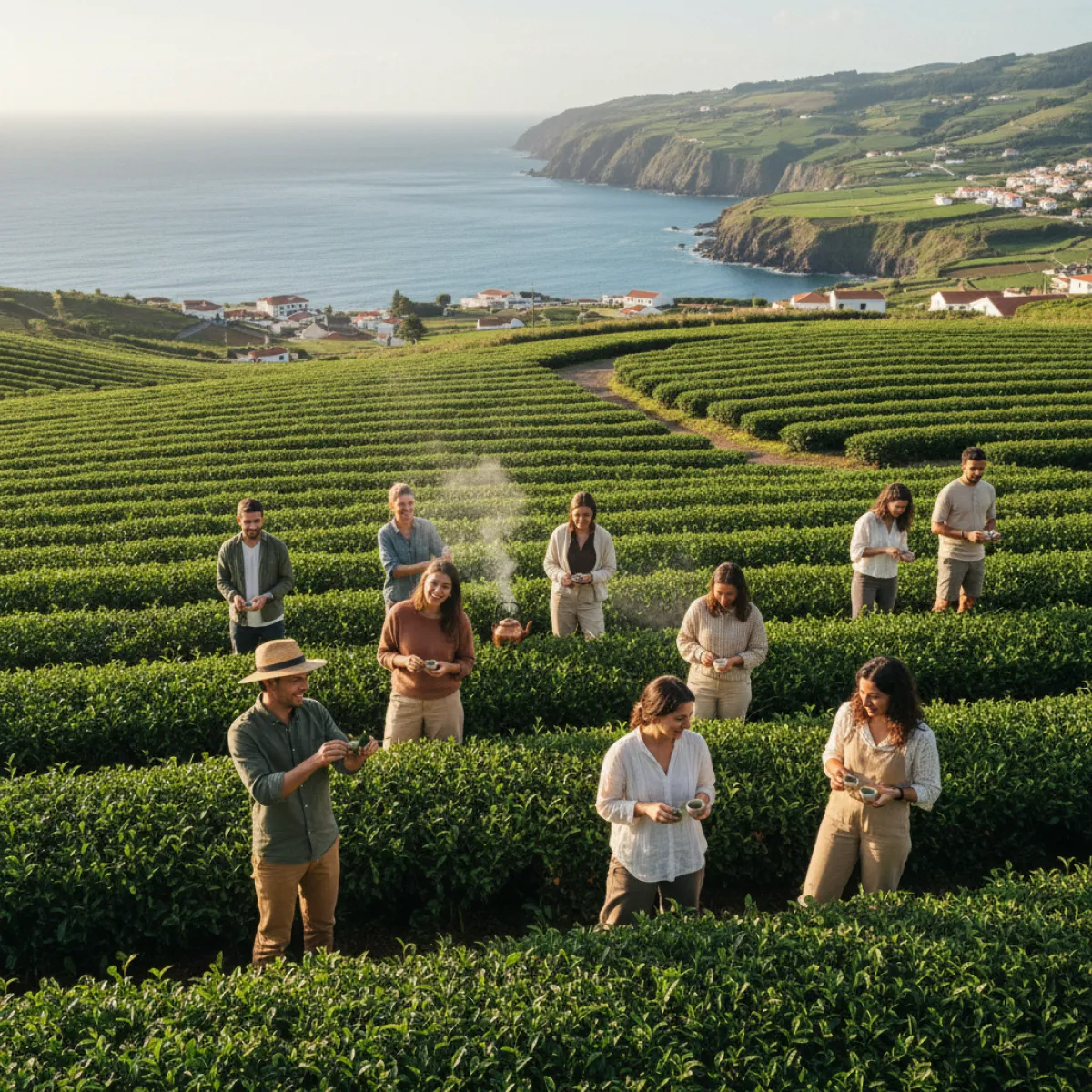
Nestled on the northern coast of São Miguel Island, the tea plantations of Ribeira Grande represent a unique phenomenon in Europe. In the municipality of Ribeira Grande, the Gorreana and Porto Formoso estates keep alive a tradition dating back to the 19th century, producing high-quality organic tea in a landscape where rolling green hills meet the deep blue of the Atlantic. This experience takes you through trails among the camellias, allows you to observe century-old machinery in full operation, and explains why the Azores remain Europe’s final tea frontier.
Gorreana Tea Factory: A Living Legacy
Founded in 1883, Gorreana is Europe's oldest and most iconic tea plantation. Upon arrival, the visual impact is immediate: the tidy rows of Camellia sinensis carve geometric patterns into the hillsides. The visit begins in the factory, where the scent of fresh tea is omnipresent. Here, the production process remains largely artisanal, utilizing original British machinery from the 19th and early 20th centuries.
You can closely observe the various stages: withering, rolling, oxidation (for black tea), and drying. The rhythmic sound of the machines and the skill of the workers create an atmosphere that feels suspended in time. After the factory tour, it is essential to hike the Gorreana trail. It is a circular path that winds through the plantations, offering perfect angles for photography and total immersion in the local ecosystem, where volcanic soil and constant humidity eliminate the need for pesticides.
Porto Formoso: Elegance and Tradition by the Sea
Just a few kilometers away, the Porto Formoso Tea Factory offers a more intimate and museum-like experience. Reopened in 2001 by private initiative to recover local heritage, this unit focuses on historical preservation and premium quality. The guided tour starts with a brief presentation on the introduction of tea culture to the island by Chinese masters in 1878.
One of the highlights of Porto Formoso is its tasting room, which recreates a traditional Azorean kitchen, and its magnificent panoramic terrace. Sitting on the terrace with a cup of black tea (available in Orange Pekoe, Pekoe, or Broken Leaf varieties) while overlooking the village of Porto Formoso and the coastline is a moment of pure tranquility. If you visit in spring, you might be lucky enough to witness the recreation of the traditional harvest, with workers dressed in period costumes celebrating the start of the season.
What the Experience Involves and How to Prepare
Both estates offer visits to their production facilities and plantation areas. The full experience involves walking through the fields, observing the industrial processing, and concluding with a comparative tasting of the different varieties of green and black tea produced on-site.
- What to wear: Comfortable walking shoes (the soil in the fields can be damp), a windbreaker (the north coast is often breezy), and a camera.
- Best time to book/visit: The harvest season occurs between April and September, which is the period when factory activity is most intense and interesting to watch.
- Insider Tip: Try the green tea ice cream at Gorreana or the traditional cinnamon biscuits that accompany the tea at Porto Formoso.
Visiting these estates is not just a gastronomic tour, but a journey into the economic and cultural history of São Miguel, where resilience and a passion for the land result in an excellent product appreciated worldwide.