Slow Beja: Alentejo Plains, Convents and Quiet Cafés
Beja is not conquered, it is inhabited slowly: a wheat plain, convents with a view, great bustards at dawn, and cafés that know your name by the second day. A guide for unhurried travellers in the Baixo Alentejo.
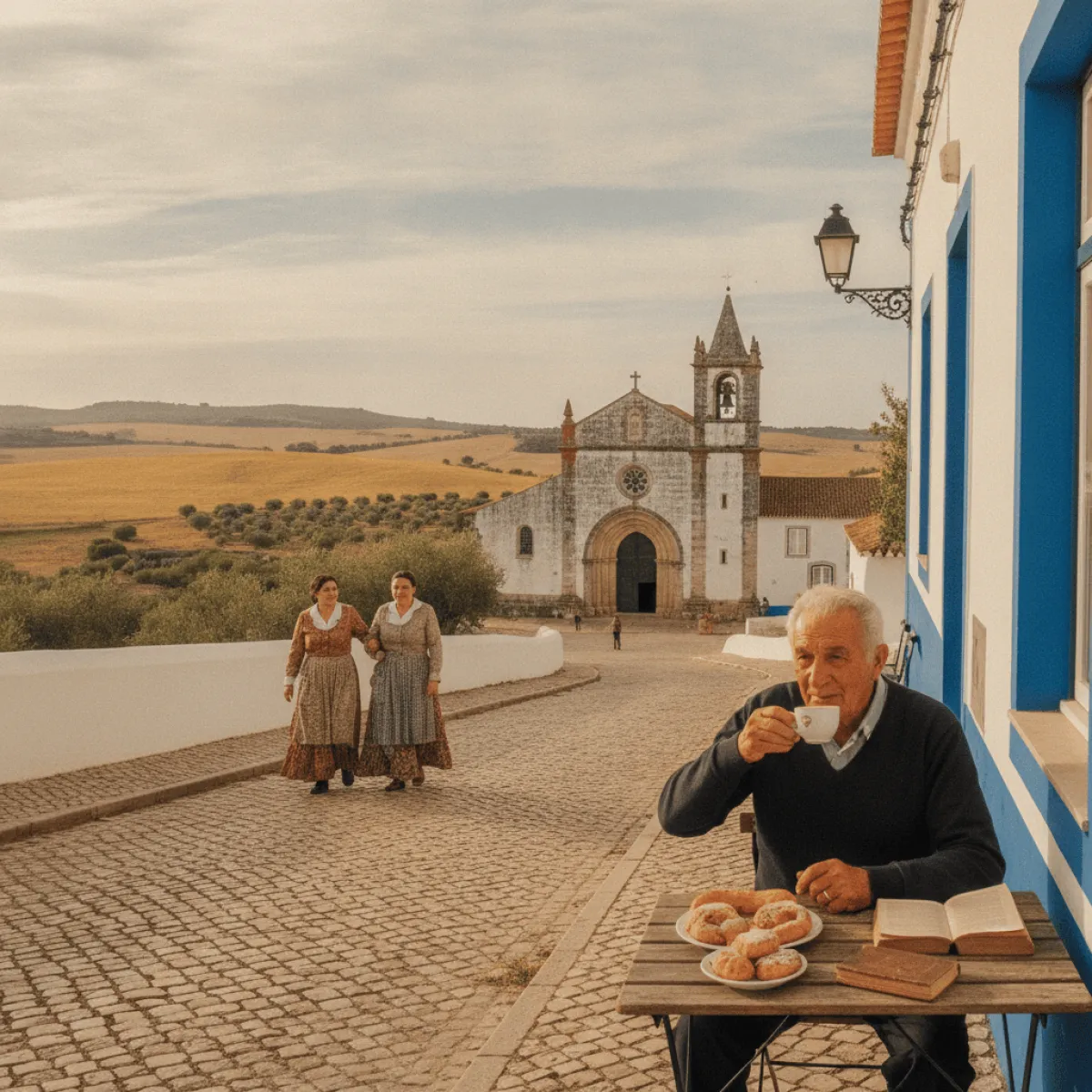
Beja is in no hurry whatsoever, and frankly that is the whole point of coming. Some Alentejo towns sell themselves in postcards. Beja sits down at a café table at three in the afternoon, orders an espresso, and waits for you to slow down to its pace. If you came looking for a queue to take a photo, you will leave disappointed. If you came to understand what time feels like when it moves slowly across a wheat plain that runs to the horizon, you picked the right town.
The case for slowness
There is a geographic reason Beja is the way it is. The town sits on one of the higher points of the Baixo Alentejo, though "high" is relative here: all around is flatness, wheat, scattered cork oaks, and a sky that somehow feels bigger than anywhere else in the country. Summer hits hard, with thermometers that climb without asking permission, so life organises itself around shade and the cooler hours. Early morning and late afternoon belong to you. Midday is for sitting still, as the locals will tell you.
That logic is exactly what makes Beja such a good destination for slow travel. There is no anxiety to "see it all." There is the Praça da República, there is the Rua dos Açoitados, there are whitewashed lanes where the glare bounces off the walls and window frames painted blue or ochre mark the houses. You walk, you sit, you repeat. That is a complete plan.
Convents, a castle, and history nobody will rush you through
The monumental heart of Beja is the former Convent of Nossa Senhora da Conceição, now the Regional Museum. It is a 15th-century building, Gothic and Manueline, with tilework that deserves more time than most people give it. It was here, the story goes, that the nun Mariana Alcoforado supposedly wrote the famous Portuguese Letters, the love letters that swept across 17th-century Europe. Historical fact or beautifully constructed legend, the so-called Mértola window remains an obligatory stop, and the tale gives the visit an extra flavour.
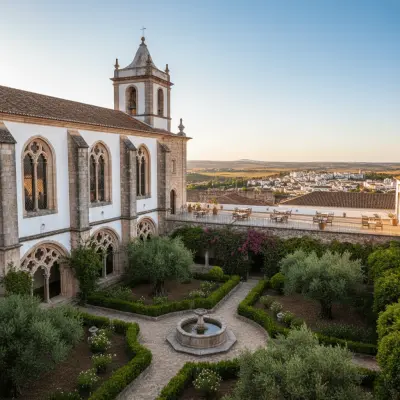
But if there is one place where Beja's convent vocation is felt without ceremony, it is the Pousada Convento de Beja, set inside the old Convent of São Francisco. Even if you do not stay the night, step in, have a coffee in the cloister, and absorb the scale of these spaces built for silence. It is the most civilised way to take a mid-morning pause.
Then climb the Castle of Beja and its keep, one of the tallest in the country. The stairs are narrow and unforgiving on tired knees, but at the top everything makes sense: the plain stretches in every direction, golden in summer, green in winter, and you understand why this was always a land ruled by wheat. Cheap entry, priceless view. Check opening times locally, as they shift with the season.
Where to sleep: convent or family home
Where you stay defines the trip. For the grand experience, with cloisters, gardens, and dinner inside historic walls, the Pousada Convento de Beja is the obvious romantic choice. It is the kind of place where you wake slowly and spend the morning doing nothing with elegance.
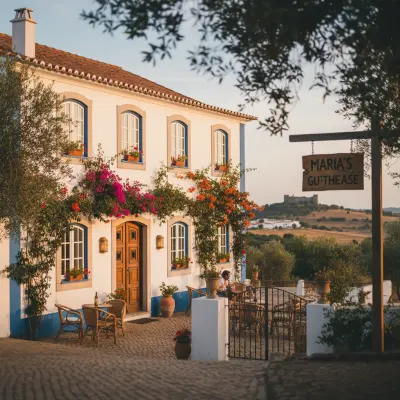
But if your idea of slow travel runs through conversation at the breakfast table and someone who tells you where to eat well off the beaten track, then Maria's Guesthouse is the warmer pick. It is the difference between being a guest and being a friend. Simple rooms, hosts who know the town by heart, and the kind of tips that show up in no guidebook. For solo travellers or unhurried couples, it is hard to beat.
Coffee, slowly: the ritual that matters
Beja lives in its cafés. Not Instagram cafés, but the ones with faded awnings and Formica tables where the waiter already knows your order before you speak. The ritual is simple: a short espresso in the morning, maybe with a slice of honey cake, and in the afternoon a long pause with the newspaper or a book. Nobody is going to nudge you out of your seat. That is the luxury.
At the table, give in to the deep Alentejo. Migas, lamb ensopado, açorda alentejana with pennyroyal and a poached egg, black pork when it is on. For dessert, the conventual sweets: encharcada, toucinho-do-céu, queijinhos do céu, all egg yolk and sugar, born precisely in convents like Beja's. Wash it down with an unpretentious Alentejo red. Prices in the Baixo Alentejo are still honest: a full lunch at a tavern costs far less than you would pay in Lisbon for the same.
Outdoors: birds and bicycles across the plain
Anyone who thinks the plain is monotonous has never seen it through knowing eyes. The area around Beja and neighbouring Castro Verde forms one of Europe's most important zones for steppe birds. Here lives the great bustard, one of the heaviest flying birds in the world, alongside little bustards, harriers, and larks. At dawn, with low light raking across the wheat, it is a silent spectacle few tourists ever witness. The best way to see it is with someone who knows: bird watching in Beja with Salva Fauna takes you to the right spots at the right hour, which is, of course, very early.
And because the terrain here is so flat it could have been designed for it, the bicycle is the ideal way to cover ground without suffering. The flat routes through Alentejo wheat are a rare pleasure for anyone tired of climbs: you pedal for kilometres between wheat fields, cork groves, and whitewashed villages, almost always on empty roads. Bring extra water and a hat, and avoid midday in July and August. Early morning or late afternoon, it is one of the best rides in the south.
The day you need the sea
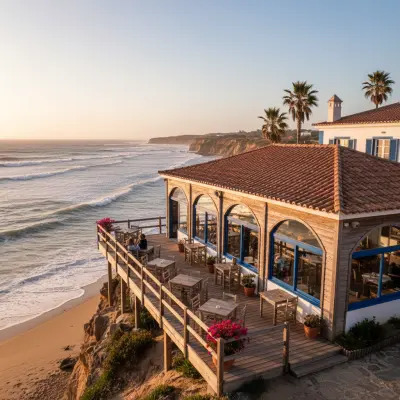
Beja is unapologetically inland, but the Alentejo has an ace up its sleeve: the coast is not really that far. When the plain has settled into your head and you crave salt, point yourself toward Praia da Zambujeira do Mar. It is one of the most beautiful beaches on the Costa Vicentina, with tall cliffs, cold and wild water, and that smell of the real Atlantic. Reckon on around an hour and a half by car. Go outside August, when the festival fills the village, and you will have the beach almost to yourself. A lunch of fresh fish in the village, a brave swim, and back to Beja at sunset, the plain turning the colour of fire.
Extending the trip: the Alto Alentejo
If Beja whets your appetite for the deep Alentejo, it is worth heading further north to the Alto Alentejo. Portalegre, leaning against the Serra de São Mamede, is the perfect contrast: greener, cooler, with a history of tapestries and streets that ask to be walked. To plan, start with the guide to a weekend in Portalegre without the tourist traps, which separates what is worth it from what is just for tourists. For walkers, the route through the Portalegre neighbourhoods worth the walk shows the town at the right pace, slowly. And at the table, follow those who know: the guide to where locals actually eat in Portalegre steers you past the traps and toward the serious tables.
Getting there and when to come
Beja is about two hours from Lisbon by road, an easy run down the A2 and then the A6, or on the national roads if you prefer the scenery. There is a direct train from Lisbon, slow but comfortable, perfect for anyone in the slow-travel spirit who would rather read than drive. Inside town you do not need a car: the historic centre is all walkable. But for the birds, the bicycle, and the beach, a car widens your options considerably.
As for the calendar: spring, between March and May, is unbeatable, with the plain green and flowering and gentle temperatures. Autumn is also excellent. Summer is beautiful but relentless in the heat, and demands discipline with your timing. Winter is cold and grey, but has its melancholy charm, and the cafés become even cosier. In any season, the rule is the same: do not try to do everything. Beja rewards those who linger.
A stress-free two-day plan
- Day 1: Morning in the historic centre, with the Regional Museum in the former Convent of the Conceição and the climb up the castle keep. Lunch at a tavern, with migas or ensopado. A slow afternoon of coffee and convent sweets. Dinner and the night at the Pousada Convento de Beja or at Maria's Guesthouse.
- Day 2: An early start for bird watching with Salva Fauna or for one of the bike routes through the wheat. An afternoon by the sea, escaping to Praia da Zambujeira do Mar, and back at sunset.
It is not an ambitious itinerary. That is on purpose. Beja is not conquered, it is inhabited for a few days. And when you head home, you will find yourself missing something strange: the silence of three in the afternoon, the plain that never ends, and a café where they already knew your name by the second day.