Nazaré's Wild Coast: Empty Beaches Beyond the Crowds
In August, Nazaré beach has towels half a metre apart and eight-euro parasols. There are five beaches twenty minutes away where none of that happens, and this honest guide tells you which, when to go, and where to eat afterwards.
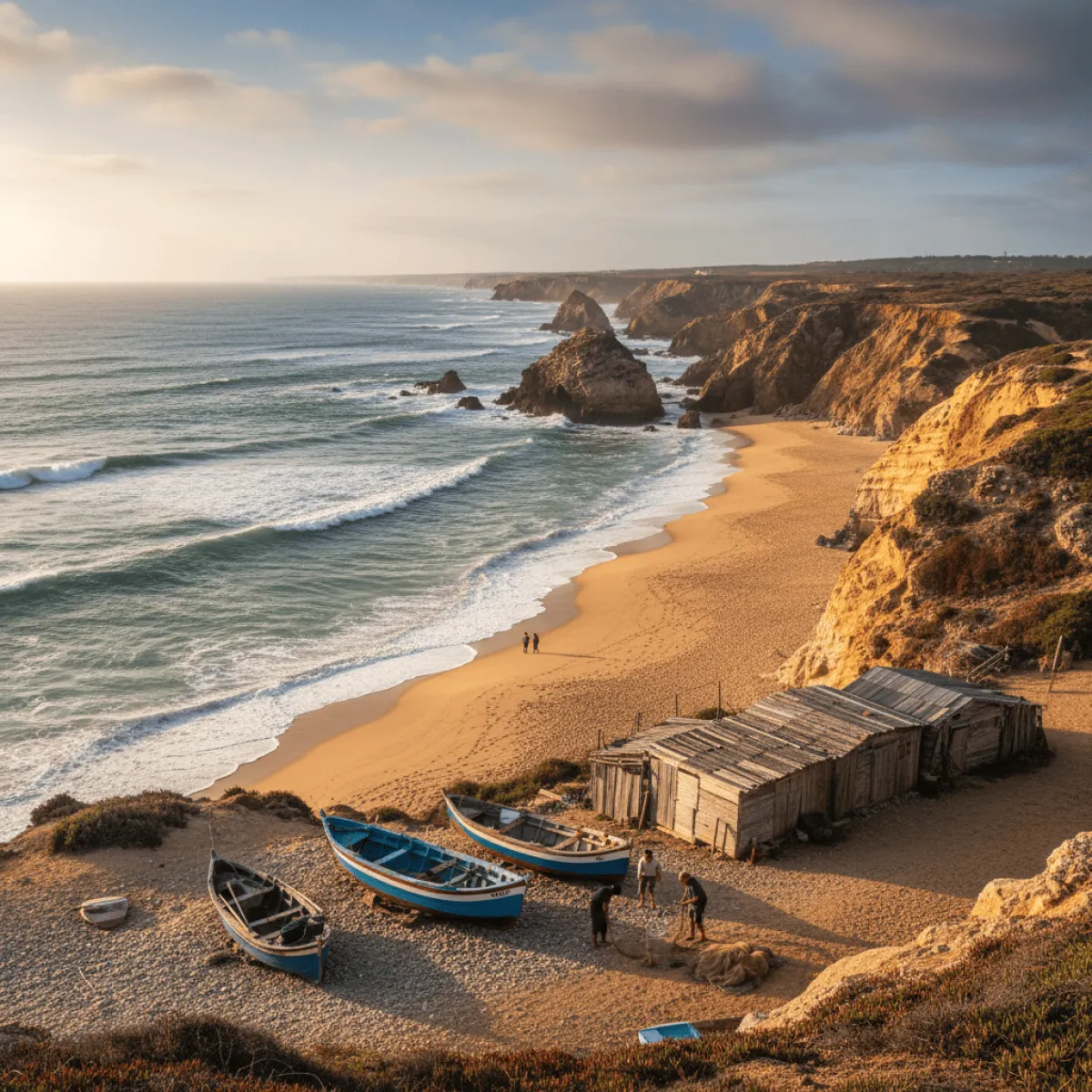
Everyone who arrives in Nazaré comes for the wave. Fair enough. In February, at the Nazaré Canyon, the ocean rears up like a twelve-storey building and breaks. It is a spectacle. It has its place. But if you drove here in July expecting that epiphany, I have bad news: you will find Nazaré beach with towels half a metre apart, you will pay eight euros for a parasol, and you will go back to the hotel sunburnt and wondering what exactly you missed.
The trick is to point the car south. Or north. In any direction other than the Avenida da República in August. The Costa Vicentina proper begins much further down, in Sines, and runs all the way to Cabo de São Vicente. But the idea, the concept of a wild beach with cliffs and no beach bar, that begins right here, on Nazaré's doorstep, if you know where to look.
This guide is not about the giant waves. It is about the other beaches. The ones twenty minutes by car from Nazaré where, even in August, you can roll out a towel without asking anybody's permission.
Why escape Nazaré beach (and when to come back)
Let us be honest. The main beach in Nazaré, down by the Sítio cliff, is genuinely good. Wide sand, decent surf, those painted striped huts that are still hand-finished every year. The problem is the human density between 1 July and 31 August, and any sunny September weekend. If you are in Nazaré during that window, treat the central beach as an early-morning thing, before ten, or a late-afternoon one, after six. In those two slots the light is better, the temperature is humane, and the children are not all screaming at the same time.
For the rest of the day, leave. Petrol is cheap, the road is empty, and there are kilometres of coastline waiting.
Praia do Norte: next door, another world
Start with the obvious. Praia do Norte is the big-wave beach, the one with the São Miguel Arcanjo fort and the lighthouse photograph everyone takes. On big-surf days in winter it is impassable and dangerous. But in summer, with a small sea and a north wind, it becomes something else. The sand is huge, 80% of the time it is empty past the dunes, and you get that rare thing: a view of the lighthouse without the lighthouse on top of your head.
Warning for parents: the currents here are serious even when the sea looks calm. This is not a relaxed-swim beach. It is a walk-barefoot, read-a-book-fifteen-metres-from-the-water, take-a-good-photo beach. For an actual swim, you can do better.
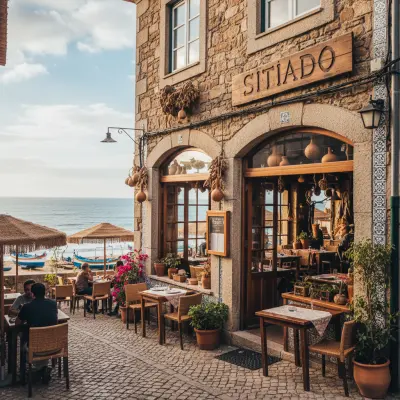
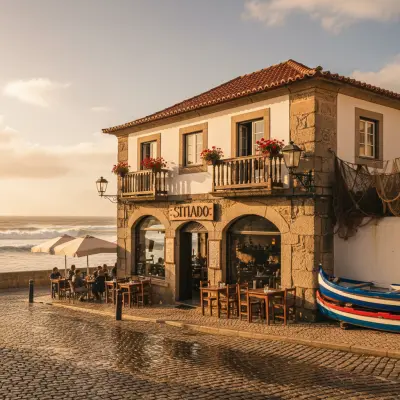
After the beach, climb up to the Sítio on foot via the staircase, fifteen minutes at a good pace, and have lunch at Sitiado, a small place where grilled fish arrives without fuss. Order whatever the man at the counter says came in that morning. Do not try to be clever with the menu.
Praia do Salgado: the best compromise
Five kilometres south, between Nazaré and Foz do Arelho, lies Praia do Salgado. This is my first choice if you want a wild beach with easy car access. There is a large car park, a decent restaurant on top of the cliff, and around 1.5 km of sand that, even in August, is rarely full because most people leaving Nazaré do not know it exists.
What to do: lay out the towel, walk 500 metres south, realise you are alone. The waves are usually cleaner here than at Nazaré beach because the coast changes orientation. It is a good spot for beginner bodyboarding and intermediate surfing. There is no lifeguard along the full stretch, so stick to the flagged zone if you are swimming with anyone who cannot swim well.
Practical detail: the access road off the Pataias road has a badly signposted bend near the top. Do not trust the GPS blindly, follow the brown beach signs.
São Martinho do Porto: for the family days
Not wild, but it deserves an honest paragraph. São Martinho do Porto, twenty minutes south, has a shell-shaped bay, almost no waves, and a sea floor that rises very gradually. For anyone travelling with children under six, this is the best beach in the region, full stop.
The catch: in August, the sand on the town side looks like Tokyo metro. The solution is to park on the Salir do Porto side, walk across the sand at low tide, and set up there, facing the open ocean. The drop in crowding is absurd. And the view back across to the painted boats of the village is the exact same postcard.
Praia de Paredes da Vitória: where the locals go
Fifteen minutes north of Nazaré, either through Alcobaça or along the coast road, sits Paredes da Vitória. It is a small village, half fishing town and half undecided about tourism, with a generous coarse-sand beach and yellow cliffs to the south. In August it gets busy. But, and this is the important but, walk 800 metres south towards the cliffs and the headcount drops by a factor of ten.
There is no natural shade beyond the dunes. Bring a hat, or one of those twenty-euro Decathlon beach tents that last two summers.
Lunch here: there are decent local taverns in the village, but if you are willing to drive another fifteen minutes back to Nazaré, it is worth eating at Pangeia Restaurante, where the approach to local fish is more considered and the service stays friendly even in peak season. Book ahead. In August without a booking it is a lottery.
Praia da Polvoeira and that other Praia do Norte
Note that there are two beaches called Praia do Norte. Ours, the big-wave one, is in Nazaré. The other one, smaller, is in the Alcobaça municipality and is almost unknown outside the area. North of Paredes da Vitória, down a wooden staircase that anybody over fifty will think about twice, lies Praia da Polvoeira. A small stretch of sand between two cliffs, freezing water, and rarely more than thirty people even in August.
It is not a place to spend a whole family day. It is a morning beach: two honest swims, then back up the stairs for a sandwich somewhere. But if you want a photograph that nobody from your hometown will have, this is the one.
Practical points: driving, tides, parking
The Costa Vicentina around Nazaré does not have much in the way of public transport. To do these beaches you will need a car. Private vans exist if you are prepared to pay, but for an ordinary day a hire car out of Leiria or Caldas da Rainha works out cheaper than most people expect, around thirty euros a day on the shoulders of summer.
- Fuel: fill up in Nazaré or Alcobaça. Petrol stations near the beaches are rare.
- Tides: at these smaller beaches, high tide swallows most of the sand. Check a tide table before leaving. Hidrografico.pt has the official one.
- Parking: arrive before 10.30 in peak summer. After eleven, you are walking five hundred metres back from the car.
- Clothing: the Nazaré wind is a character in the story. Even in July, bring a fleece for the late afternoon. This is not an exaggeration.
When to come, when not to
Honest suggestion, if you can choose: May, the second half of June, and September. The water in May is still cold, yes, but the sand is empty, the light is better, restaurants actually have time for you, and accommodation prices in some places drop by half. In September, the sea has warmed enough for long swims and weekends still have life without madness.
August is what it is. If August is all you have, come anyway. But with this guide, and with the willingness to get up early, you will dodge the worst of it.
What to do off the beach
Two full beach days is the healthy maximum for most people. For day three, change registers. The Alcobaça and Batalha monastery tour from Nazaré covers two of Iberia's gothic masterpieces and is comfortable as a half-day. Alcobaça in particular carries the Pedro and Inês story, which is worth knowing whether or not you have ever read Camões.
To understand the real Nazaré, the one that still lives off the sea and still hangs fish to dry in the sun at the Sítio, take the seven skirts experience with Alma Nazaré Tours. It is short, it is honest, and it is the best way to avoid spending a week confusing postcard folklore with real lives.
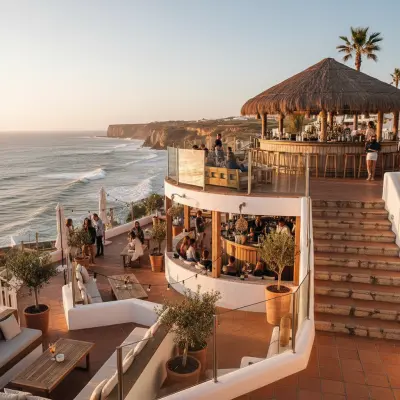
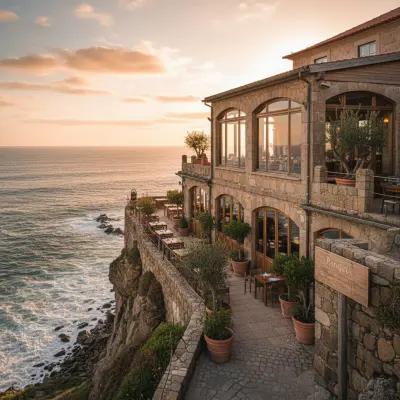
For the evening, and let me cut to the chase, Zulla Terrace Bar has the best sunset in town and a cocktail list that, while not Lisbon, embarrasses nobody. Come hungry for the snacks or eat beforehand. Another option for dinner with a view is the sister site of Sitiado up in the Sítio, where the menu shifts slightly from the lower restaurant and the atmosphere is calmer.
Going further
If you are in the region in April, it is worth widening the radius by fifty kilometres and walking the trails around Caldas da Rainha, which combine well with lunch in the fruit market square and an afternoon among the town's ceramics. And for anyone who built the trip around a liturgical calendar or out of anthropological curiosity, our honest guide to the 13 May pilgrimage to Fátima explains what to expect and, more importantly, what to skip.
Halfway between the academic and the alcoholic, if you happen to pass Coimbra between late April and early May, read the Queima das Fitas guide. It has nothing to do with wild beaches but a lot to do with understanding Portugal beyond the Lisbon-Porto-Algarve triangle.
The bottom line is this: in high summer, the smartest thing you can do with a week in Nazaré is treat the town as a base, not as a destination. Sleep here, dine here, but spend the central hours of the day on any other stretch of sand twenty minutes away. Come back at sunset, climb up to the Sítio, and you will understand why this is still one of the cleverer corners of the Portuguese coast for anyone trying to escape the crowds without giving up on eating well.