Horta's Best Beaches: Where the Crowds Don't Go
Porto Pim at 8am, Varadouro's rock pools in the afternoon, and the black sand of Praia do Norte with nobody in sight. Faial's beaches aren't Caribbean, but with the right strategy, they're all yours.
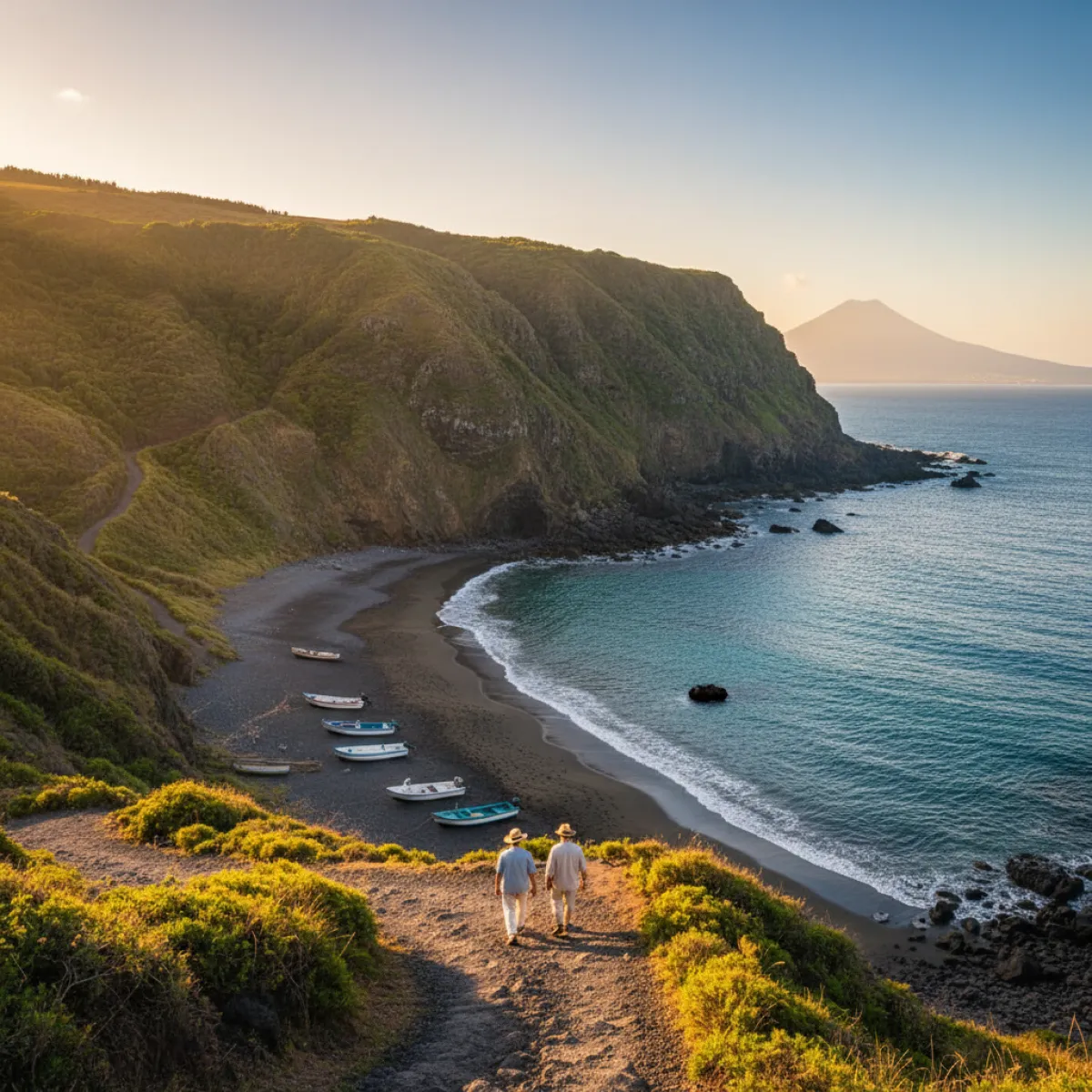
Let's get something straight: if you came to the Azores expecting Caribbean-style white sand, you booked the wrong flight. But if you're ready for crystal-clear water framed by black basalt, with the towering cone of Pico across the channel looking like something a film director would reject as "too dramatic", then Faial has exactly what you need. And the best part? Even in August, when the Algarve is a human sardine tin, you can still find a stretch of sand to yourself here.
Porto Pim: The Beach Everyone Knows (And Rightly So)
Let's start with the obvious. Porto Pim Beach is Horta's most accessible, most photogenic, and most popular beach. It's less than a ten-minute walk from the centre, tucked into a sheltered bay facing Monte da Guia. The sand is golden, a volcanic rarity, and the water is calm enough for kids without the constant anxiety of rip currents.
The catch? Everyone knows about it. From July through mid-September, Porto Pim fills up. Not unbearably (this is the Azores, not Copacabana), but enough to lose that quietness you came looking for.
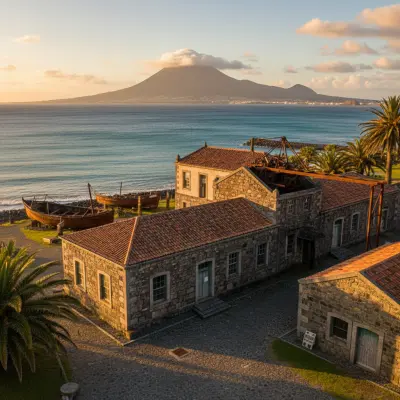
The fix is simple: go early. By 8:30am, the beach is nearly empty. Bring breakfast, coffee and a pastry grabbed in town, and settle in before the rest of the world wakes up. By noon, when the bay starts filling, get up and walk over to Fábrica da Baleia do Porto Pim, the old whaling factory right next door. It's one of the best small museums in the Azores: honest, well-curated, and it tells the story of Faial's whaling industry without sanitising the past. It pairs perfectly with the beach because Porto Pim was, before it became a bathing spot, the hub of the island's fishing and whaling trade.
If that history hooks you, the Porto Pim whaling and fishing heritage experience gives you the full walking context.
Almoxarife: Where the Locals Actually Go
About five kilometres from Horta on Faial's east coast, Almoxarife Beach is where the islanders themselves spend their summer days. It's bigger than Porto Pim, the sand is dark volcanic black, and the view across the channel to Pico's mountain is almost absurdly beautiful. I'll say it plainly: there's no better sunset spot in the Azores.
Getting there is easy by car, and there's a bus from Horta (frequency varies, check locally for summer schedules). The beach has a support bar where you can grab a bite and a cold beer, but don't expect anything fancy. It's a village beach, in the best possible sense.
The trick to avoiding crowds here is less about timing and more about the calendar. Almoxarife fills up during Sea Week (Semana do Mar, usually the first week of August), when all of Horta is in festival mode. Outside that window, even on weekends, you'll have plenty of space. Come in June or September and you might have the beach virtually to yourself, with water temperatures around 20-22°C, fresh but perfectly swimmable.
Varadouro: Rock Pools for the Sand-Indifferent
On the island's west side, the natural swimming pools at Varadouro are the perfect alternative for those who don't care about sand but want to swim in ocean water with proper conditions. Carved from basalt, with access via stairs and platforms, the pools are fed directly by the Atlantic but sheltered from the breaking waves.
Varadouro is about a 20-minute drive from Horta along the south coast road. There are changing facilities and, during bathing season, usually a lifeguard. Entry is free or nominal (check locally). The bar by the pools serves simple snacks, grilled limpets if you're lucky, which are non-negotiable eating in the Azores.
This is probably Faial's most underrated swimming spot. Tourists concentrate on Porto Pim and the Caldeira; Varadouro is left for those doing the full island loop. Go early afternoon, when the sun hits the pools head-on.
Praia do Norte and Fajã: Wild Faial
If you want beaches where the Atlantic shows its teeth, the north coast is your territory. Praia da Fajã, near the village of Praia do Norte, is a sweep of jet-black sand backed by dramatic cliffs. This isn't a beach for leisurely swimming, the sea is rougher here and currents can be treacherous, but for a barefoot walk along the waterline and photographs that command respect, nothing else on Faial comes close.
The area was severely damaged by the 1998 earthquake, and you can still see traces. A visit to the Capelinhos Volcano Interpretation Centre, a few kilometres away, completes the geological picture. This isn't a full-day towel-and-umbrella beach; it's a morning of exploration followed by lunch at a local tasca.
Crowds? Virtually nonexistent. Even at peak summer, Praia do Norte sees a fraction of the visitors that the southern beaches get. Car access is easy, but public transport is scarce, rent a car or arrange a ride.
Conceição: The Urban Swim
Technically within Horta's town limits, the bathing area at Conceição is where locals go for a quick dip without leaving the city. It's not a beach in the classic sense, more like ocean access platforms and a small cove, but the water is clean and you're in and out in minutes. Ideal if you're staying in the centre and want a swim before breakfast.
The Perfect Day: Beach Meets City
Here's how I'd structure a beach day in Horta without bumping into tour groups:
- 8:00am, Coffee at the marina, then walk down to Porto Pim. Morning swim while the beach is still empty.
- 10:30am, Visit the whaling factory as the beach fills up. Allow an hour.
- 12:00pm, Lunch near the marina. Grilled fish, simple and good.
- 2:00pm, Drive to Varadouro. Afternoon in the rock pools. Limpets and beer if the bar's open.
- 5:00pm, Return via the north coast, stopping at Praia da Fajã for photos.
- 6:30pm, Back in Horta. Wander the historic centre.
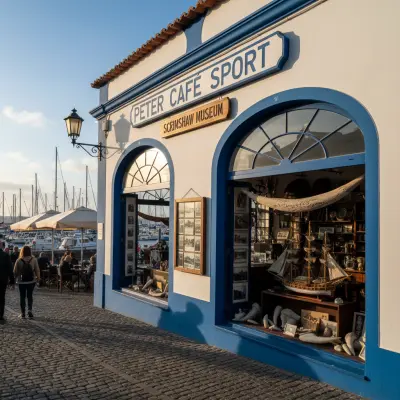
- 8:00pm, Dinner. If you have energy, swing by Peter Cafe Sport, not for the food, but for the bar. And while you're there, head upstairs to the Scrimshaw Museum, a fascinating collection of whale-tooth engravings.
If you have more time in the city, our 24-hour Horta guide covers the urban essentials efficiently.
Practical Tips That Actually Matter
Car rental: Essential if you want to explore beaches beyond Horta. Several agencies operate in town and at the airport. Book ahead for July-August, supply is limited on a small island.
Sun protection: Sounds basic, but the Azorean altitude and ocean reflection burn faster than you'd think. Overcast skies are deceptive, bring sunscreen even on cloudy days.
Swimming season: Officially June to September, but locals swim from May to October. The water is never tropical, expect 18-23°C depending on the month.
Safety: North coast currents are real. Don't risk it if you don't know the sea. Porto Pim and Almoxarife are the safest beaches for families.
If you want to break up beach days with some culture, the Museu da Horta in the town centre gives a solid overview of the island's history, and the historic walking tour of Horta shows you the city from angles you won't find on your own. For panoramic views over all of this, beaches, marina, Pico, check our guide to Horta's best viewpoints.
What They Don't Tell You
The truth about Horta's beaches is that the "crowd problem" is relative. We're not talking about Albufeira or Nazaré here. Even Porto Pim at peak August is manageable. But if you came to Faial for the quiet, and you probably did, it's worth playing smart with timing and geography. Mornings in the south, afternoons in the west, exploration up north. That way you get the full range without ever feeling like you're in a theme park.
And if it rains, and in the Azores it will rain, sometimes three times in the same day, don't panic. Go to a museum, eat, drink, wait. The sun comes back. It always does.