Horta on a Shoestring: A Real Budget Guide
A bolo lêvedo costs almost nothing, Monte da Guia charges no admission, and the painted marina is the best free museum in the Azores. In Horta, a tight budget is no excuse to miss the essentials, you just need to know where to go.
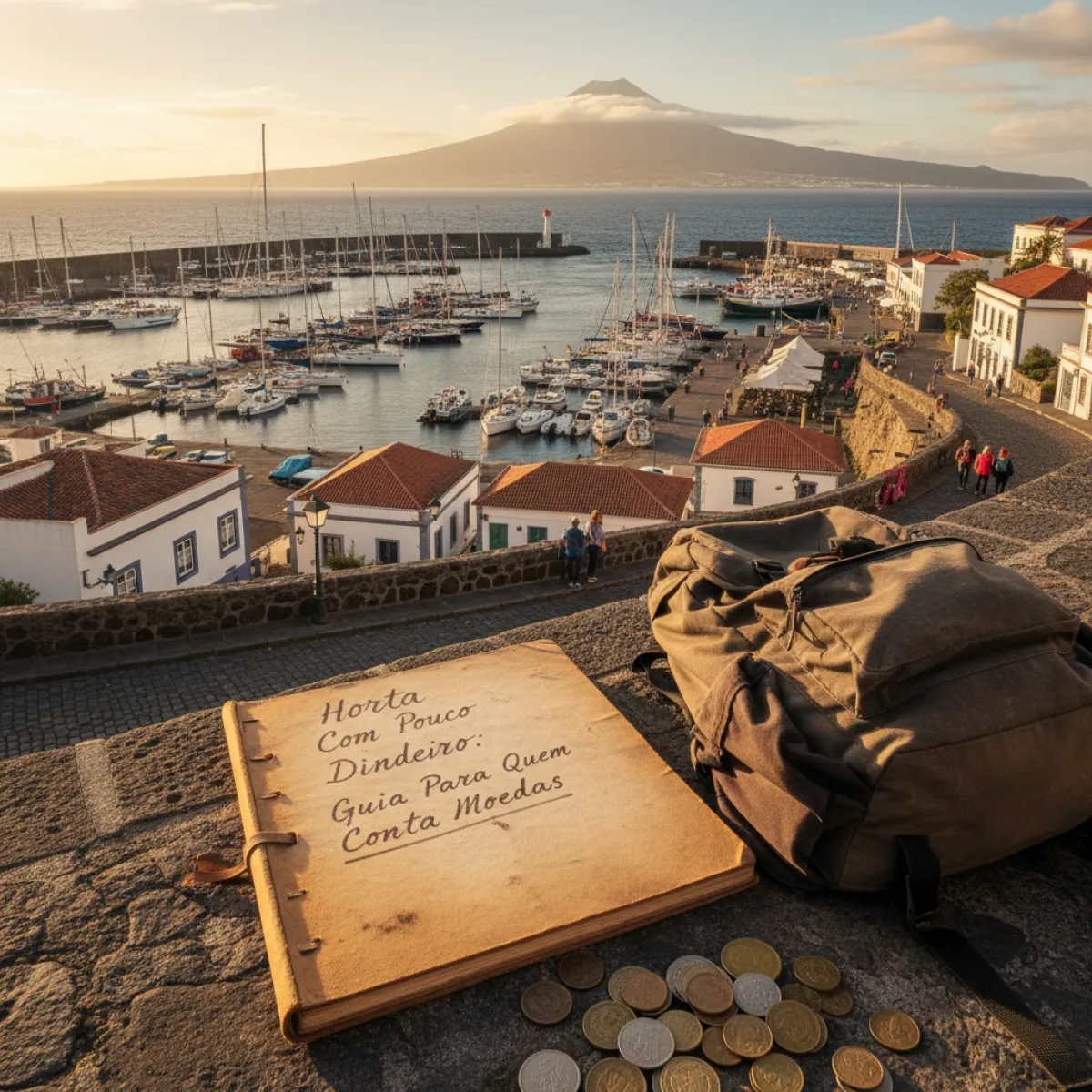
Let's be honest: the Azores aren't cheap. The flight eats into your budget before you even land, summer accommodation prices spike hard, and there's a constant temptation to blow money on whale watching tours and diving excursions. But Horta, Faial's capital, that mid-Atlantic port where sailing crews from around the world drop anchor, has one advantage many Azorean towns lack: it's small enough to walk, and the best things it offers cost next to nothing.
This isn't a guide to surviving on bread crusts. It's a plan for spending less without missing the point, worthwhile museums, honest meals, views that don't require a ticket, and that particular Horta rhythm you only catch when you slow down.
Where to Sleep Without Wrecking Your Week
Skip the marina-view hotels in the centre. For tight budgets, look for local rentals in Feteira or Castelo Branco, 10-15 minutes from town by car, and prices can drop by half. Outside July and August, studios in the centre become significantly more affordable. Another option: Faial's campsite near Praia do Almoxarife, one of the cheapest in the Azores. The sunrise view of Pico across the channel is worth more than most hundred-euro hotel rooms.
Practical note: book early. Horta is small and accommodation fills up fast, especially during Sea Week (early August).
The Breakfast Nobody Talks About
There's a bakery culture in the Azores that guidebooks systematically ignore. In Horta, instead of paying eight euros for a hotel breakfast, walk into a bakery around Rua Serpa Pinto and order a bolo lêvedo with butter and a coffee. Bolo lêvedo is a sweet, spongy bread typical of Faial. It costs almost nothing and is perfect fuel for a morning on foot. If you spot fresh massa sovada, don't hesitate.
The Marina and the Painted Wall: Zero Euros
Your first mandatory stop costs nothing. Horta's marina is world-famous among sailors, and the harbour walls are covered in paintings left by crews from every corner of the globe, a tradition stretching back decades. Superstition says that anyone who leaves without painting will have bad luck on their crossing. Spend half an hour wandering the murals. You'll find coats of arms, boat names, dates, flags, children's drawings, and near-professional artwork. It's an open-air museum, and it's free.
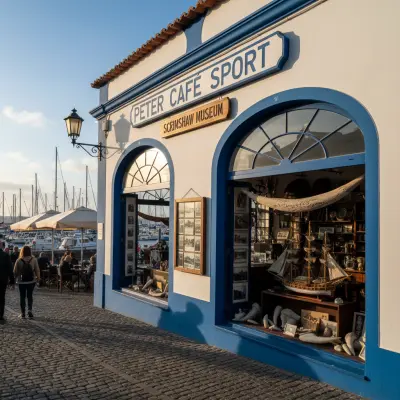
From there, head up to Peter Café Sport, yes, the most famous bar in the Azores. You don't need to spend a fortune. A gin and tonic or a local Especial beer at the counter is affordable and buys you the right to soak in the atmosphere. But what most people miss is that upstairs houses the Scrimshaw Museum, a collection of engraved sperm whale teeth that ranks among the world's finest. The entry fee is modest and worth every cent.
The Museums Worth the Ticket Price
Horta has more museums per square metre than any other Azorean town this size. When budget is tight, the trick is choosing well.
Museu da Horta, housed in the former Jesuit College, is the most comprehensive, covering the island's history from early settlers to the era of submarine telegraph cables that turned Horta into a global communications hub in the 19th century. It's surprisingly good and rarely crowded. Check locally for current hours and admission, but it's typically affordable.
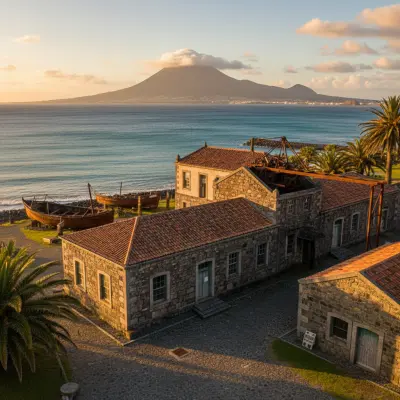
Fábrica da Baleia do Porto Pim is unmissable, even on a tight budget. The preserved industrial building tells the story of Azorean whaling, an industry that defined these islands for over a century. The exhibition is well done, with original machinery, and it sits on Porto Pim bay, which is one of the most beautiful spots in Horta. For deeper context, this journey through Horta's whaling and fishing heritage fills in the full picture.
Walking Is the Best Investment
Horta on foot is a different city from Horta by car. The historic centre is compact: from the marina to the public garden, from the Forte de Santa Cruz to Monte da Guia, everything is walkable in under an hour. And it's free.
Monte da Guia is the essential walk for anyone wanting to spend zero euros and get a million-euro view. The trail starts near Porto Pim and climbs to the viewpoint at the top, with panoramas over the bay, the town, and, on clear days, Pico in all its volcanic glory. It's short but steep. Bring water.
For something more structured, the historic walking tour of Horta covers the city's key points with real context, a good way to understand what you're seeing rather than just walking past handsome facades.
If you've read our guide to Horta's best panoramic views, you'll know there are several lookout points scattered around the city and its surroundings. Nearly all of them are free. The view is the great cheap luxury of the Azores.
Eating Well Without Spending Much
The secret to eating affordably in Horta, and the Azores generally, is eating where the locals eat and avoiding the laminated-menu restaurants by the port.
Look for daily set menus in centre-town restaurants, away from the marina strip. A prato do dia with soup, main course, and coffee rarely tops €8-10, and the quality is almost always honest. The fish of the day, usually tuna, horse mackerel, or black scabbardfish, is your safest and cheapest bet.
In the Azores, tuna is king. In Horta, a grilled tuna steak with molho de vilão (garlic, vinegar, and chilli) is a dish that costs little and delivers a lot. You don't need a fancy restaurant for this, any decent tasca serves a respectable version.
For snacks, local markets are the move. Azorean fruit, pineapple, banana, passion fruit, bought directly is cheap and incomparably better than anything on the mainland. If you find fresh Faial cheese, buy it. With bread and fruit, you have a two-euro lunch that genuinely satisfies.
The Caldeira and Capelinhos: Spend Little, See a Lot
If you rent a car, and in the Azores, unless you're staying strictly in town, you should, there are two spots on Faial that are essential and practically free.
The Caldeira, in the island's centre, is a massive volcanic crater blanketed in green. The main viewpoint is free to access. Descending into the crater requires a permit and isn't recommended without a guide, but the viewpoint alone is spectacular. Go early morning, before the fog rolls up.
The Capelinhos Volcano, on the western tip, is the most cinematic spot in the Azores. An eruption in 1957-58 added land to the island and destroyed the local community. The lighthouse half-buried in volcanic ash is an image that stays with you. The Capelinhos Interpretation Centre, built underground, is excellent, check locally for the admission price, but it's reasonable. Combine the visit with a walk across the surrounding volcanic terrain, which is free.
Transport: The Expensive Part
Here's the inconvenient truth: Faial doesn't have a public transport network that works practically for tourists. Within Horta, everything is walkable. But for the Caldeira, Capelinhos, or beaches like Almoxarife and Varadouro, you need a car or a taxi.
Car rental is cheaper if you book ahead, and off-season prices drop considerably. Another strategy: rent for just one or two days to see the rest of the island, and spend the other days exploring the town on foot. Split costs if you're travelling with someone.
The ferry to Pico is another expense to factor in. The crossing is quick (about 30 minutes) and relatively affordable, it's worth it even on a tight budget, if only for an afternoon in São Roque or Madalena.
The Perfect Budget Itinerary: Three Days in Horta
Day 1: Central Horta on foot. Marina, painted walls, Peter Café Sport with a beer, Scrimshaw Museum. Lunch at a centre-town tasca (daily set menu). Afternoon: Porto Pim, Fábrica da Baleia, hike up Monte da Guia. Light dinner with cheese, bread, and market fruit.
Day 2: Car day (shared rental). Morning: Caldeira. Lunch in Capelo or near Capelinhos (pack a picnic to save money). Afternoon: Capelinhos Volcano and interpretation centre. Late afternoon: Varadouro natural pools. Dinner in Horta, grilled tuna at a simple restaurant.
Day 3: Museu da Horta in the morning. Ferry to Pico in the afternoon to walk around Madalena and try Pico wine (the vineyard landscape is a UNESCO World Heritage Site). Return by evening.
If you have more time, check our 24 hours in Horta guide to make sure you haven't missed anything essential.
What to Skip When Money Is Tight
I'll be direct: whale and dolphin watching boat tours are expensive, easily €50-60 per person. If the budget is tight, it's legitimate to skip them. It's an extraordinary experience, but it's not the only reason to visit Faial.
Restaurants with "marina views" near the dock tend to charge more for the scenery than the food. Step back one street and eat better for less.
Souvenirs in the Azores are pricey everywhere. If you want to bring something home, the best investment is food: cheese, passion fruit jam, pimenta da terra (local chilli paste), or Azorean tea from Gorreana in São Miguel. Useful things, with local character, that fit in your bag.
The Bottom Line
Horta doesn't need money to impress. It needs feet, curiosity, and a stomach for fresh fish. The Atlantic doesn't charge admission, Monte da Guia is there for anyone willing to climb, and a bolo lêvedo with coffee remains the best gastronomic investment in the Azores. Spend little, see a lot, eat well. That's how it's done.