Horta Beyond the Marina: The Side Nobody Tells You About
Most visitors blow through Horta in two hours: gin and tonic at Peter's, marina photo, ferry to Pico. But Vila Velha, the Porto Pim whaling factory, and the Monte da Guia trail tell a far more interesting story, and they're all within a twenty-minute walk.
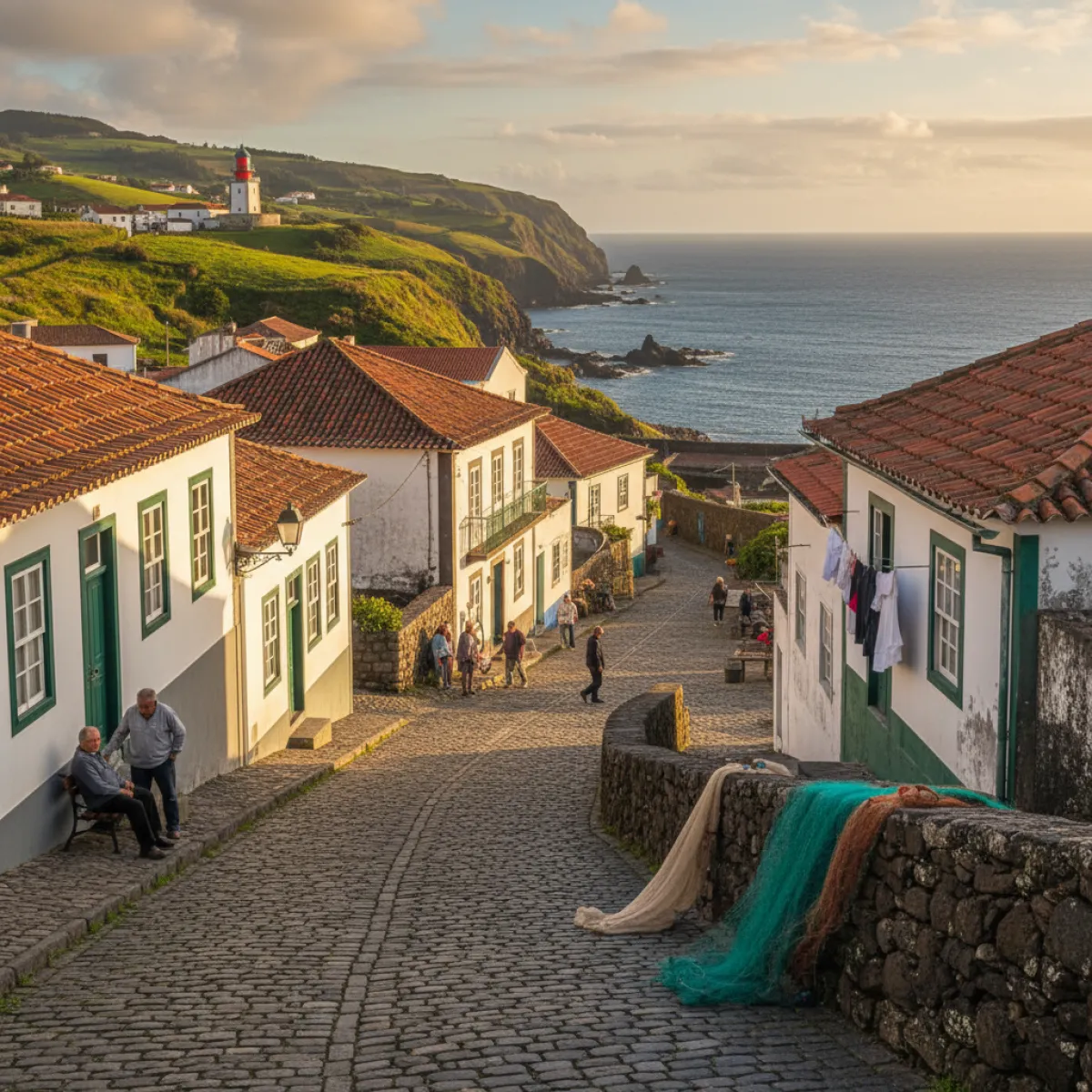
Almost everyone who arrives in Horta does exactly the same thing: sits down at Peter Cafe Sport, drinks a gin and tonic, photographs the marina murals, and catches the ferry to Pico. By the end of the day, they leave convinced they've seen Faial. They haven't.
The Horta worth knowing isn't at the marina. It's in the streets behind it, in the museums that close too early for anyone arriving on the afternoon ferry, in the bays where whalers worked until the 1970s, and at the viewpoints where, at seven in the morning, the only sound is wind and gulls. It's a small city, about fifteen thousand people in the whole municipality, but with a density of history that's wildly disproportionate to its size.
Vila Velha: Where It All Started
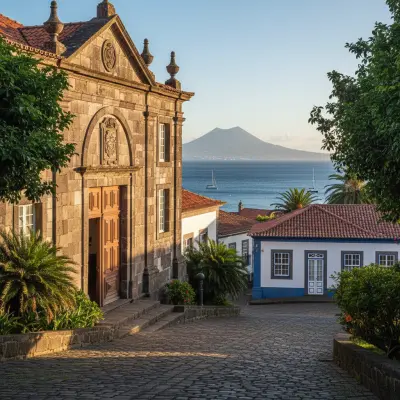
Most visitors never leave the marina zone and Rua Conselheiro Medeiros. But the oldest part of Horta sits to the north, in the neighbourhood called, bluntly, Vila Velha, between Ribeira da Conceição and Rua José Fialho. This is where Flemish settlers arrived in the 15th century, and this is where the city still breathes at a different speed.
The Igreja de São Francisco, dating to 1700, has three naves decorated with gilded carvings and azulejo tiles that deserve far more attention than they get. Next door, the Jesuit church, started in 1680, never completed because the Jesuits were expelled from Portugal in 1759, is a monument to interrupted ambition. And the Clock Tower, built between 1700 and 1720, with a mechanism from 1747, still marks the hours as if time here were serious business.
For anyone who wants to walk these streets with context, the historic walking experience through Horta connects these dots into a route that actually makes sense. Better than drifting with Google Maps.
The Museums Everyone Skips
Horta has three museums that, by themselves, justify half a day. And almost nobody gives them that time.
Museu da Horta, housed in the former Jesuit College, is the most comprehensive. The collection is eclectic, paintings from the 16th to 20th centuries, sacred art, ethnographic objects, but what really makes the visit are two things: the section on submarine telegraph cable stations (Horta was a crucial node in transatlantic communications from the 19th century through the 1960s) and the collection of miniatures carved from fig-tree pith by artist Euclides Rosa. Entire caravel ships made from fig pith, you need to see them to understand the patience they required. Entry costs around €2, and Sundays are free.
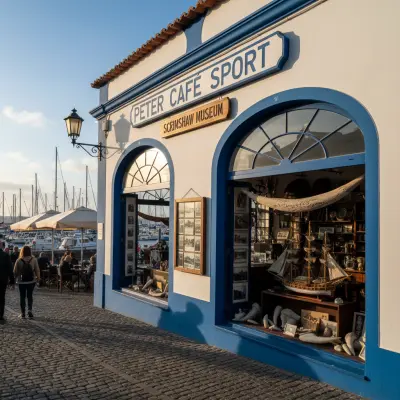
Then there's the Scrimshaw Museum at Peter Cafe Sport. Yes, it's in the same building as the most famous café in the Azores, but it's upstairs and most people don't even know it exists. Open since 1986, it holds one of the world's largest scrimshaw collections, the art of engraving and carving sperm whale teeth and bones. Sailors did this during long crossings: combs, boxes, decorative pieces, all worked with absurd precision. It's a small museum, visitable in half an hour, but unforgettable.
Porto Pim: Whales, Beach, and a Factory That Tells Everything
Porto Pim is a five-minute walk from the centre, but it feels like another world. The bay is sheltered, the beach stretches about 350 metres of fine sand, and on June mornings, before the tourists arrive, you can swim practically alone.
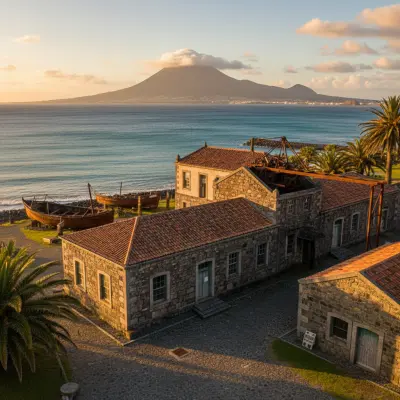
But Porto Pim isn't just a beach. On the slope of Monte da Guia stands the Fábrica da Baleia do Porto Pim, and this is, in my opinion, the most important place in Horta. The factory began operating in 1942 and, over thirty years, processed 1,940 sperm whales. It closed in 1974, when Portugal joined the international anti-whaling movement. Today it's a museum, and the permanent exhibition keeps all the original machinery: the visitor follows the complete processing route of the sperm whale, from oil extraction to bone meal.
It's not a comfortable visit. It is, at times, brutal in its honesty about what the Azorean whaling industry was. But that's exactly why it's essential. The experience dedicated to Horta's whaling and fishing heritage goes deeper for anyone wanting more than the museum alone.
Monte da Guia: The Best Walk in Town
The Entre Montes trail (PRC08 FAI) starts at the car park by Porto Pim beach and is, without argument, the best way to spend ninety minutes in Horta. It's about three kilometres, with roughly 150 metres of elevation gain, moderate, but with sections where you need to watch your footing.
The route passes the whale factory, climbs to the Miradouro da Lira, crosses 16th and 17th-century fortifications, and reaches the Ermida de Nossa Senhora da Guia, a 17th-century chapel rebuilt on its current site during World War II. The view from the top, with Pico dominating the horizon and the Caldeirinhas (underwater volcanic craters) below, is among the best in the Azores. And unlike the Caldeira, you don't need a car to get there.
For more panoramic spots, our guide to Horta's best viewpoints covers the other vantage points worth the detour.
Where to Eat (Properly)
I'll be direct: Peter Cafe Sport is a historic spot and the gin and tonic is a mandatory ritual, but it's not where you eat best in Horta. For that, you need to look elsewhere.
Genuíno, on the waterfront, belongs to sailor Genuíno Madruga and is probably the best place for fresh fish and grilled octopus in town. Order the octopus, the texture is perfect, with that touch of char that makes the difference. The limpets are excellent too.
Taberna de Pim, in Porto Pim, is the place to try alcatra, the slow-cooked beef stew that's Faial's signature recipe (and Terceira's, which claims paternity, but that's another argument). It's a clay pot dish, cooked for hours, that tastes exactly as it should: comforting and unpretentious.
Canto da Doca, by the marina, has a different concept: you cook your meal at the table on heated stone slabs. Is it gimmicky? Maybe slightly. But it works, especially for steaks and shellfish.
Practical Logistics
Horta is small and entirely walkable. The marina, Porto Pim, Monte da Guia, and Vila Velha are all within a twenty-minute walk of each other. For the Caldeira or Capelinhos, you'll need a car or taxi, they're about ten kilometres out.
Museums tend to close on Mondays. Check locally for exact hours, as they vary between summer and winter. The best plan is to dedicate the morning to museums, lunch at Genuíno or Taberna de Pim, and save the afternoon for the Monte da Guia trail, the late-day light at Miradouro da Lira is the best you'll find.
If you only have 24 hours, our 24-hour Horta guide organises everything into a tight but doable itinerary.
Why This Matters
Horta is a city that built its identity on passage, of whalers, of sailors, of telegraph cables connecting continents. But the irony is that most current visitors do exactly that: pass through. An hour at the café, a photo at the marina, and the ferry to Pico.
The other side of Horta, Vila Velha, the Porto Pim factory, Monte da Guia, the museums, asks for at least a full day. Ideally two. This isn't a city you exhaust on a ferry stopover. It's a city that, the more time you give it, the more it gives back.