Day Trips From Beja: Where to Go and How
Seven destinations within reach of Beja, from Mértola hanging over the Guadiana to Zambujeira ninety minutes away. With concrete instructions: which road, how long, what to order for lunch.
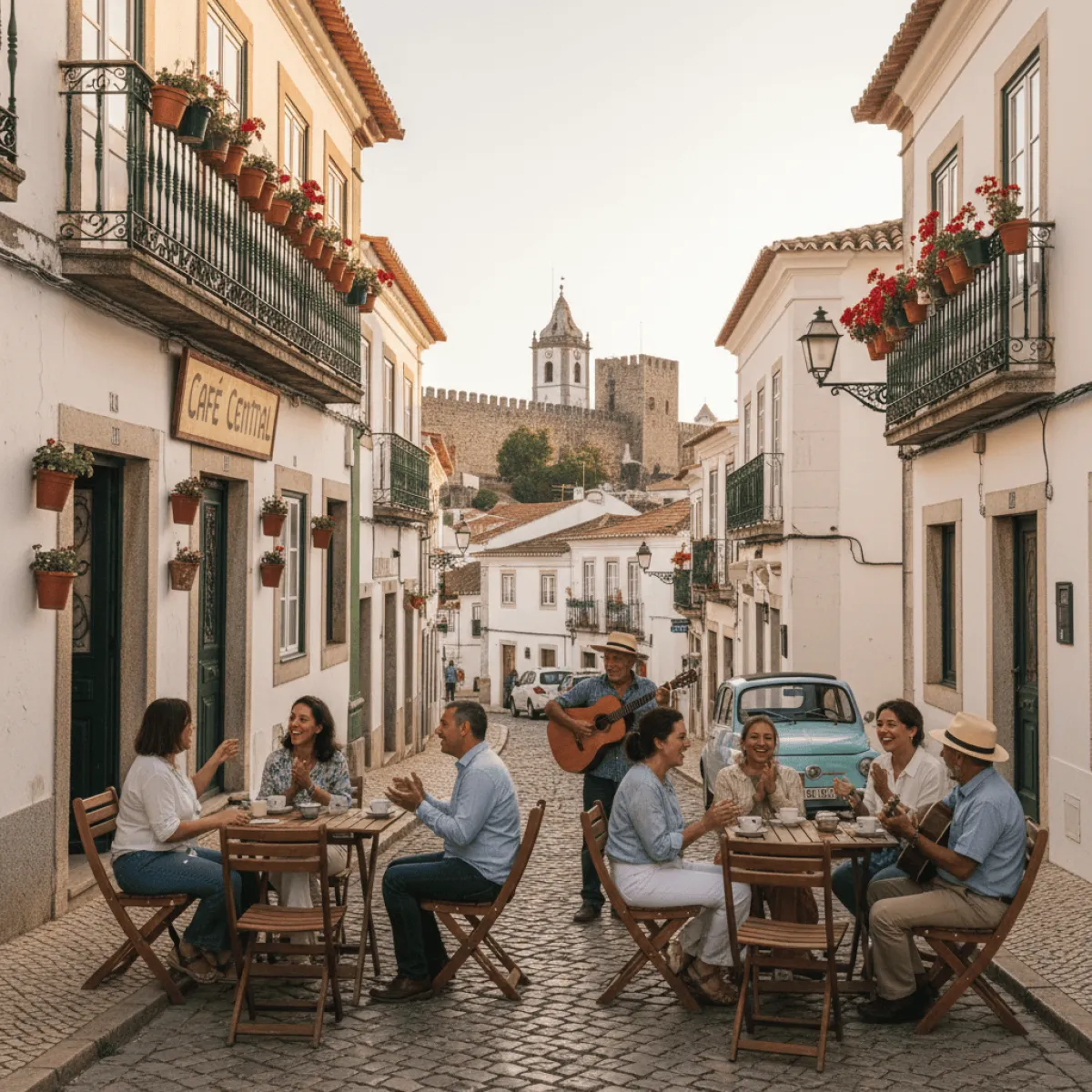
Beja rewards patience. It also rewards anyone who knows when to leave it. Seen from the castle keep, the Alentejo plain looks endless, and the impression is honest: within a hundred and twenty kilometres of the city you can reach Atlantic beaches, walled villages, hilltop chapels and roads where you can drive for half an hour without seeing another car. The question is not whether day trips from Beja are worth doing. The question is which ones.
This guide is for travellers spending two, three or four days in Beja who realise, by their second breakfast, that staying inside the city walls is leaving the best of the map untouched. I am giving you seven destinations, ordered by distance, with concrete instructions: which road to take, how long it takes, what to eat when you arrive, and when it makes sense to drive back to Beja for the night rather than sleep elsewhere.
Before you leave: getting the base right
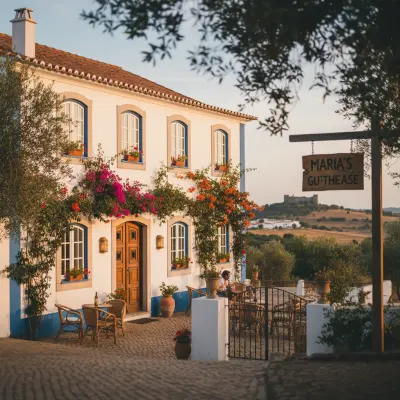
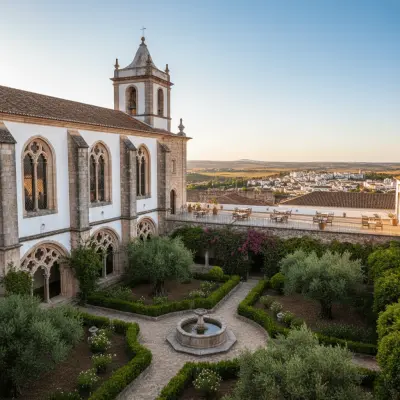
Day trips work better when the base is right. Beja has two places I recommend without hesitation, depending on budget and travel style. For travellers who want something quiet, with an owner who actually shows up, and a proper breakfast, Maria's Guesthouse is the right pick, especially for couples who want a place that does not feel like an impersonal hotel. For those who want to sleep inside a historic building, with an inner courtyard and the cloister silence only old convents deliver, Pousada Convento de Beja costs more, but you sleep inside a monument.
On transport: most of these destinations require a car. There are Rede Expressos buses to some towns, but with timetables that make a day trip impractical. If you arrived in Beja by train, rent a car on arrival. It will be the best euro you spend on the trip.
Serpa: 30 km, cheese and silence
Start with Serpa because it is the shortest day trip and the one that best explains the Baixo Alentejo. Thirty kilometres east on the IP8. Half an hour by car at most. Leave Beja at nine, you are parking by the walls at nine thirty.
What to see: the walls, the aqueduct, the castle. But the high point is not architectural, it is gastronomic. Serpa is the Portuguese capital of cured sheep cheese, and there are dairies in town and around it where you taste and buy directly from the producer. Do not buy Serpa cheese at the Beja supermarket before coming here. It is not the same.
What to order
Migas alentejanas with pork ribs, gaspacho alentejano in summer, lamb ensopado in winter. Any tavern off the main square will do it well. Full lunch with house wine, twenty five euros for two if you order modestly.
Whether to come back
Driving back to Beja for the night is the right call. Serpa has accommodation, but the night life is literally crickets. If you want any evening at all, drive back.
Mértola: 50 km, the prettiest in the south
Mértola is arguably the most photogenic village in the Alentejo. It hangs above the Guadiana river, has a mosque turned church that still keeps the original Islamic floor plan, and a castle from which you watch the river curve sharply around the village. Fifty kilometres by IP2 and then IC27. Just over forty minutes.
Do this: climb the castle on arrival, before the heat. Walk down the main street to the parish church. Visit the Islamic museum, one of the best small museums in the country and almost free. Then have lunch by the river.
The detail that makes the difference
The best part of Mértola is not the village itself, it is the dirt road that leaves it heading north toward Pulo do Lobo, a Guadiana waterfall fifteen kilometres further. The road is rough, parking is awkward, and in August there are mosquitoes. Go anyway. In May, with the river running high, it is one of the most underrated natural sights in Portugal.
Évora: 80 km, the classic that actually delivers
Évora is a UNESCO site, it is in every guidebook, and so there is always someone trying to be contrarian and saying it is touristy and you should go elsewhere. I disagree. Évora is genuinely extraordinary, and being eighty kilometres from Beja without visiting is a mistake.
Eighty kilometres on the A2 and then IP2, an hour and ten minutes by car. Leave early, eight in the morning, to get there before the coach tours.
Start at the Roman temple. Then the cathedral, including the rooftop terrace, which is worth the ticket. The Chapel of Bones, yes, even when crowded: just do the ritual. Have lunch around Praça do Giraldo or in the side streets, but skip the tourist menus with photographs of the food. Look for a tasca where customers are speaking Portuguese to each other.
What to order in Évora
Açorda alentejana with cod, lamb ensopado, sericaia with Elvas plums for dessert. Alentejo wines by the glass, you will find short, honest lists in any decent place. A serious lunch is around thirty euros per person.
Portalegre: 180 km, the detour worth taking
Portalegre is not, technically, a day trip from Beja. It is a hundred and eighty kilometres, almost two hours each way. But if you have three days in the region, dedicate one full day to Portalegre, or better, sleep there one night and drive back the next day. It is the most underrated city in the Alto Alentejo, with a different altitude, a different climate, and a cuisine that pulls in Spanish influences you will not find further south.
Rather than try to compress the city into one paragraph, I will point you to three pieces that go deeper. For travellers with only a weekend, start with this honest guide to Portalegre without the tourist traps. For those who would rather discover the city on foot, this piece on the Portalegre neighbourhoods worth every step is the article I wish I had read before my first visit. And if your priority is eating, the map of where locals actually eat is more useful than any generic recommendation.
Zambujeira do Mar: 90 km, the ocean
Beja is an hour and a half from the Atlantic. That is a luxury many visitors miss. Ninety kilometres on the IC1 and then the coast road. In July and August, leave at eight to dodge late afternoon return traffic.
The obvious pick is Praia da Zambujeira do Mar, and it is obvious for a reason: the cliffs, the white sand, the seriously cold Atlantic water, and the small village where you can still have a fish lunch without paying Cascais prices. Bring a jacket, even in August. The Vicentina coast wind does not joke.
Eating there
Simple grilled fish: white sea bream, red porgy, sea bass, depending on what came in that morning. Classic sides: boiled potatoes in their skins and a lettuce and onion salad. Do not order fancy rice dishes here. The fish is the star.
When to go
May, June and September. August is chaos, especially the weekend of Festival Sudoeste, which fills everything within a fifteen kilometre radius. Check the festival calendar before you book.
Vila Nova de Milfontes: 100 km, the estuary
If you find Zambujeira too windy and too cliff bound, Vila Nova de Milfontes is the alternative: the Mira estuary, more sheltered sand, and a town with a wider choice of restaurants. A hundred kilometres, an hour and forty minutes by car.
What to do beyond the beach: take a boat trip up the estuary to Moinho da Asneira at the end of the afternoon, with the sun setting on the western side. Yes, it is a tourist cliché. It is also genuinely beautiful.
Mourão and the Alqueva: 70 km, the dam
For travellers who have never seen the Alqueva, the detour is worth it. Seventy kilometres northeast, an hour by car along the IP8 and secondary roads. Mourão is a small village with a castle, but the real point is the largest artificial lake in Western Europe, and the boat trips departing from Amieira.
Go in late afternoon and stay for sunset. The Alqueva has dark sky certification, and on moonless nights, the Milky Way is visible to the naked eye. Bring food and drink, very little is open at night out there.
For birders: stay close and go slow
Not all good day trips involve covering a hundred kilometres. For travellers interested in birds (and the Alentejo plain is one of the best birding territories in Europe), there is a bird watching experience around Beja led by Salva Fauna guides that makes more sense than any long drive. You leave before dawn, you go to places nobody else knows, and you are back in time for lunch in town. It is the opposite of the day trip mindset, and that is precisely why it works.
Final practical notes
- Fill the tank before you leave. Petrol stations on Alentejo secondary roads are not frequent.
- Bring water. Always. Even in May.
- Do not blindly trust GPS on secondary roads. Some routes Google Maps suggests are in poor condition or private.
- Eat lunch early. In many small villages, the kitchen closes at half past two.
- Confirm museum hours locally. Many close on Mondays and some still close at lunchtime.
Beja is a good city to sleep in, and an even better one to leave from in the morning. The plain that surrounds it is generous to anyone willing to drive across it, and the mistake most visitors make is treating it as a single destination. Treat it as a base. Take two or three day trips. Come back at the end of the day, eat slowly, sleep well. Repeat.