Angra do Heroísmo in 24 Hours, at a Local's Pace
A World Heritage town rebuilt stone by stone after an earthquake, with museums a short walk apart, an alcatra that simmers for hours in a clay pot, and an extinct volcano doubling as a lookout. One full, unhurried day in Angra do Heroísmo.
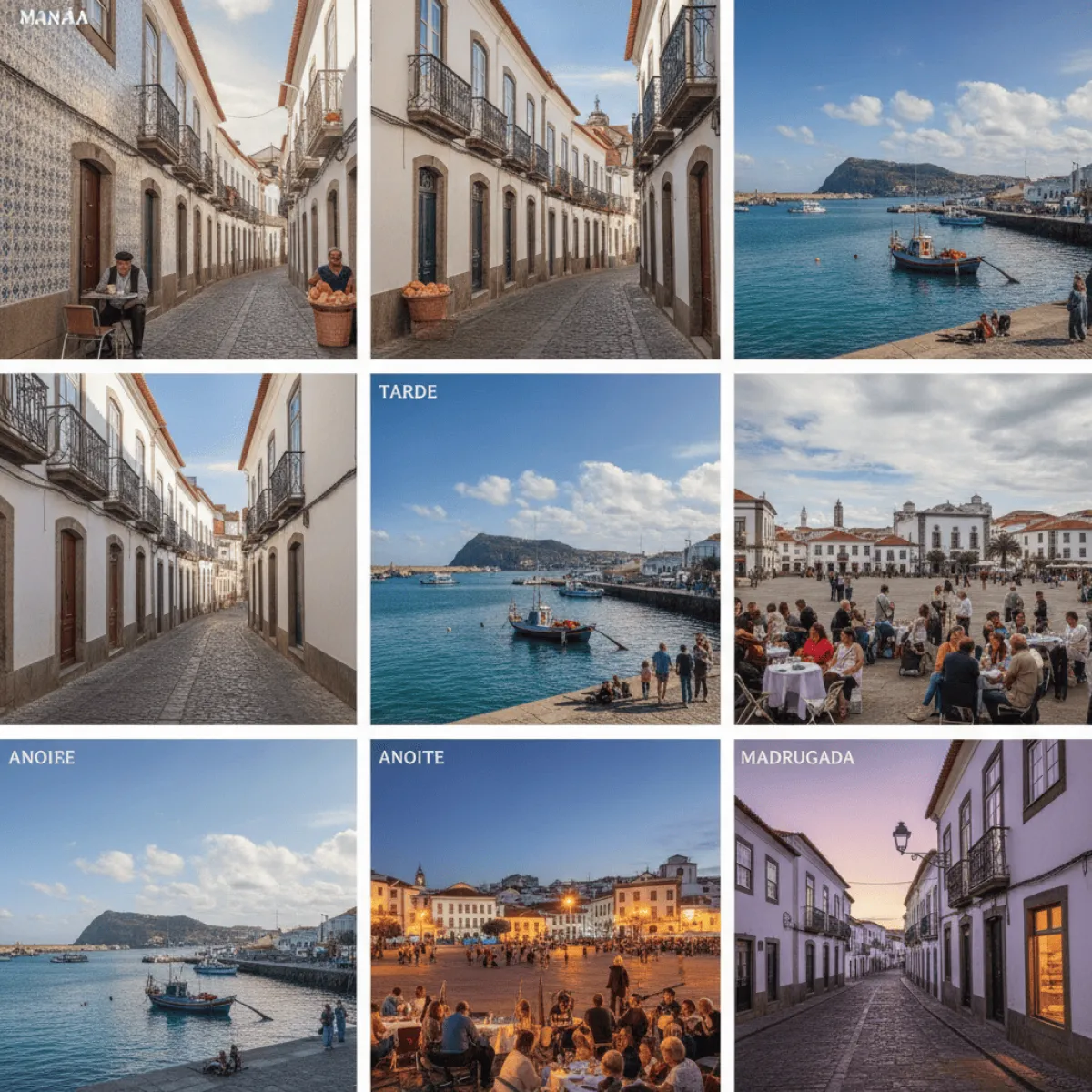
Angra do Heroísmo doesn't need to sell itself. It's been a UNESCO World Heritage Site since 1983, it was capital of the entire Azores archipelago for centuries, and yet the town you can walk end to end in twenty minutes carries all that history without any pretence. The colourful facades and dark stone cornices aren't there for postcards: they're there because after the earthquake of January 1, 1980, which destroyed nearly 80% of the town's buildings, locals rebuilt it stone by stone, following the original plans. Walking through Angra means walking through a place that was once on its knees and got back up without much fuss. This is a route for someone with one full day who wants to use it well, not sprint through a checklist.
Before 8am: the town still stretching
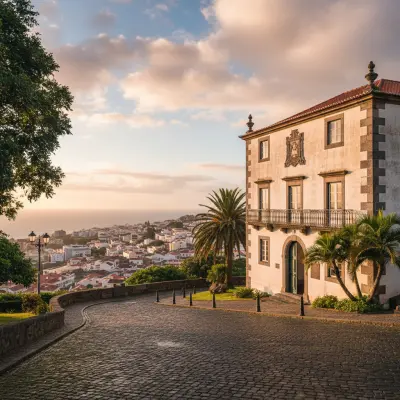
Start early, before the light turns harsh. Climb to Alto da Memória, on Monte Brasil, the extinct volcano that forms the peninsula west of the bay. The obelisk at the top commemorates the passage of King Pedro IV through Angra during the Portuguese Civil War, but the real reason to go up is the view: the whole town, the harbour, the marina and both bays laid out below, and at this hour you'll likely have the spot to yourself. If you want to walk more, the full loop around Monte Brasil, past the Fortaleza de São João Baptista, takes about an hour, but save that for late afternoon when the sun isn't beating straight down on you.
Morning: warm bread, stone and gunpowder
Head down into the historic centre for breakfast at O Forno, which does exactly what the name promises: bread and corn bread straight out of the oven, still warm, no ceremony attached. This isn't the place for an elaborate brunch, it's the place to eat like a local before a full day on your feet.
With that sorted, walk into the Museu de Angra do Heroísmo, housed in the former Convento de São Francisco. It's one of the religious buildings that survived, with repairs, the 1980 earthquake, and the museum's collection of sacred art, ethnography and maritime history explains why Angra was an obligatory port of call for fleets returning from the Indies and Brazil between the 15th and 19th centuries. Give it at least an hour, more if gilded woodwork and tilework hold your attention.
A short walk away, the Núcleo de História Militar Manuel Coelho Baptista de Lima tells the other half of Angra's story: that of a fortified town, targeted by pirates and rival powers from the 16th century on, with uniforms, weaponry and the memory of the garrisons that defended this strategic mid-Atlantic port for centuries. It's a small, unpretentious museum, but if you want to understand why an Azorean town has fortifications on this scale, it's worth the detour.
Midday: a town rebuilt stone by stone
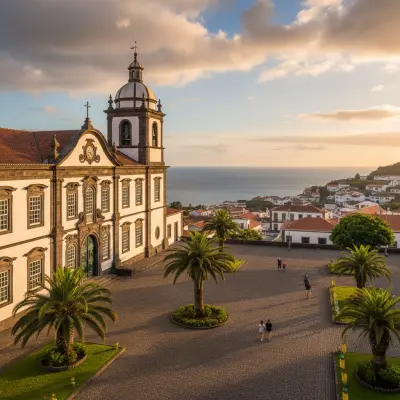
Leave the museums behind and let yourself wander the classified zone without a fixed route. The Sé Cathedral of Santíssimo Salvador, built at the end of the 16th century over an earlier Gothic church, is the largest church in the entire archipelago and still doubles as a landmark from the sea. The Palácio dos Capitães-Generais, a former Jesuit college turned seat of political power after 1766, takes up an entire block and is still used for official ceremonies today. Walk up Rua de São João or Rua da Sé and look closely at the facades: the contrast between dark basalt stonework and white plaster isn't a design flourish, it's classic Azorean architecture, built to survive earthquakes.
For lunch, look for alcatra, the dish that has defined Terceira since the mid-15th century. It's beef slow-cooked in a clay pot made on the island, layered with pork belly, onion, bay leaf, allspice and white wine, left untouched while it cooks until the meat falls apart on its own. It's traditionally festive food, served at Holy Ghost feasts to hundreds of people at long tables, but you'll find it on menus around Angra year-round. If you want to go deeper than a dish on a menu, it's worth booking ahead for the hands-on traditional alcatra cooking class, where you make the dish with your own hands instead of just eating it. It makes more sense to plan that for the following day, since a slow cook like this shouldn't be rushed.
Afternoon: contemporary art, then the volcano again
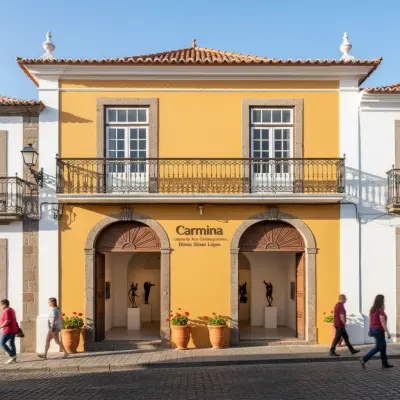
After a heavy lunch, a counterpoint: Carmina, Galeria de Arte Contemporânea Dimas Simas Lopes, proves Angra doesn't live on classified heritage alone. It's a small space, without the grandeur of the morning's museums, dedicated to Azorean and contemporary art, and it's worth the visit precisely because it's a shift in scale and time: after centuries of history, half an hour of art made now.
This is the hour, with the sun lower in the sky, when Monte Brasil pays off the climb. The trail that circles the peninsula offers alternating views over Angra's two bays, and the Fortaleza de São João Baptista, built over 400 years ago and still an active military installation, gives a different sense of scale to the town you looked down on that morning. It's not a technical walk, but wear proper shoes and bring water, because there's little shade anywhere on it.
Late afternoon and night: marina, fish and an unhurried drink
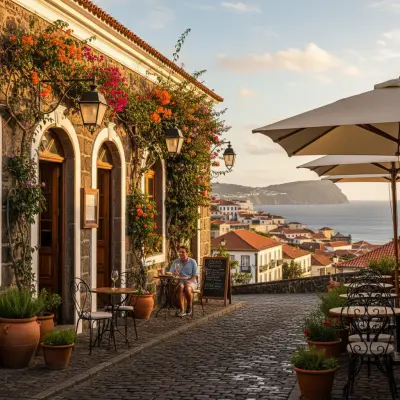
By the end of the day, head down to the marina. This is where Angra slows right down: sailboats that have crossed the Atlantic, waterside terraces, and the light changing over Monte Brasil as the day winds up. Have fish or seafood for dinner, and if you spot lapas (limpets) or cracas (goose barnacles) on the menu, try them, they're typical of the Terceira coast and rarely disappoint. There's no need to chase a specific address: the marina area and the streets around it have several places with outdoor seating and unhurried service, and dinner for two with fish and house wine tends to run at reasonable prices by Azorean standards, though always confirm locally before you sit down.
If your visit falls in June, know that you're close to the Sanjoaninas, the biggest popular festival in the Azores, ten days of marching bands, concerts, philharmonic groups and tourada à corda, the local practice in which a bull is led through the streets on a long rope held by handlers, watched by crowds from balconies and walls. It's not for everyone, but it's Terceira in its rawest form, and if it overlaps with your trip, it's worth witnessing at least once.
If you stay another day
Twenty-four hours in Angra covers the essentials, but Terceira asks for more time than that. If you have an extra morning, the birdwatching expedition to Cabo da Praia with ComunicAir is one of the best nature outings on the island, tracking seabirds and migratory species that stop over at this edge of the Atlantic. It's an early start, so don't try to pair it with the Monte Brasil walk on the same day.
And if your Azorean itinerary continues to other islands, it's worth comparing Angra's pace to the other archipelago capitals. Our guide to 24 hours in Horta, cosmopolitan soul in the heart of the Atlantic, covers a town built by passing sailors, with a very different energy from Angra's; the same guide has a section dedicated to the finest rooftops and panoramic views in Horta, for anyone who likes to end the day with a view. If São Miguel is also on the plan, the gastronomic trek through Ponta Delgada follows the same logic as this piece: eating well is the most honest way to get to know an Azorean island.
Angra do Heroísmo isn't a town of grand gestures. It's dark stone and white lime, small museums with big stories, an extinct volcano that doubles as a viewpoint, and a bowl of alcatra that takes hours to make because, here, the good things don't get rushed.