Where Locals Actually Eat in Santiago do Cacém
Santiago do Cacém is too far from the beach for the 22-euro octopus menus and too close to the sea to live on black pork alone. Here is where the locals lunch on a Tuesday, what to order, and how to dodge the roadside traps.
Santiago do Cacém has a gastronomic identity problem, and that is excellent news for anyone who likes to eat. It sits too far from the beach to be held hostage by the 22-euro octopus menus that plague Vila Nova de Milfontes every summer, and too close to the sea to settle for inland black-pork alone. The result is a borderland kitchen: the Alentejo of clay and holm oak meets the Atlantic half an hour up the road. Read the terrain and you eat very well for very little. Follow the first terrace with cheerful sun umbrellas and you pay a lot for food you will forget by the time you reach the car.
Let me be blunt: this is not a guide to restaurants with stars. It is a map of where the people of the town sit down for a Tuesday lunch, what they order, and how to dodge the mistakes that weekend visitors from Lisbon make religiously. If you are climbing the hill to Miróbriga or up to the castle, bring an appetite. You will need it.
Start with your stomach, not the monument
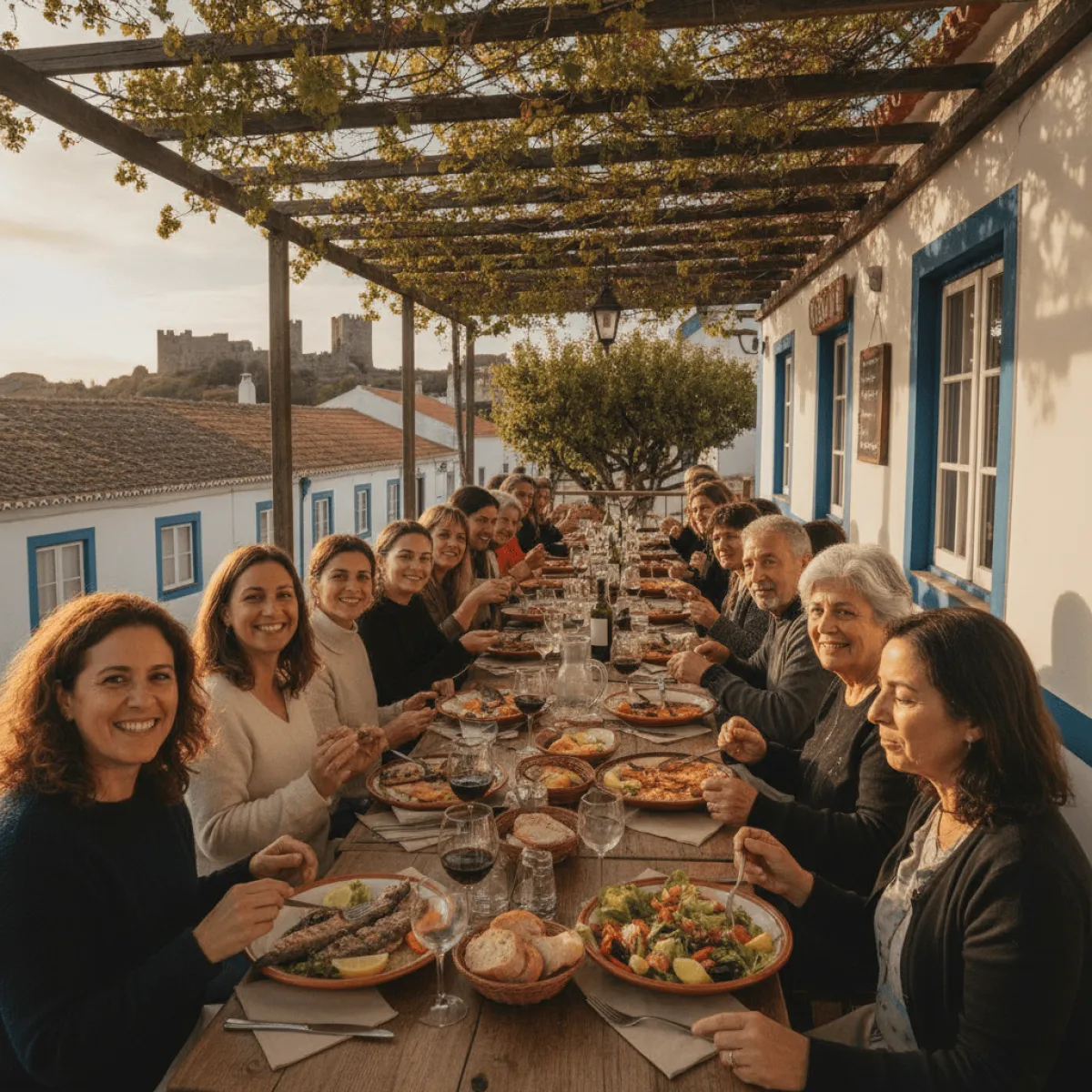
The visitor's instinct is to knock out the culture first and eat later. In Santiago do Cacém, do the opposite. The town runs on serious lunch hours: by around half past twelve the places worth your time fill up with men in work overalls, council staff and retirees who know the cook by name. By half past one there is no table. By three the kitchen has closed and whatever was left went to the dog.
The golden rule on the Alentejo coast: if the dish of the day is handwritten on a board and changes daily, sit down. If there are laminated photographs of the dishes on the menu, stand up and walk out. This town is small enough that bad food does not survive long, but big enough that a few passing-trade traps cling on near the busy roads. Steer away from the entry roundabouts and head into the streets of the historic centre, where prices fall and quality rises.
What to order: the dishes that do not lie
Some things in Santiago do Cacém are made exactly as they should be, and others exist only for tourists. Learn the difference.
The soups that are meals
Açorda alentejana is the litmus test of any kitchen. Made with stale bread, boiling water, garlic crushed in a mortar, fresh coriander torn by hand and a poached egg on top, it costs pennies to produce and reveals everything about the person making it. If it arrives watery and coriander-free, the kitchen does not care. If it arrives dense, fragrant and shining with olive oil, you are in good hands. Order it as a starter to share between two and lunch has already paid for itself at under five euros a head.
Sopa de cação is the region's other great soup, and here the nearness of the sea matters. Dogfish (a small shark) is simmered in a base of garlic, coriander, vinegar and bread. It is sour, it is strong, it splits opinion, and it is unmistakably of the Alentejo coast. Drink a glass of cold white wine with it and you will understand why the fishermen of Sines eat it for breakfast after a night at sea.
The pork and everything else
Carne de porco à alentejana, pork with clams, is the unlikely marriage that defines the region: land meat and shellfish on the same plate. Done right, with the clams opening in the pan and cubed fried potatoes soaking up the sauce, it is one of the best things you will eat in Portugal. Done wrong, it is dry pork with bagged clams. Ask whether the clams are fresh; the answer, and the face of the person answering, tell you everything.
Migas, lamb ensopado and acorn-fed black pork appear on nearly every menu, and rightly so. Black pork raised in the holm-oak montado has a different fat, a different flavour; order the presa or the secretos grilled, simply with coarse salt, and do not ruin it with sauces. For the brave, pork with bread or asparagus migas is the winter lunch that justifies a nap afterwards.
The fish, when there is any
Half an hour from Sines and its fishing port, there are days when fresh fish is the better bet than meat. It is not guaranteed, which is exactly why the right question to the waiter is always: what came in fresh today? Grilled horse mackerel, fried cuttlefish (a Setúbal and Alentejo coast speciality that travels up this far), or a simple sea bass in salt. If you hear the word frozen, switch to the meat without a second thought.
The market and the fair: where the food begins
To understand what people eat, go to where they buy it. The municipal market early in the morning is the best free lesson in Alentejo cooking there is: slow-fermented wheat bread, fresh and cured cheeses, sausages from the pig slaughter, mountain honey, plums and figs when they are in season. Buy bread, cheese and a chouriço and you have a better picnic than half the roadside restaurants.
But if you want to see it at full scale, plan your visit around the Feira do Monte, Santiago do Cacém's traditional Alentejo fair. This is where food stops being a meal and becomes a ritual: open-air grills, pork on the spit, convent sweets, wine sold by the jug. It is loud, it is chaotic, it is genuine, and it is where you will see the region's food in its natural habitat, far from tables laid out for visitors.
Sweets: do not leave without one
The Alentejo is convent-sweet country, and Santiago do Cacém is no exception. The egg-yolk-and-sugar creations (sericaia with an Elvas plum, queijadas, trouxas) are heavy, sweet to the very edge and absolutely of the place. A slice of well-made sericaia, its surface cracked and quivering, served with a plum in syrup, is the perfect full stop to a Sunday lunch. Always ask for the homemade sweet; if the waiter hesitates, ask for a peeled orange instead and save the calories for a better occasion.
When to go, what it costs, how to plan the day
Lunch is the serious meal. Reckon on 12 to 18 euros a head in a good place, house wine included, and far less if you share plates, which is the Alentejo way to eat. Dinner is quieter and some family-run places do not even open in the evening, especially out of summer; check locally before you count on a table at nine at night.
My ideal day: arrive in the morning, climb up to Miróbriga for the guided visit to the Roman ruins, though late afternoon with the sunset is honestly the best moment for those old stones, and save the morning for the castle and the historic centre. Have a proper lunch around half past twelve. Take the nap that an Alentejo lunch demands by unwritten law. In the afternoon, the market or a walk, and keep dinner light, soup and cheese are plenty after that lunch.
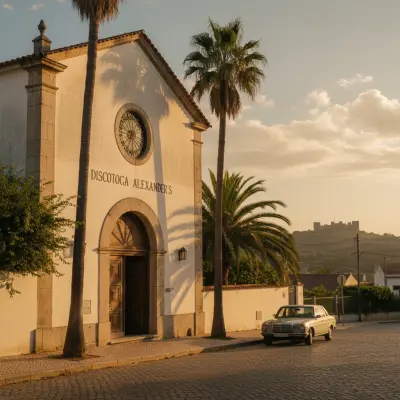
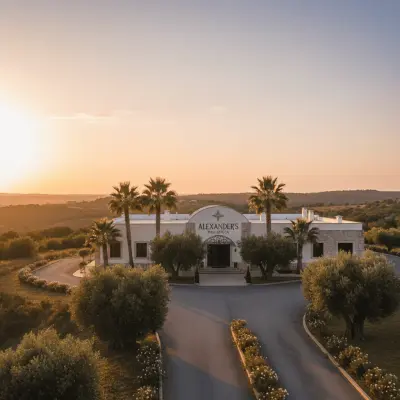
Anyone staying for the night gets a surprise: the nightlife is not just terraces and background fado. Discoteca Alexander's is where the local crowd goes when dinner is over and the night is not, proof that Santiago do Cacém does not turn in as early as it looks. It is not what you expect from an inland Alentejo town, which is exactly why it is worth the curiosity.
Where to stay to eat better
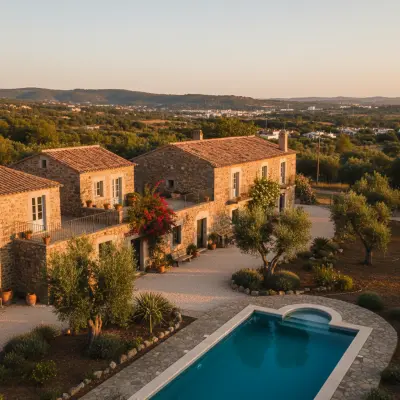
Sleeping in the right place improves the food, because it gives you time: time for the long lunch, the nap, the unhurried dinner with no road to drive. The Casas da Moagem rural retreat near Santiago do Cacém is the ideal base for living the Alentejo rhythm rather than rushing through it. Wake in the countryside, go to the market, come back with bread and cheese: that is how you eat well in this region, with no reservation anywhere.
The bigger lesson: the Alentejo is eaten slowly
If Santiago do Cacém teaches one thing, it is that hurry is the enemy of a good table. This is a kitchen of patience, of yesterday's bread put to use, of meat that simmered for hours, of olive oil that is never spared. Do not come looking for innovation or plating built for photographs. Come for the açorda that tastes of garlic and summer, for the black pork that tastes of acorns, for the sericaia that tastes of a grandmother's Sunday.
And if this appetite for the real Alentejo stays with you, take it deeper into the hills. We wrote a whole guide on where locals actually eat in Portalegre, up in the high Alentejo, another borderland kitchen, this time with the Spanish frontier right next door. For a full weekend in that town it is worth our itinerary without the tourist traps, and anyone who prefers to learn a town on foot will find the best routes in the guide to the Portalegre neighbourhoods worth the walk. But that is another story, for another hunger.
For now, stay in Santiago do Cacém. Sit at a paper-tablecloth table, order the handwritten dish of the day, and let the afternoon drift away. That is how you eat here. It always has been.