Santiago do Cacém Market Crawl: Buy, Taste, Skip
A market crawl in Santiago do Cacém is not about collecting products: it is understanding the Alentejo through your stomach. What to buy, what to taste standing up, what to skip, plus the castle, Miróbriga at sunset and the Feira do Monte.
There is a right time to work a market in Santiago do Cacém, and it is not ten in the morning, when the coaches unload visitors who came to see the castle and photograph the view toward the Serra de Grândola. The right time is earlier, when the Alentejo bread is still warm and the person selling cheese still has the patience to explain the difference between a three-month cured wheel and the plastic-wrapped thing you ate at home. It makes all the difference.
Santiago do Cacém is not a market town in the way Lisbon or Loulé are. It is a town of the coastal Alentejo, leaning against its castle hill, feet in the plain and eyes on the Sines coast you can sense to the west. Provisioning here is a serious and old business, tied to the land that produces and the people who still cook the way their grandmothers did. This is the guide to making that round without getting fleeced: what is worth the money, what you taste right there, and what you leave for the distracted tourists.
First rule: come early, come hungry
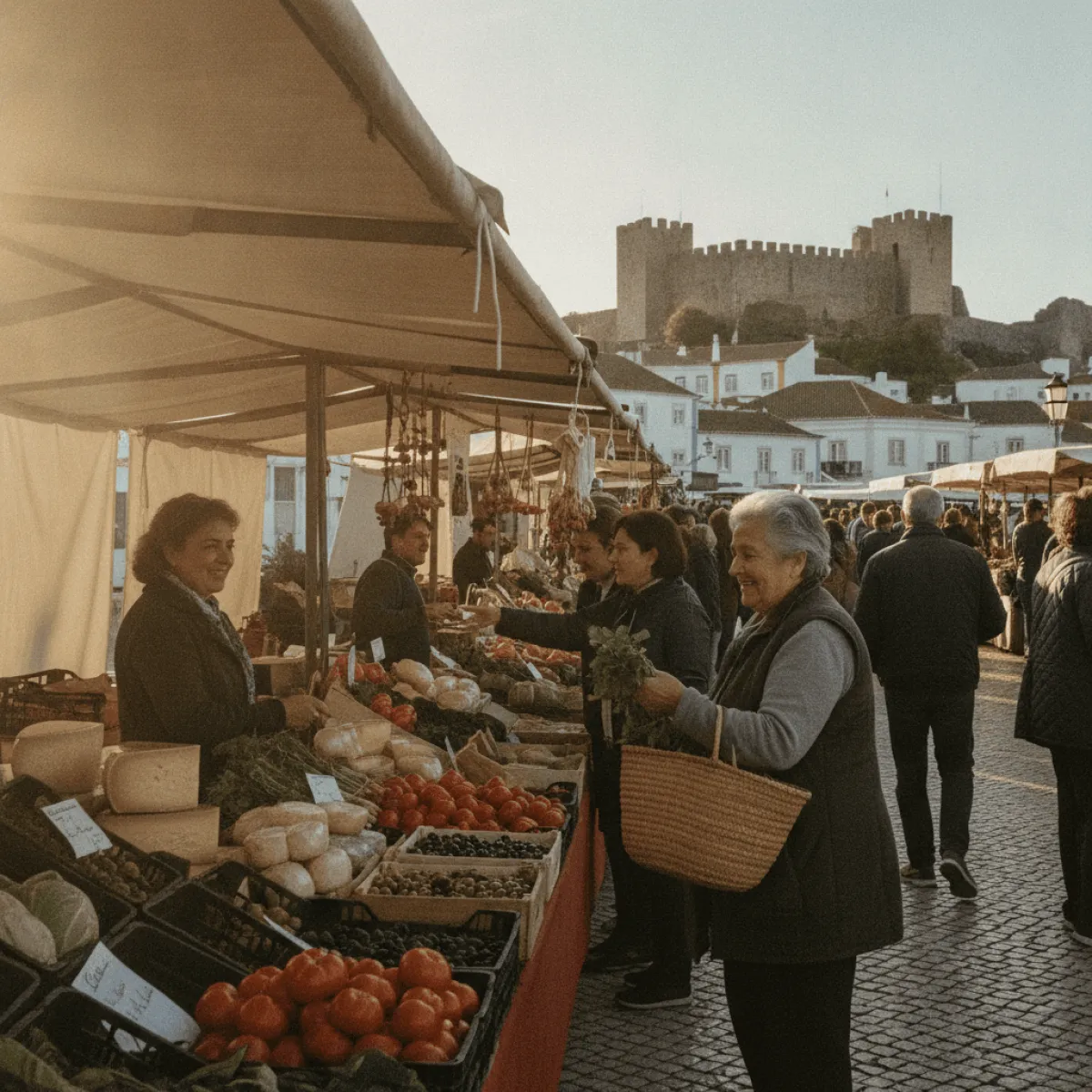
The Mercado Municipal of Santiago do Cacém runs in the mornings and comes alive above all on Saturdays, when producers from the surrounding farms bring down what the week's harvest gave them. Check the hours locally before you go, because a town's rhythm is not a city's and closing time can catch you out. What does not change is the logic: whoever arrives early gets the best, and whoever arrives at noon gets the leftovers.
Come hungry, but do not fill your stomach at the first counter. The art of a market crawl is the strategy. Do one full lap first, buying nothing, just reading prices and looking at the hands of the people selling. Hands with dirt under the nails are a good sign: that is someone who pulled it from the ground this morning. Then go back and buy for real.
What to buy: the Alentejo pantry worth the suitcase
Cheese, before anything
You are in sheep's cheese country, and this is no minor detail. The Alentejo makes buttery cheeses you eat with a spoon when properly ripe, and firmer, drier wheels that survive the drive home. Ask to taste. Anyone serious about their cheese lets you try without pulling a face. If they refuse, be suspicious and move on. A well-made cured sheep's cheese is the most Alentejan thing you can carry home, and it costs a fraction of the packaged version in Lisbon's gourmet shops.
Bread, and you take more than you think
Alentejo bread is dense, thick-crusted, made to last and to soak. Do not buy half a loaf: take a whole one. You will understand why when you reach the migas and the açorda, two dishes built precisely to use yesterday's bread. In any self-respecting Alentejo kitchen, a loaf is never wasted whole.
Cured meats, olive oil and honey
The region's cured meats, chouriço, paio, farinheira, are a sure presence at the stalls and in the town's charcuteries. Buy little and good rather than lots and dubious. Alentejo olive oil is another treasure that fits in a bag: look for what local producers sell and do not be shy about asking which mill it comes from. The local honey, especially the rosemary one, is the kind that justifies an extra jar to give away.
- Always buy: cured sheep's cheese, a whole Alentejo loaf, producer olive oil, rosemary honey.
- Buy if you trust the seller: cured meats, fresh herbs, seasonal vegetables.
- Skip: anything in pretty packaging you can also find at the supermarket. You did not come all this way for that.
What to taste right there
The best part of a market is what you eat standing up, no ceremony. Find the freshly baked bread and ask for a slice with a drizzle of olive oil on top. Simple, and better than half the starters you will pay a fortune for in the tourist restaurants down on the coast.
If it is the season, try the figs, the plums, whatever the season gives. Alentejo fruit grows in the sun and tastes of it. And if you find someone selling the region's convent sweets, the sericaia and the queijadas are worth every calorie. Sericaia, that cinnamon custard cracked across the top and traditionally served with an Elvas plum, is the dessert that defines the Alentejo better than any postcard.
What to skip without regret
Skip the trinkets. Every town with a bit of tourist traffic ends up with a stall of fridge magnets and plastic Barcelos roosters, and the Barcelos rooster is not even from the Alentejo. Skip the pre-packaged national-brand cheeses, skip the olive oil in a no-name plastic bottle, and skip anything that costs the same as it would in Lisbon. The whole point of shopping markets outside the big cities is to escape big-city prices and uniformity.
After the market: the town is waiting
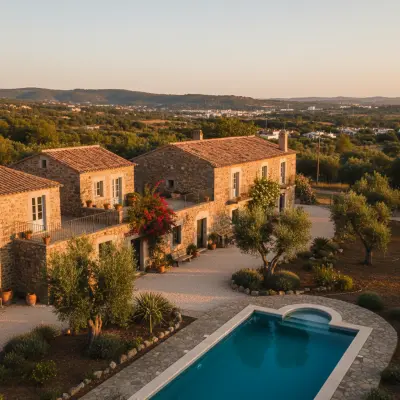
With your bag full, it is worth staying. Climb to the castle that crowns the hill and offers the best view of the town and the plain around it, and get lost in the narrow streets of the historic center. But if you want to turn a market morning into a proper stay, consider sleeping away from the noise, out in the country. Casas da Moagem, a rural guesthouse on the outskirts, is the kind of place where you wake to birdsong and cook with what you bought that morning. It is the most honest way to extend the experience.
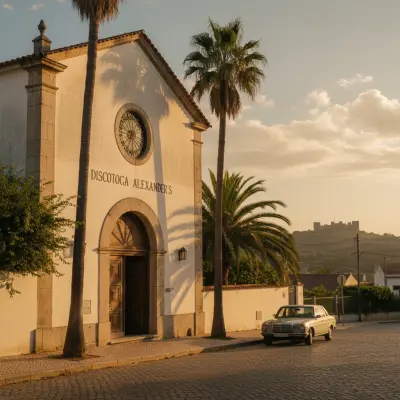
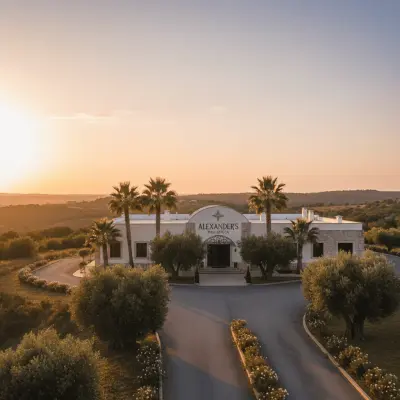
For those who stay into the night with energy to spare, the town still has somewhere to burn the last hours. Discoteca Alexander's is the option for anyone who does not want the night to end early, though the Alentejo is, by nature, a land of long dinners more than dance floors.
Miróbriga at the end of the day
Before or after the market, save the late afternoon for Miróbriga, the Roman ruins a few minutes from the center. The Alentejo light at dusk does things to old stone that are worth seeing slowly. The guided visit to Miróbriga at sunset is the best way to understand the site without the brutal midday heat and with a guide who can tell you what the stones no longer say on their own.
The big fair: if you can plan for it, plan
If your visit coincides with the end of summer, there is a level above the weekly market. The Feira do Monte, Santiago do Cacém's great Alentejo tradition, is the annual fair that fills the town with livestock, crafts, food, drink and music. It is the market raised to a festival, and it is when the whole town comes out. If you can fit your trip around those dates, do it: a market morning turns into days of celebration.
And when the Alentejo gets you
A warning: after a round like this, the Alentejo tends to stick. You will want to keep hunting markets, cheeses and sweets across the region. If that happens to you, and it will, it is worth looking inland. We have written about where the locals actually eat in Portalegre, about the Portalegre neighborhoods worth the walk, and about how to spend a real weekend in Portalegre without falling into the traps. They are different stops on the same journey: the Alentejo you eat slowly.
The summary, to keep in your head
- When to go: early morning, ideally Saturday. Confirm hours locally.
- What to buy: cured sheep's cheese, a whole Alentejo loaf, mill olive oil, rosemary honey, cured meats from someone you trust.
- What to taste: warm bread with olive oil, seasonal fruit, sericaia and queijadas if you find them.
- What to skip: trinkets, supermarket brands, anything at Lisbon prices.
- How to round it off: the castle, Miróbriga at dusk, and, if the dates line up, the Feira do Monte.
Working a market in Santiago do Cacém is not about collecting products. It is about understanding a place through your stomach, which is, in the end, the most sincere way to understand the Alentejo. Come early, taste everything, take the cheese. The rest sorts itself out.