Santiago do Cacém's Museums: What's Worth It
In Santiago do Cacém, the best museum has no roof. Miróbriga at sunset earns the trip; the rest is context. Here's what to see, what to skip, and where to eat while you're at it.
Let me be blunt, because that's what an honest guide is for: Santiago do Cacém is not Lisbon. It does not have ten museums and it does not need them. It has a handful of places where history is kept. Some are extraordinary, others are, let's be fair, a twenty-minute stop. The trick is knowing the difference, and not wasting a sunny Alentejo morning indoors when the best museum in town is, in fact, outdoors.
The one that matters: Miróbriga
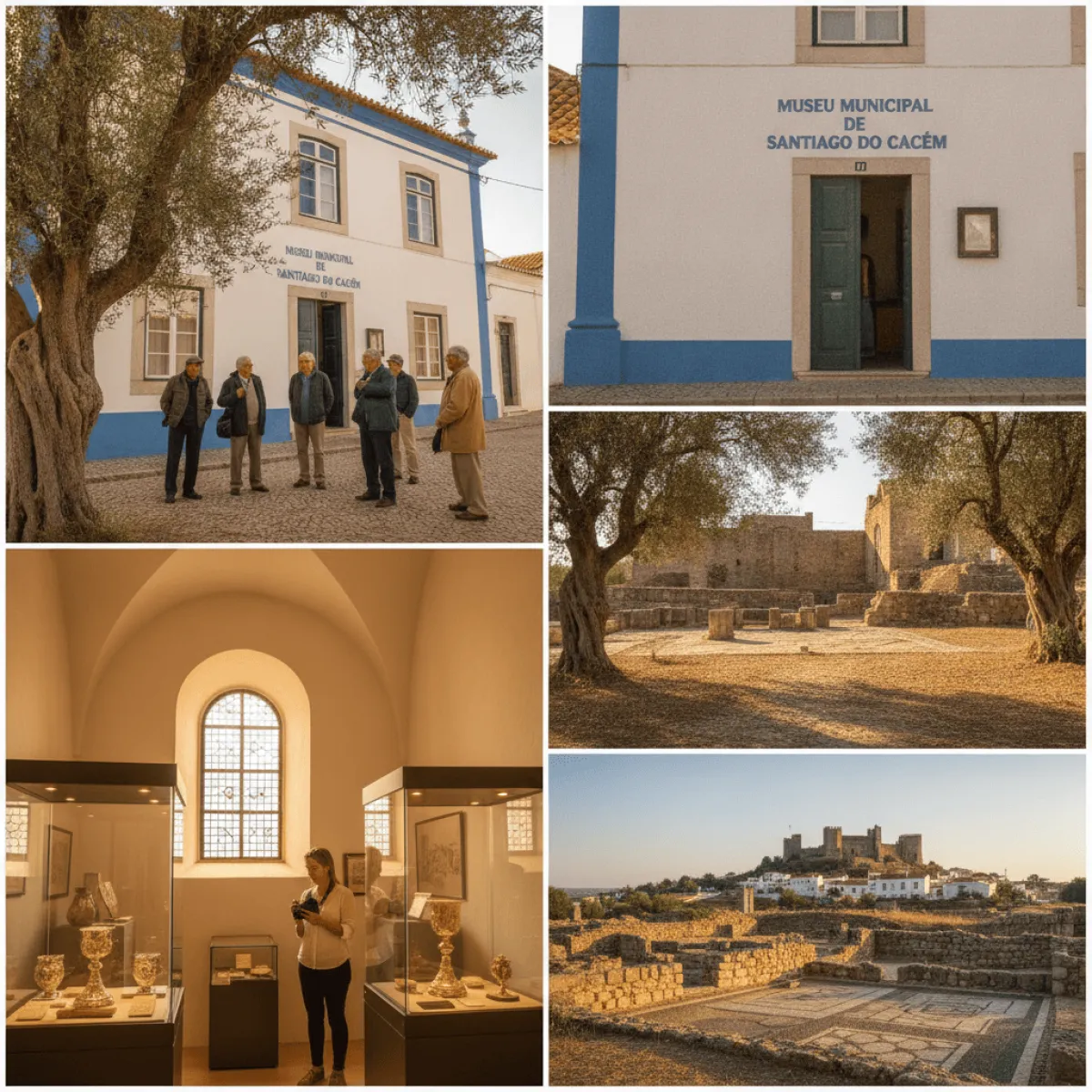
If you only have time for one thing, go to Miróbriga. Full stop. It's the most important Roman ruin on the Alentejo coast and, unlike many archaeological sites that ask for a generous dose of imagination, here you can actually understand what you're looking at. There's a forum, there are baths with the underfloor heating system still visible, and there's what might be the most underrated detail in the whole region: the remains of a Roman hippodrome, outside the walls, one of very few identified in Portugal. Sit on the slope, take it in, and the scale lands. This is not a scale model in a glass case. This is the real place.
The practical advice: go late in the day. The low light raking across the stones changes everything, and the heat has finally backed off. Some people organise the visit for exactly that hour, and it's worth considering the guided visit to Miróbriga at sunset, which gives meaning to what would otherwise be low walls and numbered rocks. On your own you'll walk the site in forty minutes; with someone who knows the story, you'll understand why the town existed and why it vanished. The ticket costs a few euros, but confirm the hours and price locally, because state-managed heritage sites shift their schedules with the season.
It sits about a kilometre and a half south of the centre. You can walk it if you like walking (around twenty-five minutes along a road that isn't especially scenic) or drive it in five. Bring water. There's no real shade on site, and the Alentejo does not forgive anyone who forgets that.
The Municipal Museum: better than its reputation
In the historic centre, housed in the old prison building, is the Municipal Museum of Santiago do Cacém. And here I have to defend something against the indifference it usually gets: the building is the best thing in the collection. It served as a jail until relatively late in the twentieth century, and there's a reconstructed cell that tells you more about life in this region than a dozen pottery displays. It's uncomfortable, it's raw, and that's exactly why it works. Kids are riveted, adults go quiet.
The rest of the collection is ethnographic and archaeological, with pieces from Miróbriga and objects from everyday Alentejo life. It's not a collection you'd cross the country for, let's be honest. But if you're already in town, it's a well-spent half hour and the entry is cheap. Pair it with the climb up to the castle, two minutes away, and you've sorted your morning.
The castle and the cemetery inside the walls
It's not a museum in the strict sense, but it's the spot most people photograph, and for good reason. The castle crowns the hill, was retaken by Christian forces in the twelfth century, and has a quirk that catches everyone off guard: inside the walls there's a cemetery still in use. It might sound macabre, but it's oddly serene, and the view from the top pays back the climb. On clear days you can see all the way to the Grândola hills on one side and the sea on the other.
Entry is free, it's open every day, and it's the best place in town for sunset if you're not at Miróbriga. The climb up Rua de Lisboa is steep but short. Wear decent shoes; the Alentejo cobblestones are beautiful and treacherous in equal measure.
What you can skip (and what to do instead)
Here's the part nobody tells you: not everything billed as a point of interest deserves your attention. If you're hunting for grand art museums or national collections, you won't find them in Santiago do Cacém, and that's fine. The town is a base, not a museum marathon. The hurried visitor's mistake is trying to cram the day with minor stops when the time would be far better spent on one thing, done properly.
So instead of collecting stamps at lesser sites, do this: give Miróbriga the late afternoon, the Municipal Museum and the castle the morning, and save the rest of the day for what makes the Alentejo the Alentejo, the table and the calendar. If your visit lands at the right time, the Feira do Monte is the region's true living museum: a traditional fair where you'll see more Alentejo culture in one afternoon than in a week of display cases. It takes place in September, beside the town park, and it's where locals actually go. Livestock, crafts, singing, and food that was never made for tourists.
How to plan the day (and where to sleep)
Santiago do Cacém can be seen well in twenty-four hours, but it earns two if you want to combine it with the coast, the Santo André lagoon a few kilometres away, or the beaches near Sines. My plan: arrive early afternoon, climb to the castle and museum before they close, eat early, and save Miróbriga for late the next afternoon, with the light on the right side.
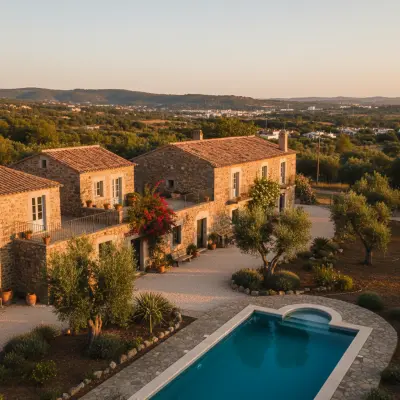
To sleep, if you want to escape the national road and the pass-through hotels, look at the rural tourism in the surrounding countryside. Casas da Moagem is exactly the kind of place that justifies waking up outside town: open country, silence, and the feeling of the real Alentejo instead of the usual anonymous room. Book ahead in summer, because the Alentejo coast fills up and the good places sell out.
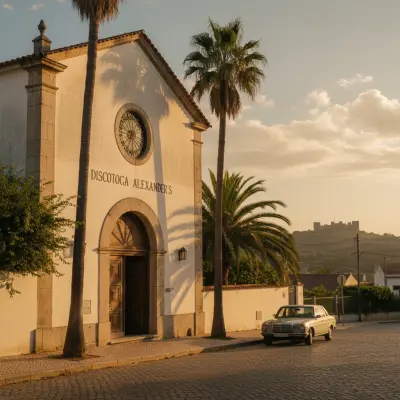
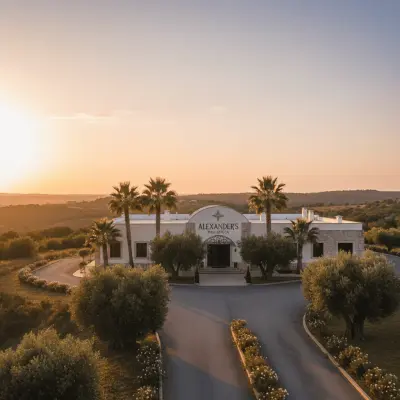
If your evening calls for something less contemplative than Roman ruins, Discoteca Alexander's is the name that comes up when you ask where to go out around here. It's not Lisbon nightlife, and it doesn't pretend to be. It is what it is: a place to end the night once the archaeological curiosity has run dry.
What to eat while you're here
You don't visit museums on an empty stomach, and the Alentejo is, above all, a region of the table. Here the rule is black pork, the soups (açorda, cold gaspacho in summer), and the slow-cooked ensopados. Look for game dishes in season and don't leave without a conventual sweet, which the region makes with an almost religious seriousness. Avoid the tourist-menu places with photos of the dishes by the door. The rule is simple and as old as the world: eat where the workers eat at lunch.
If this appetite for the real Alentejo stays with you, and the Portalegre area is on your map, here are three reads that follow the same philosophy I'm applying here. Portalegre without the tourist traps is the starting point for a weekend free of plastic tourism; Portalegre on foot shows the city as it really is, slope by slope; and Portalegre's real food answers the single most important question of any trip inland: where do the locals actually eat.
The verdict
Santiago do Cacém will not impress you with the quantity of its museums. It will impress you with the quality of one. Miróbriga is the reason to stop in this town, and everything else, the museum in the old jail, the castle with its cemetery, the September fair, is the context that makes the stop complete rather than rushed. Spend your time where it pays off: outdoors, late in the day, on stones two thousand years old. The best museums in this corner of the Alentejo have no roof.