Visit
€
Tapada Nacional de Mafra
Mafra
Eight hectares of baroque garden right beside the Palace of Mafra, free to enter and largely ignored by visitors. The century-old waterwheel still runs, peacocks roam the aviary, and the Horta dos Frades replicates the friars' apothecary with 39 species of aromatic plants.
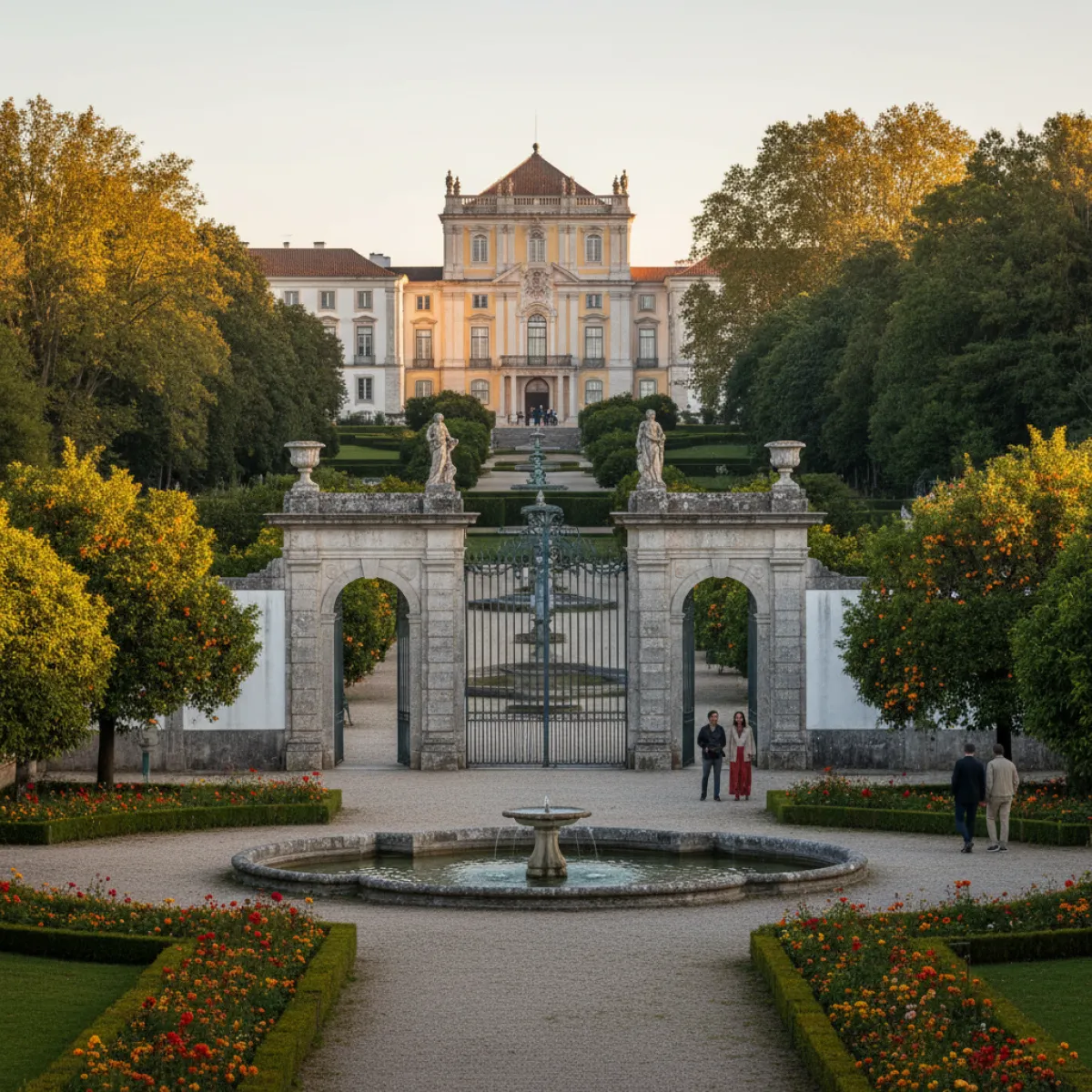
Everyone who visits Mafra goes inside the Palace, gawks at the basilica, walks through the famous bat-patrolled library, and leaves. Very few turn left towards the Jardim do Cerco. That is, frankly, a mistake. This is one of the best public gardens in the Lisbon region, it covers eight hectares, admission is free, and on most weekdays it's practically empty.
King João V commissioned the garden in 1718, while the convent was still under construction. The original plan was modest: a walled convent enclosure with a vegetable patch, an orchard, and water tanks. But João V, not exactly a man known for restraint, ordered a forest planted with trees brought from across the kingdom, in an ambition loosely inspired by Versailles. The result, three centuries later, is a vast and surprisingly well-maintained space that forms part of the UNESCO World Heritage ensemble classified in 2019.
Walking in, the wide aligned pathways give you the scale of the project. There are ornamental ponds with koi fish, an aviary where peacocks strut and call, a century-old waterwheel (nora) that still functions, and the Horta dos Frades, which is my favourite detail. Here, across 36 organised beds, roughly 39 species of aromatic and medicinal plants grow: thyme, peppermint, lavender, lemon balm, marjoram, coriander, fennel, chives, rue, pennyroyal. It replicates what the friars used in the convent's pharmacy, and it clicks into place when you learn that the monastic apothecary here was one of the most important in the country.
The playground is large, safe, and well-equipped. This is not a sad slide next to a broken bench. There is plenty of room to run, and the picnic area lets you set up lunch without hassle. Bring your own food, or if you want something more substantial after your visit, Prédio Ericeira is a solid option nearby.
The garden is open daily: 9am to 7pm from April 1 to October 14, and 9am to 5pm the rest of the year. Entry is free. The address is Largo General Humberto Delgado, 2640-602 Mafra, right beside the National Palace. Driving from Lisbon takes roughly 40 minutes on the A8. There is free parking in the surrounding area, though it can fill up on weekends. By public transport, Mafrense buses run from Lisbon (Campo Grande) to Mafra, stopping a few minutes' walk away.
The best time to visit is early morning, particularly in spring, when the aromatics are at their peak and the low-angle light catches the water mirrors properly. If you're in Mafra around March, check our guide to Mafra in the shoulder season to plan other stops. And if you want to pair the garden with wilder nature, the Tapada Nacional de Mafra is just a few kilometres away and a completely different experience.
Mafra is almost always reduced to the Palace. And the Palace deserves your time, no question. But the Jardim do Cerco is the kind of place where you understand how a religious community actually lived in the 18th century: the pharmacy garden, the vegetable beds, the water tanks, the planted forest. When the Republic was proclaimed in 1910, the garden became state property and opened to the public. In 1994, the municipal government took over management and invested in serious restoration. The result is a public garden that works, that's clean, that's beautiful, and that costs nothing. In Portugal, that's not something you can take for granted. Make the most of it.