Visit
€
Jardim do Cerco
Mafra
The Palácio Nacional de Mafra spans 38,000 square metres, houses six pipe organs designed to play simultaneously, and keeps a library where bats protect 36,000 volumes from insects. João V built Portugal's most excessive building, and that's precisely why it's worth your time.
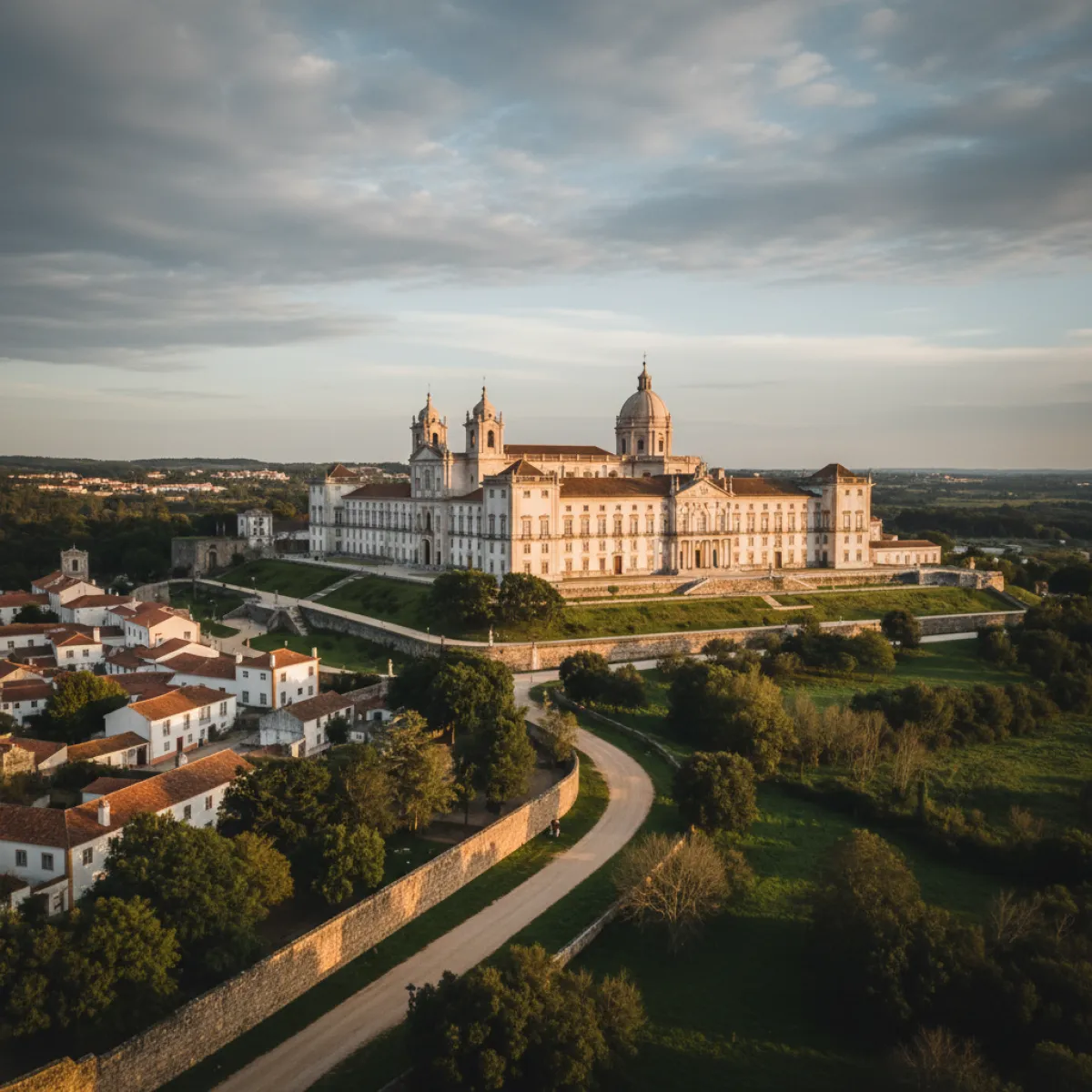
King João V had too much gold and not enough restraint. The proof sits in Mafra, at Terreiro D. João V, 2640-492: a palace-convent spanning roughly 38,000 square metres that took 13 years to build, employed tens of thousands of workers, and today leaves visitors stunned not just by its scale but by the sheer stubbornness it represents. The Palácio Nacional de Mafra has been a UNESCO World Heritage Site since 2019, and rightly so. There is nothing quite like it on the Iberian Peninsula. There may be nothing like it in Europe.
Forget what you picture when you think of a Portuguese palace. Mafra is not Queluz, not Sintra, not a place of rococo frivolity. This is heavy baroque, designed to impress ambassadors and humiliate rivals. The main façade stretches over 200 metres. When you walk in, the feeling is not charm. It is being overwhelmed.
You can tour the royal apartments, you can walk through the basilica, you can admire corridors that seem endless. But the Library is where everything shifts. Housing around 36,000 volumes, it is one of the most important historical libraries in Europe. Marble floors, wooden shelves climbing to the vaulted ceiling, light entering from the side in golden shafts. I don't need to embellish this: the room speaks for itself. There are first editions, incunabula, treatises on science and religion spanning centuries of knowledge. The bats that live in the library are, in fact, part of the conservation system: they eat the insects that would otherwise destroy the books. It sounds like fiction. It's documented fact.
The basilica at Mafra contains six pipe organs, built in the late 18th century, designed to be played simultaneously. Six. It is the only case of its kind in the world. When concerts feature all six playing together, the sound fills the basilica in a way that puts any modern speaker system to shame. If you can time your visit with one of these concerts, do it. Check directly with the official website or call +351 261 817 550 for dates.
Mafra is about 40 minutes from Lisbon via the A8 motorway. By public transport, Mafrense buses run regularly from Campo Grande. The palace sits in the centre of town, impossible to miss: it is literally the most visible thing for kilometres around.
Admission is in the €€ range, with discounts for students and seniors. Check current hours and exact prices on the website or by phone, as they change seasonally. Allow at least two hours for the visit, three if you like reading every information panel. Wear comfortable shoes: there is a lot of marble to cover, and it gets slippery.
There's no formal dress code, but remember that part of the complex is a religious space. Covered shoulders are good practice in the basilica.
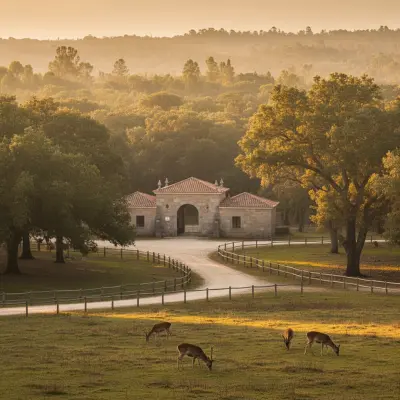
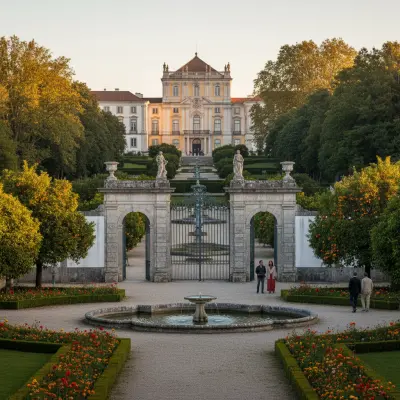
A visit to Mafra doesn't end at the palace doors. Just behind the building, the Jardim do Cerco is a generous green space with formal garden design, perfect for decompressing after hours of stone and marble. A few kilometres away, the Tapada Nacional de Mafra was the royal hunting reserve and is now a park where you can walk among deer and wild boar. For those wanting to explore that wilder side properly, our guide to Wild Mafra: Wolves, Deer and the Royal Tapada on Foot is essential reading.
For lunch, Prédio Ericeira is a solid option in the area. Mafra and its surroundings have a strong tradition of convent-inspired pastries worth seeking out, particularly if you visit around Easter.
Mafra is not for everyone. If you want the intimate charm of a Manueline church or the lightness of a romantic garden, this will feel excessive. And it is excessive. That's the point. João V wanted to build Portugal's Escorial and ended up building something bigger, more expensive, and more unreasonable. But it is precisely that disproportion that makes Mafra fascinating. It is not a beautiful place in the conventional sense. It is an impressive place, and the distinction matters.
Go in the morning, before the tour groups arrive. Start with the basilica, move up to the royal apartments, and save the library for last. It's the right crescendo.