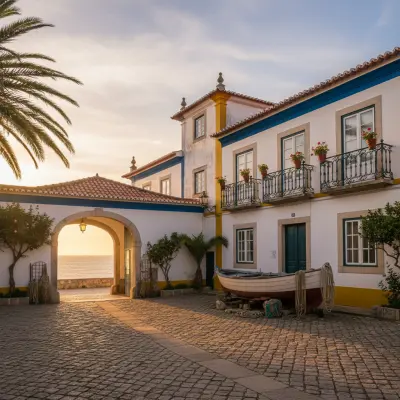
Wild Mafra: Wolves, Deer and the Royal Tapada on Foot
Tapada Nacional de Mafra packs 819 hectares of forest, 300 fallow deer, wild boar, and red deer roaming free inside 18th-century walls. Add the Iberian Wolf Recovery Center in nearby Gradil and you have one of the best nature days within half an hour of Lisbon.
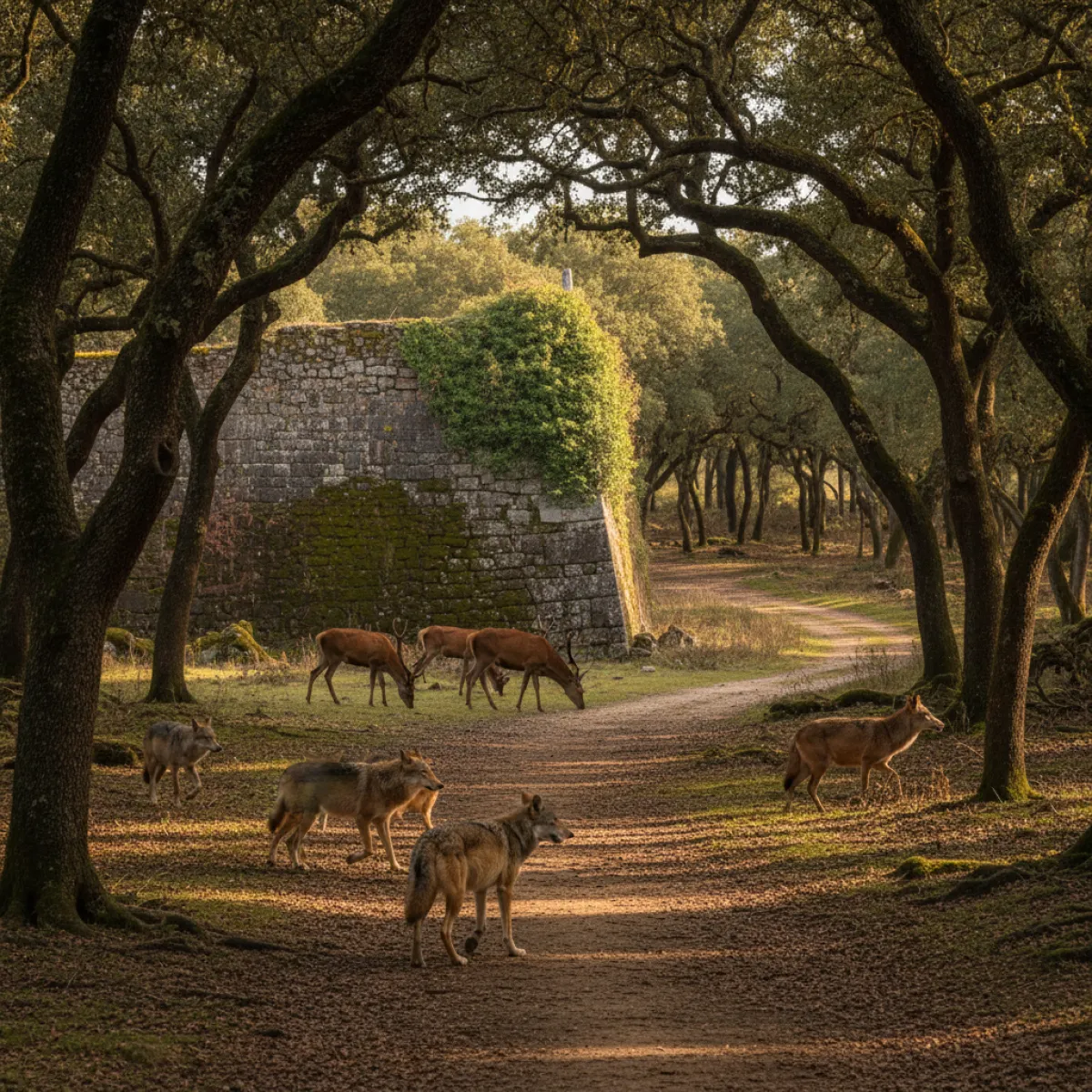
Most people associate Mafra with the palace. That absurdly grand convent built by King João V, the library immortalized in Saramago's novels, the facade that just keeps going. All fair. But the hunting king didn't just build in stone: he had 819 hectares of forest enclosed by a 21-kilometer wall so he could chase fallow deer and wild boar at leisure. Three hundred years later, that enclosure is the Tapada Nacional de Mafra, and the animals are still there. Only now it's us who come to see them, on foot, quietly, half an hour from Lisbon.
What the Tapada actually is
It's not a zoo. It's not a wildlife theme park. It's a walled forest reserve where around 300 fallow deer, 50 red deer, 200 wild boar, badgers, foxes, and over 160 species live freely inside the original 18th-century walls. The scale is hard to grasp until you're inside: over 800 hectares of oaks, cork trees, pines, and dense scrubland, cut by streams and clearings where, with luck and patience, you'll spot a fallow deer drinking at seven in the morning.
Since February 2026, the Tapada reopened with a new model: all visits now require a guide. This might sound like a limitation, but in practice it's an advantage. The guides know the trails, they know where animals tend to be at each time of day, and they explain the ecology with a depth that no information panel can match.
The hiking trails: the best of the Tapada
There are several ways to visit the Tapada. You can take an electric car with an audioguide (€10.50 per adult), which is comfortable but impersonal. My recommendation: go on foot. The hiking trail costs €5 per person, with a minimum of three participants, and it's the most honest way to experience the place.
Easy trails follow the banks of the Safarujo stream, are accessible for families with children, and offer good opportunities to observe typical fauna and flora without much effort. For those wanting something more demanding, there are moderate-difficulty routes that exceed two hours. These aren't suitable for strollers or anyone unused to uneven terrain.
The trick is to go early. The Tapada opens at 9am, and the first hours of the morning are when fallow deer move through clearings and wild boar still roam near the streams. By midday, in the heat, almost everything retreats into the scrub. If you can, choose a weekday: fewer people, less noise, better chances of spotting animals up close.
What to bring
- Trail shoes, even for the easy routes. The ground is uneven and muddy after rain.
- Binoculars, if you have them. Fallow deer are shy and keep their distance.
- Water and a light snack. There's no cafe or restaurant inside the Tapada.
- Neutral-colored clothing. It sounds excessive, but it makes a difference when approaching wildlife.
The Iberian Wolf Recovery Center
In the same municipality of Mafra, in the village of Gradil, you'll find the Centro de Recuperação do Lobo Ibérico, established in 1987 by the Grupo Lobo conservation group. It's not inside the Tapada, but it pairs perfectly as a same-day visit. Here, around 13 Iberian wolves live out their lives after being rescued from illegal captivity, hit by cars, or otherwise injured beyond the point of return to the wild.
Visiting the Center is a different experience from the Tapada. More contained, more educational, more emotional. You won't see wolves running free, but you may hear them howl in the late afternoon, and you'll begin to understand how this species, once present across all of Portugal, was pushed to the most remote corners of the north. Visits are organized and should be booked in advance. Check schedules and availability directly with Grupo Lobo.
Before or after: what to do around Mafra
The Tapada asks for a full morning. The Wolf Center, another hour or two. That leaves the afternoon, and Mafra has more to offer than first meets the eye.
If you visit at the right time of year, it's worth exploring the local pastry traditions. The Easter sweets trail in Mafra is a good starting point for understanding how convent-style baking and family recipes still mark the town's gastronomic calendar.
For dinner, drive 15 minutes down to Ericeira. Predio Ericeira is a solid pick: cooking centered on local produce, relaxed atmosphere, and a wine list that favors Portuguese producers. After a day walking through the forest, sitting down to fresh fish with no rush feels especially right.
And if a day in nature has whetted your appetite for something deeper, consider staying longer in the area. The Detox Retreat at Quintinha do Mar is a disconnection experience that pairs well with the spirit of the Tapada: less noise, more attention to what surrounds you.
Getting there
Tapada Nacional de Mafra is at Portão do Codeçal, 2640-602 Mafra. By car from Lisbon, it's about 40 minutes via the A8 motorway. There's parking at the entrance.
By public transport, things get tricky. Mafrense operates buses from Campo Grande in Lisbon to Mafra town, but the stop is in the center, not at the Tapada. You'll need a taxi or a 20-minute walk to the entrance. Being honest: for this kind of day trip, a car is almost essential.
When to go
The Tapada is open year-round, from 9am to 6pm, but each season has its own character. In spring, fallow deer have fawns and the forest is at its greenest. In autumn, it's the red deer rutting season: the stags bellow at dawn and dusk, a deep, primal sound that carries for hundreds of meters. Winter is quieter, but the low January light filtering through bare oaks is worth the visit on its own. Summer is the worst time: excessive heat, animals in hiding, trails dry and dusty.
If you're a runner or serious hiker, note that the Trail da Tapada Real de Mafra takes place annually, with 12km and 20km courses inside the reserve. Check dates on the official website.
The bigger picture: Mafra in the region
Mafra sits within the Lisbon-Sintra-Ericeira axis, which is probably the most diverse stretch of experiences in the entire Lisbon region. Within a 30-kilometer radius, you have surf beaches, romantic palaces, sea and land cuisine, and now this slice of raw nature that the Tapada represents.
If you're planning a longer stay in the area, combine the Tapada with a visit to Sintra. The Sintra neighborhood guide helps navigate the town beyond the obvious tourist spots. And for those wanting to understand the region from a broader perspective, the guide to local culture in Lisbon provides context for what makes this part of Portugal so distinctive.
The bottom line
Tapada Nacional de Mafra is the kind of place that should be on the list of anyone living in Lisbon who has never been. 819 hectares of centuries-old forest, wildlife roaming free, trails for every level, and the rare feeling of being somewhere that has existed for three centuries without being turned into a theme park. Add the Iberian Wolf Recovery Center, a good dinner in Ericeira, and you have one of the best days you can have in the Lisbon region without hitting motorway traffic. Almost.