Easter Sweets in Mafra: A Tradition Worth Tasting
At Easter, the municipality of Mafra becomes an artisan pastry operation. From overnight-leavened folares to sugar-coated almonds presented with bureaucratic solemnity, this guide takes you from Ericeira's bakeries to the confectioneries of central Mafra.
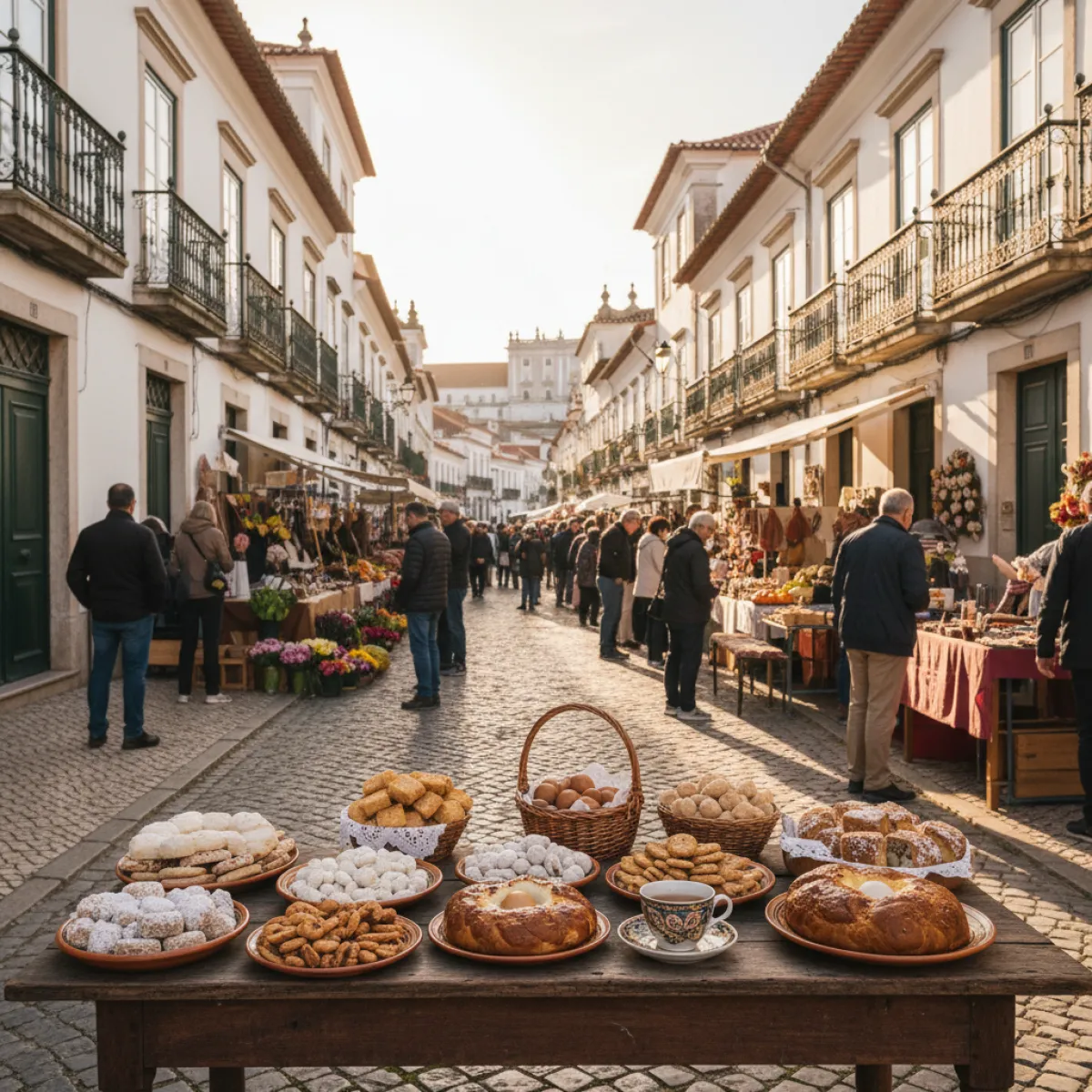
There is one specific week of the year when the municipality of Mafra smells like cinnamon, caramelized sugar, and puff pastry fresh from the oven. Easter here is not just Mass and processions, it is a full-scale pastry operation that mobilizes bakeries, confectioneries, and home kitchens with an intensity that only locals truly understand. And while Lisbon's supermarkets sell their cellophane-wrapped industrial folares, in Mafra and its surroundings, things are still done properly: with leavened dough, whole boiled eggs, and that egg-wash glaze that shines like lacquer.
The Folar: Where It All Begins
Let's get to the point. The folar de Páscoa is the gravitational center of this whole story. In the Mafra region, and across much of the Estremadura, the folar is sweet, unlike the savory, cured-meat-stuffed version that dominates in Trás-os-Montes. Here, it is an enriched dough made with eggs, butter, lemon zest, and cinnamon, with whole boiled eggs nestled into the surface and decorated with strips of dough in a cross pattern. It is not a sophisticated cake. It is better than that: it is honest.
The secret to a good folar is slow fermentation. Bakeries that still use natural leaven let the dough rise for hours, sometimes overnight, and the result is unmistakable: lighter texture, deeper flavor, and that crackly golden crust that no internet recipe using instant yeast can replicate. If you find an artisan bakery in the Mafra area, and several still exist, particularly in Ericeira and Santo Isidoro, buy the folar on the day itself, early in the morning, when it is still warm.
The Other Sweets Nobody Talks About
The folar gets all the attention, but Easter sweets in Mafra have more players. Dry pão-de-ló, not to be confused with the wet pão-de-ló of Ovar or Alfeizerão, is a tradition here. The local version is firmer, almost crumbly on the outside, and moist in the center. You eat it in thin slices, sometimes lightly toasted, with a strong coffee alongside. It is not glamorous, but it works.
Then there are the sugar-coated almonds, which in Mafra are given with the seriousness of someone handing over an official document. They are whole almonds coated in colored sugar, white, pink, blue, and they appear on every self-respecting Easter table. You can buy them at traditional confectioneries or the older grocery shops in central Mafra. They are nothing extraordinary in gastronomic terms, let's be honest, but they are part of the ritual and that is what matters.
The region's queijadas also deserve a mention. They are not exclusively an Easter item, but production ramps up at this time of year and they appear decorated or packaged as gifts. The Sintra queijada is the most famous in the area, and if you want to explore that town thoroughly, our Sintra neighborhood guide gives you the full map, but Mafra has local versions that are equally good, made with fresh curd cheese and cinnamon.
Where to Eat (and What to Skip)
Mafra is not a city with a cutting-edge food scene, and that is an advantage. You eat well here precisely because there is no pressure to impress tourists with deconstructed plates. At Easter, local restaurants typically offer special menus featuring roast kid, the main dish of the season, along with traditional desserts.
If you are in Ericeira, Prédio Ericeira is a solid base for a full meal. Ericeira has been changing considerably in recent years with the arrival of surfers and digital nomads, but the restaurants with local roots remain the places where the food is best. After your meal, walk through the village bakeries and confectioneries, that is where you will find the artisan folares and almond sweets worth buying.
An important note: avoid buying folares at large supermarkets. This is not snobbery, the quality difference is enormous. An industrial folar is basically a generic sweet bread with an egg glued on top. An artisan bakery folar has flavor, texture, and that grandmother's-kitchen aroma that no factory can replicate. The price difference is minimal, we are talking about 5 to 8 euros for a family-sized folar from a local bakery.
The Convent and Easter: Context That Matters
You cannot discuss traditions in Mafra without mentioning the National Palace of Mafra. Not because the palace sells sweets, it does not, but because the entire conventual pastry tradition of the region is linked to the Arrábida friars and the canons regular who occupied the convent for centuries. Many Portuguese conventual sweet recipes were born in these monastic settings, where eggs were abundant (egg whites were used to starch habits and clarify wine, leaving surplus yolks) and sugar arrived from Brazil.
The egg-based sweets found in the region, trouxas de ovos, ovos-moles, toucinho do céu, all share this conventual origin. In Mafra, the tradition is not as prominent as in Aveiro or Évora, but it is there, quietly present in family recipe books and in the small confectioneries that make these things to order at Easter.
A Practical Route: Three Days of Sweets
If you want to do this properly, here is a suggested itinerary.
Day 1: Mafra Town
Start in central Mafra. Visit the Palace in the morning, the library is one of the most extraordinary spaces in Portugal, no exaggeration, and then explore the local bakeries. Look for artisan folar and pão-de-ló. Have lunch at one of the traditional restaurants in the center. In the afternoon, if the weather cooperates, the Jardim do Cerco (the palace gardens) is perfect for digestion.
Day 2: Ericeira
Ericeira deserves a full day. In the morning, walk through the old village and stop at the bakeries, this is where you will find the best folares in the area. Have lunch at Prédio Ericeira or at one of the fish restaurants near the port. In the afternoon, head down to Praia dos Pescadores or Praia do Sul. Bring sugar-coated almonds to snack on at the beach, it is the perfect combination.
Day 3: Regional Excursions
The municipality of Mafra is strategically positioned. Sintra is less than 30 minutes away, Cascais about 40. If you want to extend the itinerary, you can do a day trip, our guide on day trips from Cascais has solid suggestions. And to understand the broader cultural context of the region, it is worth reading about Lisbon's traditions and local culture, which naturally extend across the entire north bank of the Tagus.
When to Go and How to Get There
Easter is, obviously, the ideal time, but the artisan bakeries of Mafra and Ericeira make folares and traditional sweets throughout Lent, which begins about 40 days before Easter. If you want to avoid the Holy Week crowds, go in the weeks before, the selection is virtually the same and you will have more time to chat with the bakers.
By car, Mafra is about 35 minutes from Lisbon via the A8 motorway. By public transport, Mafrense operates regular buses from Campo Grande. Ericeira also has a direct bus connection from Lisbon. Parking in Mafra town is relatively easy outside peak days.
What to Bring Home
An artisan bakery folar keeps well for two to three days if stored in a cotton cloth (never plastic, it gets damp and the crust goes soft). Sugar-coated almonds last for weeks. If you find egg-based sweets, trouxas or ovos-moles, eat them the same day or the next, as they contain no preservatives. Dry pão-de-ló, on the other hand, can last up to a week without problems.
The best souvenir, however, cannot be wrapped. It is that moment when you walk into a bakery at nine in the morning, the folar has just come out of the oven, the baker cuts you a slice still warm, and the taste is exactly what your memory expected. Or, if you have never tried one, exactly what you did not know was missing.