Where to Stay in Santiago do Cacém by Style
Under the castle, out in the country, or by the Lagoa de Santo André: in Santiago do Cacém, where you sleep decides the weekend you get. An honest guide to picking the right base for your style.
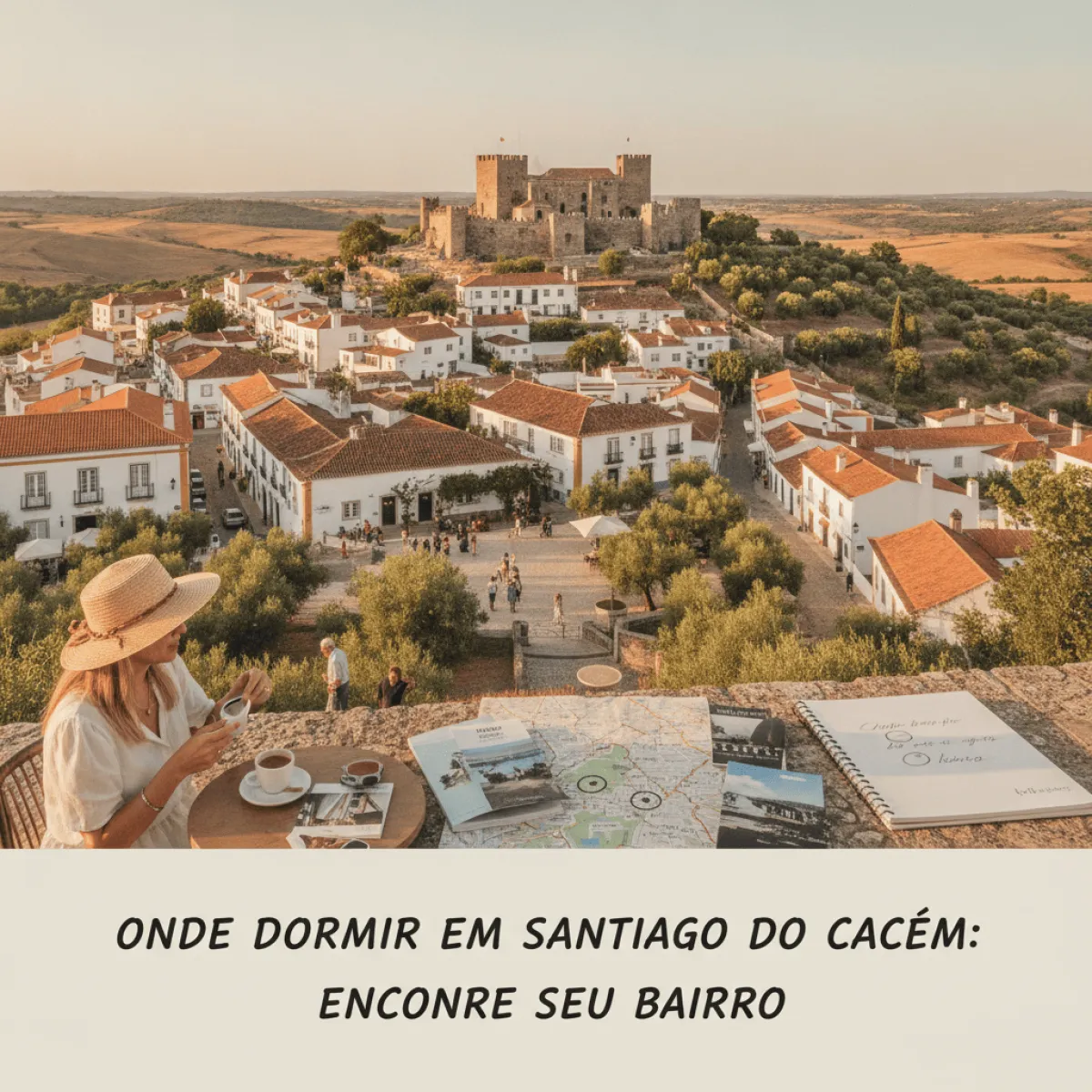
Santiago do Cacém is not a city you conquer with a tidy map of neighborhoods. It is a place where the choice of where to sleep, more than almost anywhere else on the Alentejo coast, decides what kind of weekend you are going to have. Sleeping below the castle is one thing. Sleeping out in the countryside, with cicadas for a soundtrack, is something else entirely. And bedding down ten minutes from the Lagoa de Santo André, with the beach waiting, is a third option. There is no historic core with five boutique hotels elbowing each other for attention. There is a small town clinging to a hill, and a wide territory around it that asks you to choose well.
Let me be blunt: most people drive through Santiago do Cacém on their way to Porto Covo or the Costa Vicentina and never sleep here. That is a mistake. The medieval castle on top of the hill, the Roman ruins of Miróbriga just outside town, and the easy reach of the Alentejo beaches make this a far smarter base than the overcrowded coastal villages in summer. The question is not whether you should stay. It is where.
The historic center: for waking up under the castle
The heart of Santiago do Cacém climbs the hill up to a castle of Moorish origin, rebuilt by the Order of Santiago in the 12th century. This is the most characterful part of town: narrow cobbled streets, whitewashed houses trimmed with the classic Alentejo yellow and blue, and a view from the ramparts that, on a clear day, runs across the plain all the way to the sea. The cemetery sitting inside the castle walls is one of the most talked-about curiosities here. You rarely get to sleep this close to a view like this.
This is the obvious choice if you are traveling without a car or simply prefer to do everything on foot. You are minutes from the municipal market, from the pastelarias where you take your morning coffee next to retirees arguing about football, and from the parish church. At night the center is quiet, almost asleep, which delights some and disappoints others. If you want to be out until the small hours, this is not the spot, and I will come back to that.
For those who mix culture by day with calm by night
Stay in the center and one of the region's best experiences is right at your door. The ruins of Miróbriga, just a couple of kilometers away, are a Roman town with baths, a forum, and one of the few identified hippodromes in Portugal. I strongly recommend the guided visit to Miróbriga at sunset: the low light raking across the stones is worth the trip on its own, and having a guide explain what each room once was turns a heap of rubble into a place you actually understand. Check the timetable locally, as it shifts with the season.
The countryside: rural stays for people who came to switch off
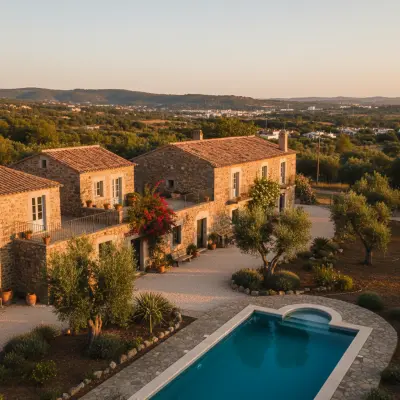
If your idea of a holiday involves hearing no traffic, waking up to roosters, and eating breakfast at a stone table under an olive tree, forget the town and head for the country. The Alentejo does rural tourism like nowhere else, and this is where Santiago do Cacém shines for anyone chasing quiet.
My clear recommendation for this profile is Casas da Moagem, a rural guesthouse that revives the logic of a traditional farming estate. It is the kind of place you arrive at tense from the city and leave three days later on a different rhythm. For couples who want privacy, families who need space, or simply anyone tired of hotel corridors, it is a safe bet. The trade-off, and it matters, is that you will need a car for everything: to reach town, the beach, Miróbriga. Without one, the Alentejo countryside is gorgeous and genuinely isolated.
The pace of the country
Staying in the country changes how you experience the region. Days organize themselves around meals and drives, so plan ahead: a morning at the beach, a long lunch, an afternoon exploring a village, and the drive back to the estate at dusk. It is the exact opposite of checklist tourism. If you come in September, try to line up your stay with the Feira do Monte, the great Alentejo tradition of Santiago do Cacém, an annual fair with centuries-old roots where livestock, crafts, food and music come together in one of the most authentic events on the local calendar.
Near the coast: a base for the Lagoa de Santo André and the beaches
There is a third Santiago do Cacém, the one facing the sea. The parish of Santo André, to the west, holds the Lagoa de Santo André, one of the largest coastal lagoons in the country, separated from the Atlantic by a ribbon of dunes. It is a nature reserve, a haven for birds, and the beach stretching beyond the dunes is vast and far less mobbed than the beaches further south.
Staying here makes sense if you came mainly for the beach and the nature but want to dodge the prices and crush of Porto Covo at the height of summer. The trade-off is that you are further from the historic center and from Miróbriga, and the accommodation tends to be more functional than charming. This is a practical choice, not a romantic one. For families with kids and for anyone who likes to walk or watch birds, it pays off.
And if you want a night out?
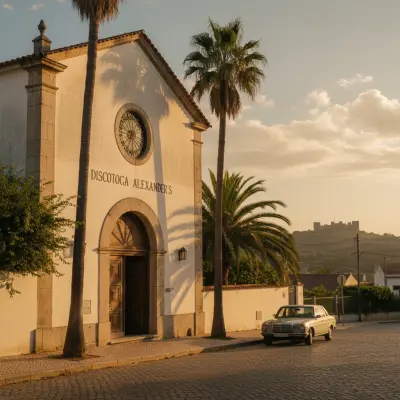
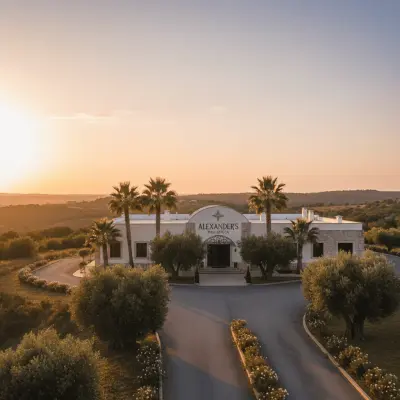
Let us be honest: nobody comes to Santiago do Cacém for the nightlife. That does not mean there is none. Discoteca Alexander's is a local institution, the kind of place that comes up in conversation with anyone who grew up around here and still fills up at weekends. Do not expect big-city clubs, but if the plan is to dance late without having to drive an hour, this is the reference point. There is more than one space tied to the name, so check which room is actually open before you head out, as the schedule varies.
The practical advice: if going out is a priority, stay in or near the center. Driving back from the countryside in the middle of the night, along unlit Alentejo roads, is a bad idea after a few drinks. Match your bed to the kind of night you want.
How to get there and when to come
Santiago do Cacém sits about an hour and a half from Lisbon by car, via the A2 and then the A26, or along the national road if you prefer scenery to speed. Public transport is possible, with Rede Expressos coaches, but once you are here you are limited without a car, especially if you stay in the country or on the coast. This is a region where a car is not a luxury, it is a tool.
As for timing: summer is hot, dry and packed on the beaches. May, June, September and early October are, in my view, the sweet spot, long days, bearable heat, and less competition for a lunch table. September has the added pull of the Feira do Monte. Winter is calm and cheap, but plenty of outdoor experiences depend on the weather.
A place for every traveler
To sum it up without the waffle: if you want culture, cobblestones and everything on foot, stay in the historic center under the castle. If you want to switch off, sleep in silence and have a car, go to the country, to a proper rural guesthouse. If you came for the beach and the lagoon, settle nearer the coast and accept that you are further from everything else. And if a night out is part of the plan, keep it simple: sleep where you can walk home.
Santiago do Cacém rewards travelers who choose with intent. And if the Alentejo gets into your blood, as it tends to, it is worth planning further forays into the region. The interior has cities that deserve the same care in choosing where to stay, and Portalegre is a good example: take a look at our weekend guide to Portalegre without the tourist traps, the itinerary of Portalegre neighborhoods worth the walk, and our tips on where the locals actually eat in Portalegre. The Alentejo is best taken this way, one town at a time, in no hurry at all.