Vila do Porto at Dawn: Shearwaters and the São Brás Fort
Wake at 5:30 to hear Cory's Shearwaters at Miradouro da Macela, eat a warm queijada on the seawall, and reach Forte de São Brás before the cargo ships arrive. A one-night, two-coffee playbook for the oldest town in the Azores.
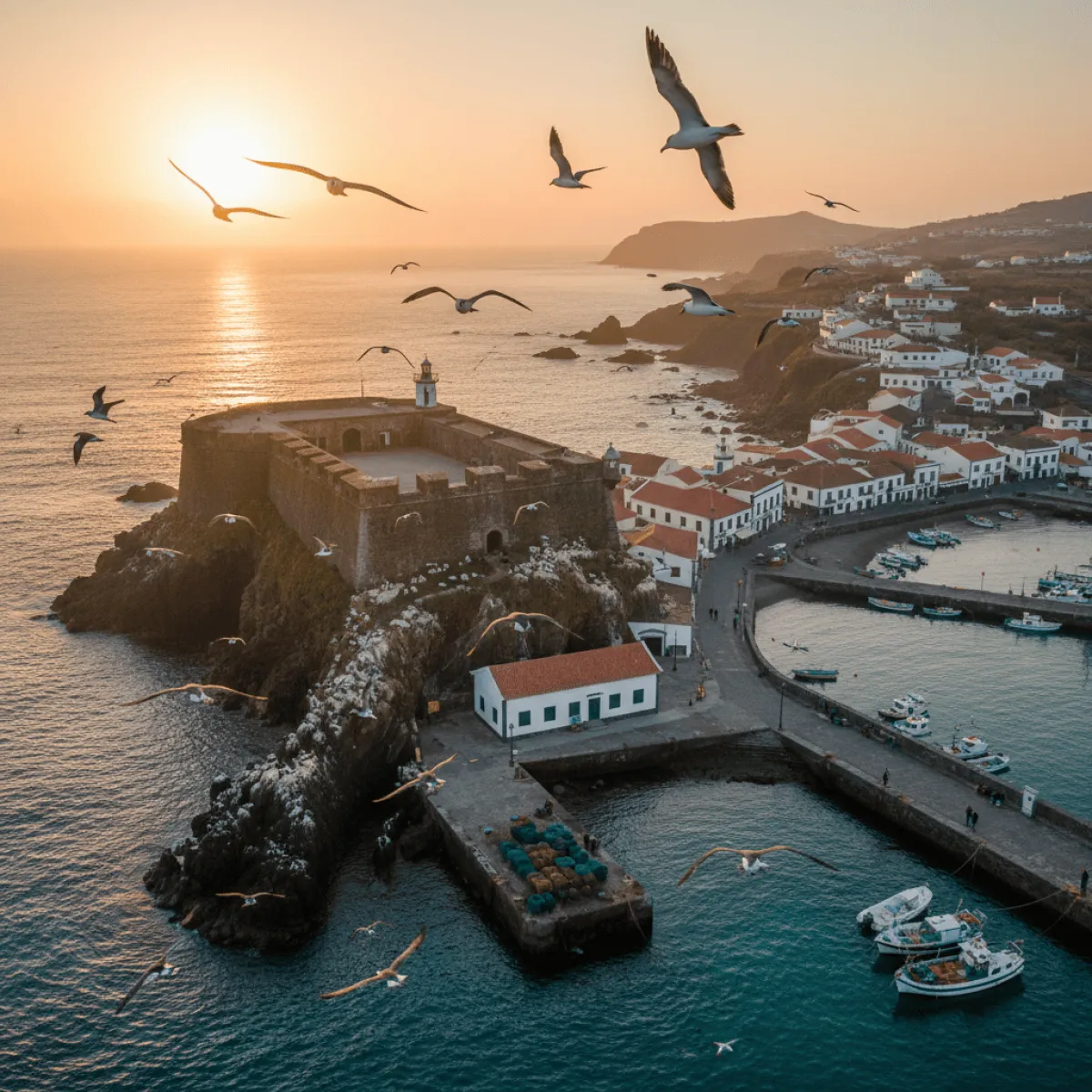
At 5:30 in the morning, Vila do Porto is still deciding whether it is worth waking up. The seagulls are asleep, the baker on Rua Dr. Teófilo Braga has just opened the shutter, and a light the colour of weak tea is rising over São Lourenço. This is the hour, and only this hour, when you understand why this town, the oldest settlement in the Azores, still has the face of someone who arrived first and stayed staring at the sea with patience. The other tourists are in Ponta Delgada arguing about whether to do the crater lake or the hot springs. You are here, with a coffee in your pocket and the shearwaters calling from the cliffs.
This article is a direct request: spend at least one night in Santa Maria, and use it well. Do not fly in on the morning SATA flight and back out by lunchtime thinking you have seen the yellow island. Vila do Porto rewards those who stay through the second coffee, and who know that the best walk of the day is not at one in the afternoon. It is before sunrise, and again at dusk, when the fort changes colour.
Why the shearwaters, and why in the dark
The cagarro, or Cory's Shearwater (Calonectris borealis), is the seabird that defines the sound of the Azorean night between May and October. It lays eggs in burrows in the cliffs, fishes far offshore by day, and almost always returns after dark. The cry, and it is genuinely a cry, sounds like an unhappy baby crossed with two cats negotiating. The first time it scares you. The second time it is the sound that makes Santa Maria unlike any other island.
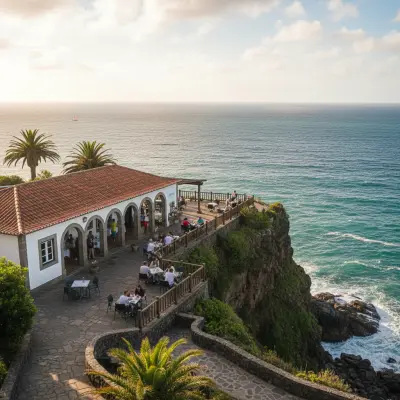
In Vila do Porto, the best listening posts run along the seawall between the harbour and the Cabrestante area, but the place where it really works is a little further west at the Miradouro da Macela. Arrive 30 to 40 minutes before sunrise, bring a headlamp with a red filter (white light scares the birds away), an extra layer, and the patience of someone who is not going to stare at their phone. Shearwaters do not pose. Either you pay attention, or you miss it.
Practical note: guided night observations run from June to October and are usually cheap (10 to 20 euros per person), led by Parque Natural guides. If you prefer to go alone, the silence is better. Do not light fires, do not smoke near the colonies, and for the love of everything sacred on this island, do not touch eggs or fallen chicks. There is an SOS Cagarro hotline during October, when young birds get disoriented by town lights and crash-land: you find a stunned bird, put it in a shoebox with holes, and drop it off at the local collection point. It is one of the best good deeds you can do on a trip.
Sunrise on the seawall
After the listening, stay. Walk back into the centre slowly, take as long as you need, because the light at 6:30 in Vila do Porto is something even Instagram cannot ruin. The white seawall with its yellow stripe, the low houses, the white chimneys clustered together, the black basalt outlining doors and windows. Vila do Porto has the most peaceful tone of whitewash in the Azores, without the baroque show of Angra or the rush of Ponta Delgada.
For coffee at seven, the bakery on Rua Teófilo Braga opens early. The pastel de massa tenra (yes, it is a local thing, savoury, filled with beef) costs little more than a euro. Ask if there are queijadas da Vila still warm, and take two. One for now, one for the fort.
The walk to Forte de São Brás
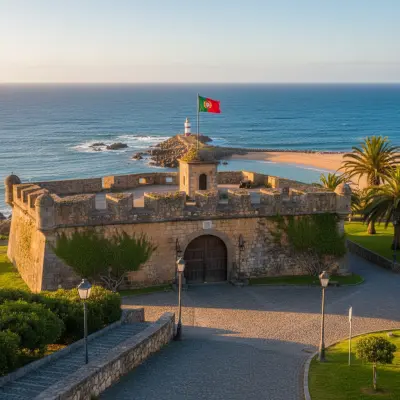
From the centre of town to the Forte de São Brás is about ten minutes on foot. It is not an epic hike. It is a walk with a point. Leave from Rua Dr. Luís Bettencourt, head downhill toward the sea, and as the houses thin out the fort appears on your right, planted on a basalt promontory that looks made for it.
The fort was commissioned in the 16th century, after a corsair raid sacked Vila do Porto in 1576 (for those who like dates). The current version is 18th century, with star bastions, thick walls of black stone, and a view over the bay that is probably the best on the island. Today it has civic uses and occasionally opens for visits. Check locally for opening hours before climbing up: it may be closed to the public on weekdays.
Even closed, the fort is worth the walk. There is a small square out front with a roughly cut stone bench that fits one decent person, and from there you see the commercial port, the seawall, the curve of the bay, and, with luck, a cargo ship arriving from Lisbon. Eat the second queijada here. There is no better place for it.
The detail nobody sees
Look at the ground. The basalt slabs at the fort entrance carry the marks of old gun emplacements, and there is a section of wall where you can clearly see a later reinforcement, lighter coloured, layered over the darker original stone. It is the sort of detail that is on no information panel, and that only appears if you stand still for five minutes. Most visitors take the photograph, turn around, and leave. You will not.
Where to eat (without falling into the tourist menu)
Vila do Porto is not Lisbon. There are not thirty restaurants fighting for a star. There are half a dozen good places, a few decent ones, and the rest close early. Learn to eat early: lunch between 12:30 and 2, dinner between 7 and 9. If you turn up at 9:30 you will often find the kitchen already winding down.
- For a Sunday lunch: order sopa de nabos (a Santa Maria speciality, even when the turnips are in season elsewhere) and a grilled chicharro. Fresh chicharro on Santa Maria is serious business, smaller and more flavourful than what you find on the mainland.
- To try once: alcatra à moda da terra, beef slow-cooked in a clay pot with wine and onions. Not on every menu, but worth asking for.
- For afternoon coffee: queijadas da Vila and bolo D. Amélia. Bolo D. Amélia is technically from Faial, but it has spread across all the Azores and Santa Maria does it well.
- To avoid: any menu with little flags drawn next to dishes and translations in four languages. You are not in Lisbon, and that is the whole point.
Local wine deserves attention. Santa Maria does not produce at Pico's scale, but there are small house wines, dry whites, that work well with fish. Ask for the house wine before the expensive one. Nine times out of ten, the house wins.
If you stay another day: the rest of the island
Santa Maria is the only Azorean island with pale sand beaches, and that changes everything. If Vila do Porto is the base, Praia Formosa is where you go for long afternoons. There are also the inland trails, the area of Anjos (where Columbus came ashore on the return leg of his first voyage), and the Espigão viewpoint. For travellers who want to cover it all without stress, I recommend the guided trails and beaches experience with SMATUR, which combines hiking with stops at places you would drive past in a rental car without noticing.
Book ahead. The island is small, the guides are few, and August fills up.
Getting there, sleeping, what to wear
You reach Santa Maria by air, via Ponta Delgada or on some direct SATA flights from Lisbon. The airport is three kilometres from Vila do Porto, and a taxi into the centre runs about 7 to 10 euros. Car rental desks are at the airport, and renting is what I recommend if you stay more than a day.
Sleeping: most of the offer is alojamento local, traditional houses restored with white chimneys and hydrangea courtyards. For a night with a sea view, choose something in the upper town or on the slope toward the harbour. In high season (July to mid-September) prices rise and availability vanishes. In May, June and October, everything is open and costs half.
What to wear: bring layers. Yes, this is the warmest island in the Azores, but the warmest island in the Azores is still an island in the middle of the Atlantic. Mornings are cool. Afternoons in sun, you sweat. Evenings near the sea, jacket back on. Shoes with proper soles, because wet basalt is treacherous.
Vila do Porto is not Horta, and that is the point
If you have read our 24 hours in Horta guide, you know each Azorean island has its own character. Horta is cosmopolitan, stays up late, receives sailboats from all over the world at Peter Café Sport. Vila do Porto is the opposite: introverted, agricultural, sea-bound but without the nautical glamour. A different scale. Anyone looking for the buzz of Horta's rooftop scene will not find it here. Anyone looking for a deserted street at 7am that smells of warm bread, with a shearwater calling overhead, will.
And the food? Different too. If your Azores trip includes Ponta Delgada, our gastronomic guide to Ponta Delgada will help you read the difference. São Miguel has cozido das Furnas, larger-scale Espírito Santo festival soups, chef-driven restaurants. Santa Maria has home dishes, fish off the boat, and few places. Not better or worse. Just different.
The return, and what stays
When you walk back up to Forte de São Brás in the late afternoon, bring another queijada. The light at 6:30 in June is different from 8:30 in August, but in any month there is a moment when the fort turns the colour of old roof tile and the sea below goes from green to ink. Stand still. Do not take photographs. Leave the phone in your pocket. This is one of the few places in Portugal where the silence has not yet been branded by a hotel chain.
The next day you will go to the beach, or to Anjos, or to the airport. But the memory of Vila do Porto that stays will not be the headline sights. It will be the bakery at half past six, the shearwater crying from the cliff, the fort changing colour while you finish the second queijada. That, more than anything, is the yellow island nobody told you was there.