Praia da Vitória Up High: Trails, Cheese and Lava Wines
Terceira is a volcanic cone, and what makes summer in Praia da Vitória worth your time is not the beach. It is what happens above 600 metres: trails on Santa Bárbara, wine grown inside lava walls in Biscoitos, and the island cheese mainland supermarkets sell as a watered-down imitation.
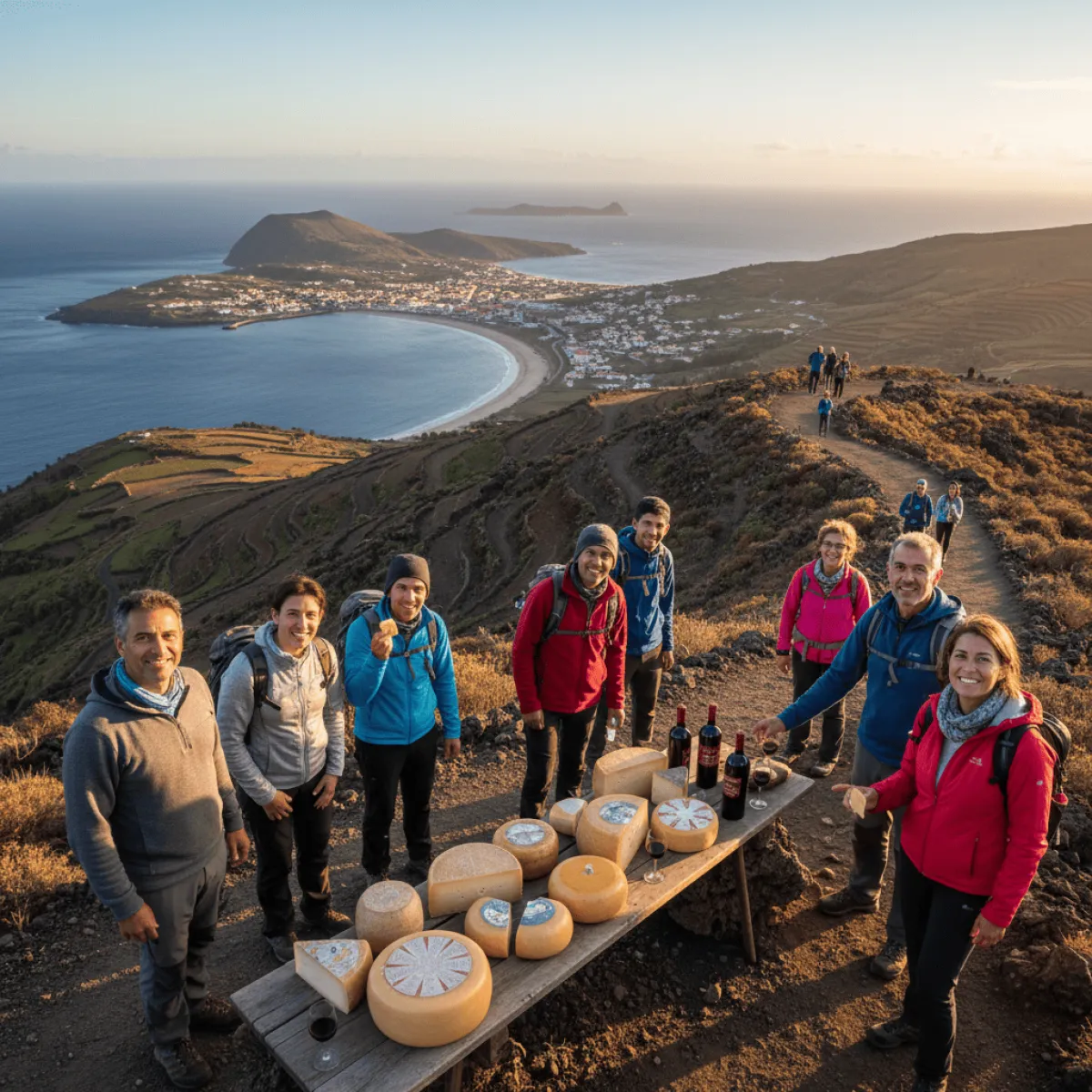
There is a misconception that takes hold of most first-time visitors to Terceira: that this is a flat island, made for slow afternoons on the seafront and quick dips at Prainha. True, Praia da Vitória has the largest urban beach in the Azores, and in August Avenida Álvaro Martins Homem smells of salt air and roasted lupin beans. But sticking to sea level is wasting half the island. Terceira is, above all, a volcanic cone, and what makes summer here interesting is not the beach. It is what happens above 600 metres.
This guide is for travellers who land in Praia da Vitória and want to go up. For people who accept that the island's best cheese is not in the supermarkets downtown, that the wine from Biscoitos tastes of black stone, and that the only proper way to see the Santa Bárbara caldera is with boots, water, and the patience of someone who knows the fog can ruin the plan by eleven in the morning. We will go to the trails, then to the cheese, then to the views, in that order.
The briefing: why summer in Terceira is not what you think
Forget the dry heat of the Algarve. In July and August, Praia da Vitória sits between 18 and 25 degrees, with high humidity and clouds that come and go on the wind. This is good news: it means you can hike at noon without melting. It is also bad news, because the weather on Santa Bárbara changes every twenty minutes. The rule is simple: start early, carry a windbreaker, and have a sea-level backup plan for days when the mountain refuses to cooperate.
The airport sits in Lajes, ten minutes from central Praia da Vitória. A rental car is practically required, unless you plan to spend three days on the seafront eating alcatra. Public transport exists, but runs on a schedule designed to frustrate tourists. Budget 35 to 55 euros a day for a small car, plus fuel that will cost you your right kidney, because everything in the Azores is imported, gasoline included.
Day one: Santa Bárbara before lunch
Terceira's highest point reaches 1023 metres and lies at the western end of the island, about an hour from Praia da Vitória along the ER1-1ª. The road climbs gradually through pastures and endemic cedars to the visitor centre, which usually opens around ten in the morning. Check locally, because Azorean hours have a poetic flexibility.
The Caldeira de Santa Bárbara trail is short, about three kilometres in a loop, and technically easy. Do not be fooled by the distance: the wind up here blows like it has something to prove, and the low vegetation, mostly heather and laurel scrub, demands firm steps. The reward is a volcanic crater carpeted in moss where the silence is broken only by the occasional shriek of a buzzard. On clear days, you see the ocean on both sides of the island. On cloudy days, you see your own boots, and nothing else.
Unpopular advice: do not attempt this trail in late afternoon. Fog forms almost daily after two and the temperature drops ten degrees in half an hour. The locals know this. Tourists learn the hard way.
The cheese: why the supermarket is lying to you
Queijo da Ilha Terceira DOP is a specific animal. Aged between four and twelve months, made with raw cow's milk, slightly piquant, with a rind that darkens with age. The problem is that what passes for 'island cheese' in mainland supermarkets is, in most cases, an industrial, softened version that does not honour the original.
For the real thing, ignore the chilled shelves of the big stores and look for the small artisan dairies scattered across the island. Around Vila de São Sebastião and the outskirts of Altares there are producers who sell directly. No formal address, just a hand-painted sign. Expect to pay 12 to 18 euros a kilo, depending on the curing time. Buy half a kilo of the most aged version, break it with your hands (not a knife, it sounds like blasphemy but the cheese crumbles better that way), and eat it with Terceira corn bread and a glass of Biscoitos verdelho. This is the breakfast of serious people.
Biscoitos: wine that grows on lava
Fifteen minutes west of Praia da Vitória by car, the parish of Biscoitos is perhaps the most underrated spot on Terceira. The name comes from the look of the volcanic rock covering the land, pitted and dry like a biscuit. It was on this lava, now a Protected Landscape, that early settlers planted vines inside small stone enclosures to shield them from the Atlantic wind. The result is a white wine, Verdelho dos Biscoitos, with briny minerality and an acidity that cleans your palate like nothing you have tasted on the mainland.
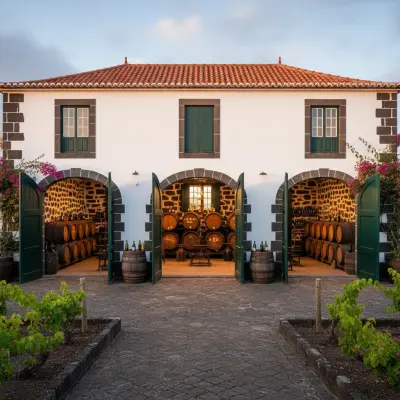
The Museu do Vinho dos Biscoitos tells the story of this improbable agricultural engineering. It is small, family run, and during high season operates on hours worth confirming in advance. The visit includes a tasting, and with luck you will catch one of the Brum family descendants explaining the difference between dry verdelho and the fortified version. It is worth ten times more than paying thirty euros for a tasting at any Douro cellar with a laminated brochure.
Right next door, and this is the kind of geographic coincidence that makes Terceira fun, you find the venue for the Brianda craft beer experience in Biscoitos. Yes, there is craft beer 600 metres from the ocean, brewed with local water. The IPA is decent. The stout is better. Prices are honest, around five euros a glass.
Culture, because one does not live on cheese alone
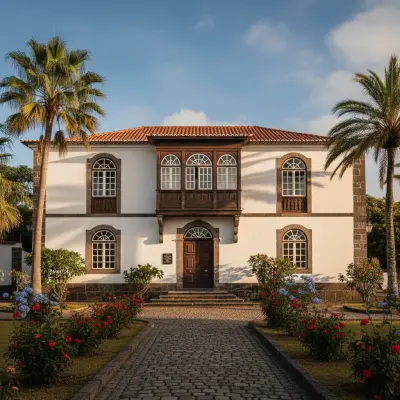
Between trails and pours, it helps to remember that Praia da Vitória has a cultural density few Portuguese towns can match. Start at the Casa Museu Vitorino Nemésio, dedicated to the author of Stormy Isles, who grew up on these streets. The house is modest, the collection is intimate, and the best part is walking in and understanding, in half an hour, why Azorean literature carries the melancholy it does. It is not accidental: it is the wind, the isolation, the permanent sense of being halfway between two continents.
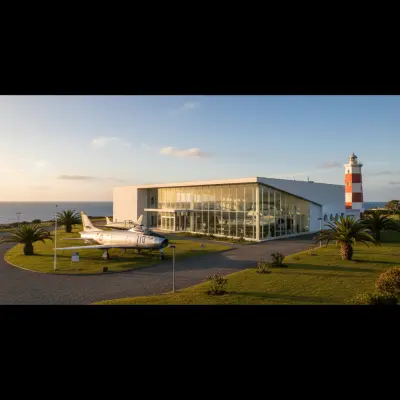
Then, and this will sound strange to anyone who has never lived on an island with an American air base, cross town to the Núcleo Museológico da Base Aérea Nº4. It tells the story of Lajes Air Base, which during the Cold War made Terceira a strategic node of the North Atlantic. The aircraft that still occasionally land overhead, above the white-walled town, are the last chapter of that history. For anyone interested in twentieth-century military history, it is essential. For everyone else, it is a one-hour curiosity that costs almost nothing.
The electric bicycle: the honest shortcut
If the idea of climbing Santa Bárbara on foot sounds like too much commitment, there is an alternative I recommend without irony: the e-bike tour through Praia da Vitória. Electric bicycles solve the problem of Terceira's climbs, which look gentle on the map and brutal on the legs. In three to four hours you can cover a loop that takes in the seafront, cliffs, and some of the inland pastures, with stops at the viewpoints you choose. Local guides know when the wind will hit and when it will not. Trust them.
Expect to pay 50 to 70 euros per person, bike and helmet included. It is not cheap, but it is one of the better tourist investments on the island: three hours on an e-bike show you more of Terceira than three days walking around central Praia da Vitória.
Where to eat (and where not to)
Praia da Vitória has the classic problem of seaside towns: many average restaurants, a few excellent ones, and a minority that survive on the fact that the marina brings people who will not return. The rule is to ignore everything directly attached to the beach and head one or two streets back.
Alcatra terceirense, a beef cut marinated in aromatic wine and cooked for hours in a clay pot, is the signature dish. You find it on most traditional menus, but quality varies sharply. Always ask whether it is cooked fresh or reheated. If reheated, order something else. The fish is reliably good: grilled limpets with garlic butter, grouper when it shows up, and fresh tuna in summer, usually as steaks or in molho de vilão, a vinegar and garlic dressing.
For breakfast, skip the hotel package and find a neighbourhood bakery with fresh corn bread, island cheese, and a strong coffee. It is not a gourmet experience. It is the right rhythm for starting a trail day.
If you are tempted to hop islands
Terceira is part of an archipelago, and if you have more than four days it pays to think about a short flight to another island. São Miguel is the obvious choice, with more dramatic landscapes and heavier tourist infrastructure. Faial and Pico are for those who love sea and whales. If you are planning the jump, it is worth reading our 24-hour guide to Horta before booking tickets, especially if your time is tight. And for those wanting a different angle on the town, this round-up of the best rooftops and panoramic views in Horta will save you two hours of research.
On São Miguel, Ponta Delgada is the obvious stop, but you need to know what to order and what to skip. Our gastronomic trek through the city works as a map for anyone who refuses to fall into the first tavern with a laminated tourist menu.
The final tally
Four days in Praia da Vitória in summer, including a Santa Bárbara hike, an e-bike tour, a visit to the Biscoitos wine museum, an afternoon in the town museums, and two decent dinners, runs between 450 and 700 euros per person, excluding flights and accommodation. It is not low cost. It is also one of the few tourist experiences in Portugal where you leave feeling you have seen things most mainlanders do not know exist.
The trick is not to treat Terceira as a less famous version of São Miguel. It is not. It is an island with its own character, with wine that grows inside lava, cheese that tastes of salty pasture, and a small town whose greatest virtue is not trying to be something else. Climb, taste, and come back in winter to understand the other half of the story. The trip is worth it.