Praia da Vitória by Bike: Cycling Routes for All Levels
From the flat waterfront to a 14-kilometre climb up to Biscoitos, ending with a cold pint at the Brianda craft brewery. Four cycling routes in Praia da Vitória, from ice-cream rides to rides with character.
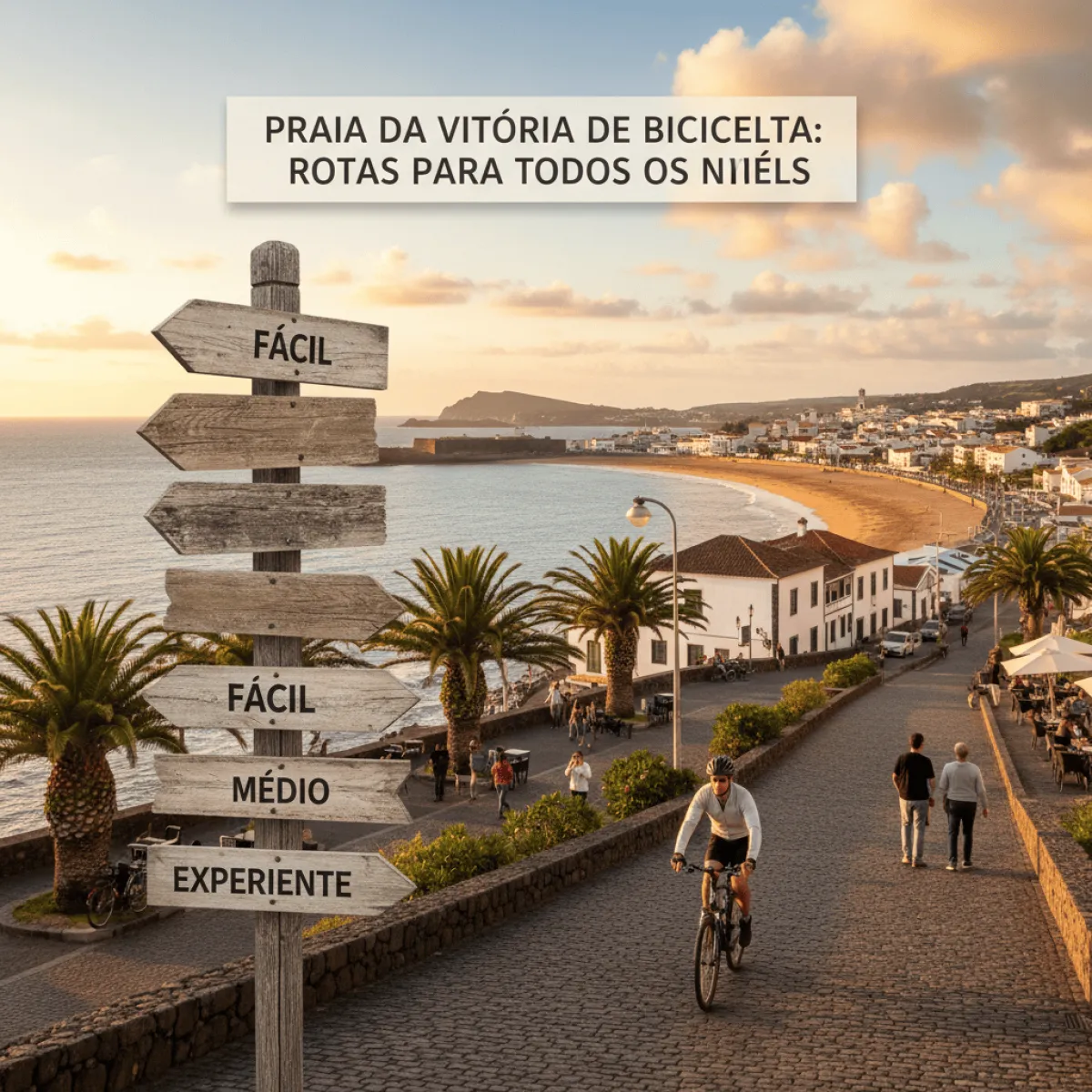
There is a theory, held by anyone who knows Terceira beyond the tourist signposts, that this island was designed to be travelled on two wheels. It is not an exaggeration. The bay of Praia da Vitória, with its 2.5 kilometres of unbroken sand, offers the flattest and most continuous waterfront of any Azorean city. From there the terrain rises in gentle terraces up to Biscoitos, crosses pastures where the cows have right of way, and ends at viewpoints that justify every push of the pedals. If you arrived here convinced the Azores are only for lava trails in heavy boots, prepare to change your mind.
This guide is not for Lycra-clad cyclists training for the Giro. It is for travellers who want to see Terceira at the right pace: fast enough to cover ground, slow enough to stop when the smell of a wood-fired oven drifts out of a house in Lajes. We will move from basic (the waterfront, with children and ice cream) to serious (the inland climb to Biscoitos), with strategic stops at museums, wineries, and a craft brewery that, I promise, will give meaning to every drop of sweat.
Before you start: what you need to know about cycling on Terceira
The first thing to understand is the wind. Terceira is an Atlantic island and the wind has a personality of its own, especially on the north coast. Cycling from Praia da Vitória to Biscoitos with a northeast wind in your face is an experience that separates the casual cyclist from the convinced one. The golden rule: start your route into the wind and return with it at your back. When you are tired, you want the breeze pushing you home.
The second thing: the weather changes in 20 minutes. In May, I saw clear skies at 10am turn into drizzle at 10:30 and back to sun by 11. Always carry a light windbreaker, even if the thermometer reads 22 degrees when you leave the hotel. Apply sunscreen before setting off, because the Atlantic wind hides the sun but not the UV.
On bikes: most hotels in Praia da Vitória partner with local operators. For anyone who has never cycled on Azorean terrain, I strongly recommend starting with an electric bike. It is not laziness, it is strategy. The climbs into the island interior have gradients that, without a motor, turn a pleasant ride into a long penance. The e-bike tour through Praia da Vitória is the ideal starting point: a quality bike, a guide who knows the shortcuts, and an itinerary covering the essentials without demanding athletic fitness.
Route 1: The waterfront and the bay (level: easy, 8 km)
This is the ride I do every time I arrive in Praia da Vitória, even before unpacking. Set off early, ideally before 9am, when the waterfront still belongs to fishermen and local joggers. Start at the southern end of the bay near the port and head north along the cycle path that runs alongside the beach.
The route is flat as a table. Children, grandparents, retired cyclists, everyone fits here. Stop at Jardim da República, the central square, for an espresso at the kiosk with a sea view. It costs just over a euro and tastes twice as good with the sound of waves 30 metres away. Continue to the northern breakwater, turn around, and on the way back detour into the historic centre.
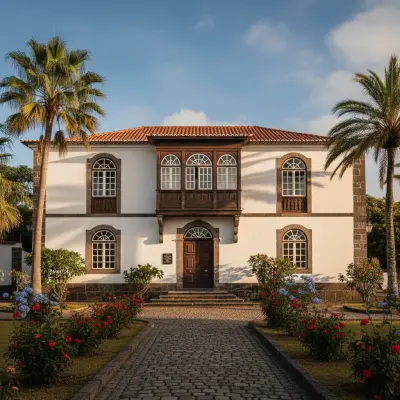
The mandatory stop here is the Casa Museu Vitorino Nemésio. For anyone unfamiliar with Nemésio, he is probably the most important writer the Azores ever gave to Portugal, author of Mau Tempo no Canal, a novel that defines the archipelago as much as any guidebook. The house where he was born is small, intimate, and offers a reading of Praia da Vitória that no waterfront will give you. Set aside 45 minutes.
For lunch, lock the bike in the centre and look for a place serving fresh fish of the day. Praia da Vitória has an active fishing fleet and the fish on the tables arrived at the port that morning. Always check prices before ordering, especially if you are tempted by veja or cherne, the two most coveted and therefore most expensive species.
Route 2: Praia da Vitória to the Air Base Museum (level: easy to medium, 14 km return)
This is a route few tourists take, and that is part of its appeal. Lajes Air Base Nº4, shared between the Portuguese Air Force and the US Air Force, is a Cold War history lesson frozen in time. For decades this base was a mandatory stopover for American transatlantic flights, and the city of Praia da Vitória grew around that military presence.
The route leaves the city along the road that flanks the base, with the ocean on the right and the runways on the left. On clear days, you can watch C-130s landing. The cycle path does not cover the entire road, so there are sections where you share the lane with cars, which requires attention but is safe outside rush hour (avoid 8am to 9am and 5pm to 6pm, when base workers come in and out).
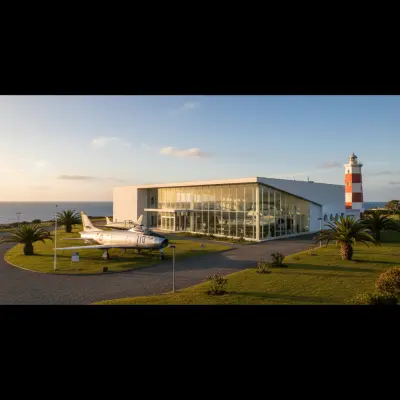
The Air Base Nº4 Museum is, without flattery, one of the most surprising visits on Terceira. Vintage aircraft, photographs of the arrival of American forces in 1944, and the historical context that explains why half of Praia da Vitória has surnames ending in Portuguese vowels and the other half has names like Smith or Jenkins. Check hours locally, as they vary by season.
On the way back to the city, stop at one of the bakeries in the Porto Martins neighbourhood for a snack. The local malassadas, sugar-dusted parcels of fried dough, are the perfect fuel for the second half of the day.
Route 3: The climb to Biscoitos (level: medium to hard, 28 km return)
Now things get serious. This is the route that justifies the electric bike if you are still undecided. The climb from Praia da Vitória to Biscoitos goes via the inland road, crossing rural parishes where time runs slower. The elevation gain is about 300 metres spread over 14 kilometres, which sounds modest on paper but, with a headwind and afternoon heat, feels like much more.
The name Biscoitos comes from the lava stones that cover the area, formed by ancient eruptions that left the soil covered in black basalt. It is on this seemingly impossible ground that Azorean Verdelho grapes are grown, enclosed in stone corrals that protect the vines from wind and salt spray. When you arrive, you will understand why this wine has Protected Designation of Origin status and why winemakers from the mainland come here for internships.
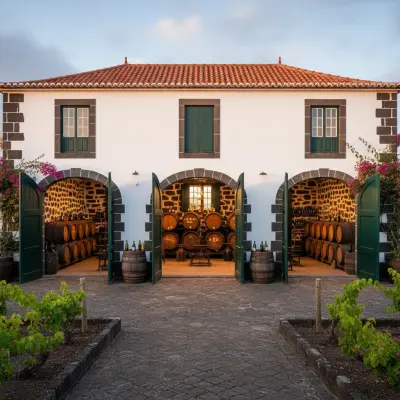
Mandatory stop: the Biscoitos Wine Museum. It is a family museum, run by the Brum family, who have made wine here for generations. The visit includes the traditional press, the antique bottle collection, and a tasting that justifies the stop. Verdelho dos Biscoitos is dry, mineral, with that salty edge that only Atlantic wines have. Buy a bottle. You will not easily find this wine outside the Azores.
Five hundred metres from the museum, and this is the card few guides play, is the Brianda craft brewery. Yes, you read that correctly: Biscoitos wine and craft beer within the same square kilometre. Brianda produces beers with personality, using local ingredients whenever possible, and the tasting room overlooks the same basalt corrals you saw in the vineyard. A cold beer after a 14-kilometre climb is the practical definition of I earned this. Prices are reasonable and the atmosphere is informal, without pretension.
The return to Praia da Vitória, now downhill, takes almost no pedalling. Enjoy it, but mind the brakes and your speed, especially if the road is wet, which happens more often than you might think.
Route 4: The north coast to Serra do Cume (level: hard, 35 km with significant climbing)
This route is for those with conditioning who want to see Terceira from above. Serra do Cume is the rim of an ancient volcanic caldera, and from the top you see the famous "patchwork quilt": a mosaic of pastures divided by stone walls that covers the entire central plain of the island. It is one of the most photographed views in the Azores, and for good reason.
The climb is demanding. There are stretches with gradients above 8 percent, and if the wind is from the north, it becomes a test of character. I recommend doing it early in the morning, in dry weather, carrying enough water for a long hour of effort. At the top there is a viewpoint with a car park and nothing else: no café, no kiosk. Bring a sandwich and a bottle of water, and sit looking at the mosaic for as long as you wish.
This is a route that rewards patience. There are no tourist stops along the way, only the effort of the climb and the reward of the top. If you are a weekend cyclist, you may prefer to skip this one and stick with the others. But if you ride seriously, this is the route you will remember when someone asks you about Terceira.
When to go, where to stay, how much it costs
The best time to cycle on Terceira is from May to October, with a preference for June and September, when temperatures sit between 18 and 24 degrees and the chance of rain is lower. July and August are warm by Azorean standards and crowded with mainland Portuguese tourists, especially during the Sanjoaninas Festival in Angra do Heroísmo and the Praia da Vitória festivities in August.
For accommodation, Praia da Vitória has a growing selection of mid and upper-range hotels and local lodgings. The historic centre is the most convenient option for cyclists: bike parking, restaurants 100 metres away, and the cycle path at the door. Average low-season prices are around 70 to 100 euros per night in a decent hotel, rising to 120 to 180 in July and August. Confirm rates at the time of booking.
Bike rental: an electric bike costs between 25 and 40 euros per day depending on the operator and duration. A conventional bike runs 12 to 20 euros daily. Most operators include a helmet, lock, and map.
Beyond Terceira: other Azorean destinations
If Terceira has awakened the Atlantic cyclist in you, consider extending the trip to other islands. Faial and Horta have a compact urban grid perfect for exploring without effort; our 24-hour guide to Horta covers the essentials for a short escape. For views, this companion guide to the finest rooftops and panoramas in Horta pairs well.
And if Azorean hunger lingers after the pedalling, read our gastronomic guide to Ponta Delgada on São Miguel, where cozido das Furnas, slow-cooked in volcanic holes in the ground, is the most theatrical meal you can eat in Portugal.
The last ride
Terceira is the right size to be conquered by bike in three or four well-planned days. Do not try to do everything at once. Start with the waterfront on day one, climb to Biscoitos on day two, ride to the Air Base on day three, and save day four for a free route, without a map, following only curiosity. That is how you discover the island, and that is how you understand why so many Azoreans, after emigrating to California or Canada, come back one day to die here. The bicycle, in this context, is just the vehicle. The destination is the landscape, and the landscape in Terceira is made of calm, wind, basalt, and people who still greet anyone passing by.