Mirandela Beyond the Sausage: A Guide to the Best Cafés
In Mirandela, coffee is a survival ritual against the heat. From the legendary Papos de Anjo at Flor de Aveiro to the meat-stuffed folar at Ramos, discover where the locals hide.
The Sugar Ritual and the Tua Heat
Arriving in Mirandela in the height of summer is an experience that tests any traveler's resolve. The city is famous for its microclimate of extremes, locals say it’s nine months of winter and three months of hell. To survive, you need a strategy, and that strategy involves finding shade. But forget air-conditioned malls. In Mirandela, resistance happens on terraces facing the Tua river or on the cool marble of pastry shops that have guarded secrets of egg yolks and sugar for centuries. To understand this place, you must accept that coffee here isn't just caffeine; it’s the social lubricant that precedes an alheira sausage and follows a heavy Transmontano stew.
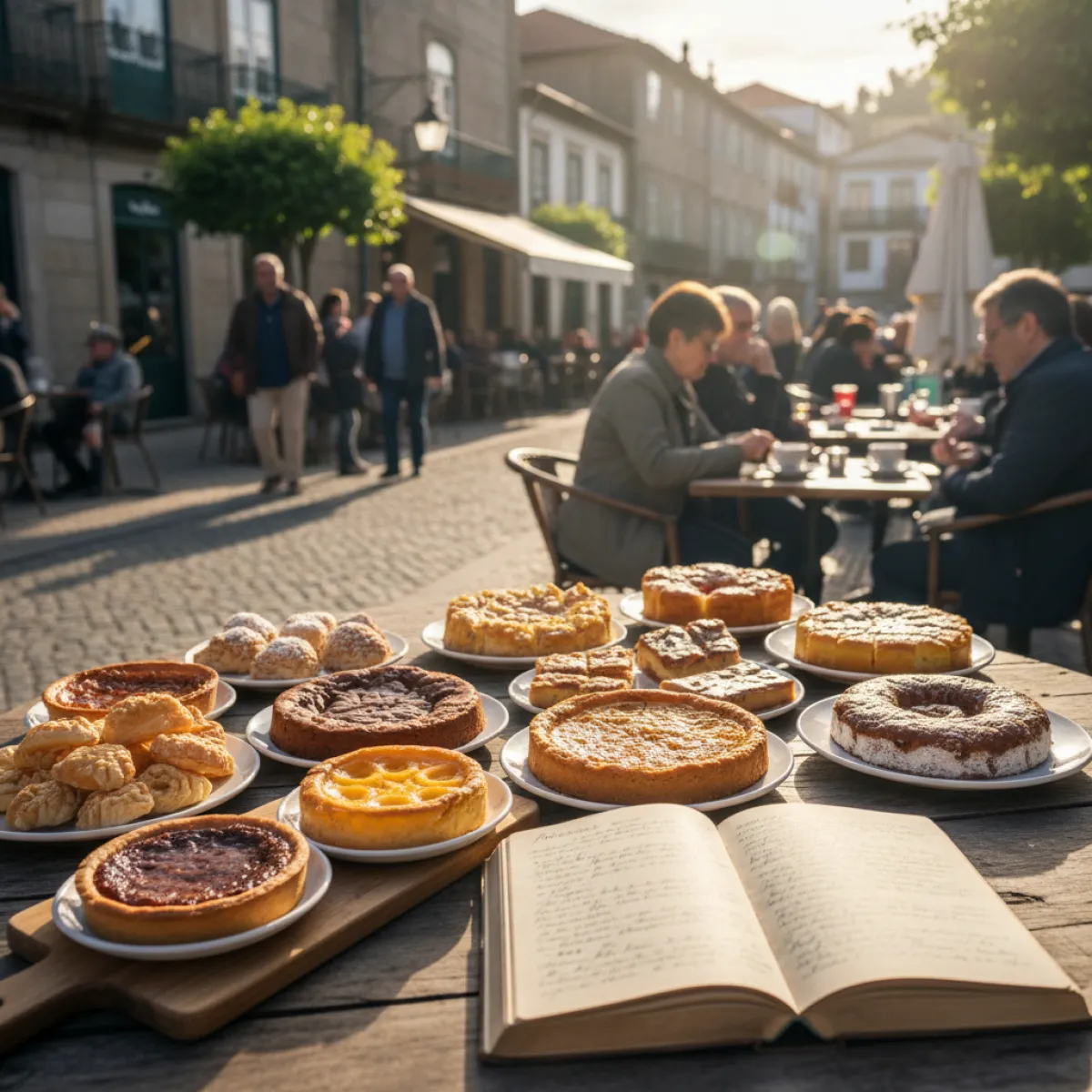
Your first stop is non-negotiable. Pastelaria Flor de Aveiro, located in Praça do Município right across from City Hall, is the epicenter of local indulgence. Don't be fooled by the name suggesting the coast (Aveiro); what they do here is purely Transmontano in its opulence. The order is mandatory: Papos de Anjo. If you’ve never tried them, imagine a cloud made almost exclusively of egg yolks, beaten to exhaustion, steamed, and then submerged in a sugar syrup that glows like liquid gold. They cost little more than a euro and are worth every single calorie. It’s a sweet that demands a short, sugarless espresso (a "bica") to balance the scales. The service is fast and old-school, no frills, just the efficiency of people who know they have the best product in town.
Between Folar and Squash Sweets
While Flor de Aveiro dominates the Papos de Anjo scene, Pastelaria Ramos, a bit further up, is where you go to explore the wider range of regional sweets. Here, the highlight is the Peixinhos de Chila. There’s no actual fish involved; instead, it's the pulp of the gherkin squash (chila), transformed into transparent sweet threads, wrapped in a thin, fried dough. It’s a crunchy texture that gives way to a moist interior. This is also the place where locals buy their folar to take home. The Folar de Mirandela is a lesson in porcine anatomy: a leavened bread generously stuffed with ham, chouriço, and salpicão. Unlike the sweet folar from the south, this is a full meal disguised as a snack. If you’re passing through, ask for a slice; if you’re smart, buy a whole one for the drive up to the Miradouro de Franco, where you can eat with the best view of the valley.
For those who prefer a more classic vibe, Pastelaria Lord on Rua da República maintains that provincial café charm where time seems to have stalled in the 90s, in the best way possible. It’s the ideal spot for people-watching: lawyers discussing cases near the courthouse, farmers coming into town to handle paperwork, and retirees reading the newspaper from front to back. Order a Queijada de Mirandela. Unlike the ones from Sintra, these have a denser consistency and a more pronounced cheese flavor, often with a hint of cinnamon that lingers. This is a café meant for staying, not just passing through.
The Terrace as an Observation Deck
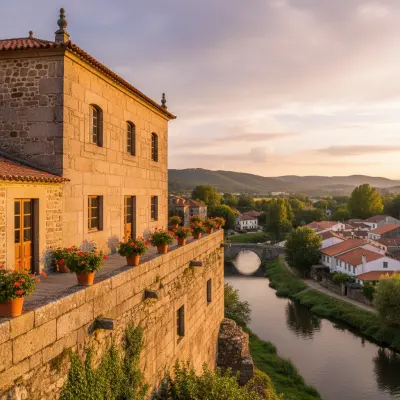
When the sun begins to dip, but the heat refuses to leave the granite walls, the destination is the riverbank. The Tua is the heart of Mirandela, and the terraces along Avenida Nossa Senhora do Amparo are the best places to watch life go by. Café Avenida is a classic. Don’t expect gourmet specialties; order a cold beer or a coffee and focus on the show of the Jato d'Água. This water jet, which rises dozens of meters into the air from the middle of the river, is the city's pride. It’s an exercise in contemplation: the sound of falling water, the medieval bridge (which everyone calls Roman) in the background, and the ducks that ignore tourists with practiced indifference.
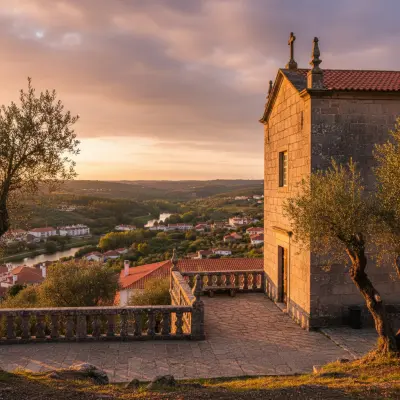
It’s at these metal tables that the rest of the day is planned. If your appetite starts to stir, it’s worth reading our guide Beyond the Alheira: Mirandela’s Culinary Resilience to find out where to have dinner. But before that, head up to the Miradouro do Paço dos Távoras. The climb is short, but the perspective over the old town rooftops and the bend in the river justifies the effort. This is where you realize the scale of the city: small enough to know in a day, but dense enough in flavor to keep you coming back.
Practical Advice for the Traveler
If you're coming from Porto or Lisbon, the drive along the A4 is fast but tiring. Mirandela is the perfect stopping point before heading further north, perhaps toward Chaves to relax, as suggested in The Roman Legions' Legacy: Exploring the Ancient Thermal Springs of Chaves.
- Hours: Most pastry shops open early, around 7:30 AM. This is the best time to catch the folar fresh out of the oven.
- Prices: A coffee and a sweet will rarely cost you more than €2.50. Mirandela remains extraordinarily affordable.
- What to avoid: Don't just instinctively ask for a "pastel de nata." You’re in Trás-os-Montes; ask for what belongs to the land. The pastel de nata here is an extra; the Papos de Anjo are the stars.
- Parking: Try to leave your car near the municipal market or in the peripheral areas and walk. The central area is narrow and traffic can be annoying during peak hours.
At the end of the day, if the heat allows, a final visit to the Miradouro da Igreja de São Bento offers the perfect farewell. From there, you see the city lights flickering on and the Tua reflecting the orange of the sky. It’s the moment to decide if you're staying for dinner or taking a box of Papos de Anjo for the road. The correct answer, obviously, is both. Mirandela is not visited in a hurry, nor on an empty stomach. If you're planning a longer route through the Northeast, don't miss the guide on The Silence of Montesinho, as the contrast between Mirandela's liveliness and the mountain's peace is what defines this region.
The Geography of Taste
To the casual tourist, all pastry shops might look the same, but there are nuances. The secret is to watch where the locals park their flatbed trucks. If you see three or four trucks double-parked in front of a café with no fancy name, go in. That’s where the coffee is strongest and the folar has the most (good) fat. Café culture in Mirandela is democratic: it joins the lawyer and the construction worker at the same zinc counter. There are no ceremonies. Just show up, order, eat, and move on. But if you have time, sit down. Listen to the heavy accent, the Transmontano frankness, and let yourself be wrapped in the hospitality that, around here, is measured in grams of sugar and milliliters of coffee.