The Roman Legions' Legacy: Exploring the Ancient Thermal Springs of Chaves
Discover the millennial allure of Chaves, where 73°C thermal springs and the imposing Trajan Bridge tell the story of the Seventh Legion Gemina. A detailed guide to Trás-os-Montes gastronomy, Roman archaeology, and the rustic luxury of the borderlands.
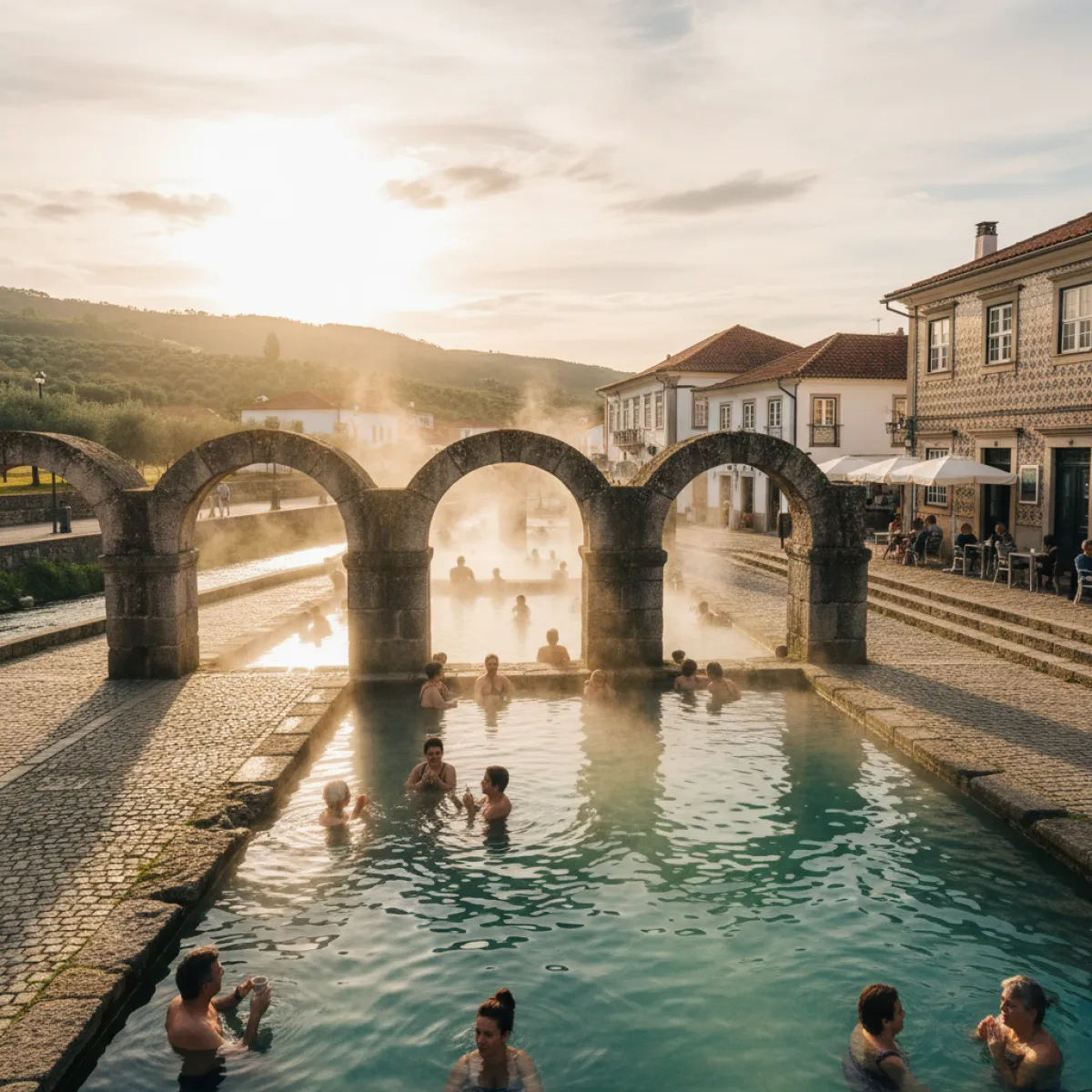
The Persistence of Steam: Where Roman Heritage Meets the Present
Chaves is not a city that asks for your affection; it commands it through the sheer weight of its history. Situated in the fertile valley of the Tâmega River, just a few kilometers from the Spanish border, this northern Portuguese outpost, formerly Aquae Flaviae, continues to pulse to the rhythm of its hyperthermal waters. This is not merely a leisure destination; it is a geological and archaeological testament to the human capacity to harness nature for well-being. While most European cities buried their Roman past under layers of concrete, Chaves chose to expose it, revealing one of the best-preserved thermal complexes in the Roman Empire.
The air in Chaves, particularly on cold winter mornings, is marked by a persistent mist emanating from spring waters at 73 degrees Celsius. It is a temperature that defies surface logic, reminding us that beneath the cobblestones, the earth still boils. This constant heat shaped the character of the 'Flavienses' and attracted, two millennia ago, the Seventh Legion Gemina. Soldiers patrolling the empire’s fringes came here to heal war wounds and the ailments of age, establishing a tradition of healing that has never ceased.
The Sanctuary of Aquae Flaviae: Living Archaeology
A visit to the Roman Thermal Museum is essential to understand the scale of Flavian ambition. Discovered accidentally in 2006 during the construction of a parking garage, these ruins are considered the largest and best-preserved in the Iberian Peninsula. Walking across the metal gangways suspended over the original pools, one can see the drainage systems, niches for clothing, and the channels that transported the sacred water. The sophistication of Roman hydraulic engineering, which utilized gravity and the natural slope of the terrain to feed the complex, is a stark reminder of our own technological humility.
Unlike many static museums, here you feel the humidity and the aura of a site that was central to the social life of the Empire. Romans viewed bathing not just as hygiene, but as a ritual of citizenship. Today, the modern Balneário Termal de Chaves continues this lineage, offering treatments that utilize bicarbonate-rich, fluorinated waters to treat digestive and musculoskeletal pathologies. The contrast between the ancient stone of the museum and the contemporary glass of the new spa facility encapsulates the city's identity: one foot in the imperial past and the other in functional, sober modernity.
Trajan’s Engineering and the River’s Flow
The Roman Bridge of Trajan, spanning the Tâmega with its eighteen surviving arches, is the axis upon which the city rotates. Completed at the end of the 1st century AD, the bridge has withstood monumental floods and the weight of modern traffic until it was finally pedestrianized. It is the ideal place to observe the local flow of life. The stone pillars bear Latin inscriptions honoring emperors and local tribes, serving as an open-air museum that charges no admission. At dusk, the golden light hitting the granite create an introspective atmosphere that invites slow exploration.
For those seeking a more direct connection with the natural landscape surrounding this urban core, exploring the paths along the riverbank is essential. Cycling the Border: A Journey on the Ecovia do Tâmega with Tamega E-bike offers a dynamic perspective on how water geography defines the frontier. Pedaling along the ecovia allows one to observe the transition between the built environment and the riparian vegetation, where willows bow over the waters that feed the region's traditional vegetable gardens.
Gastronomy: From the Mountains to the Sea
The cuisine of Chaves is noted for its robustness, the cured ham (presunto), the chouriço, and of course, the Pastel de Chaves, with its impossible puff pastry and minced veal filling. However, there is a culinary phenomenon in Chaves that defies geographical logic: the abundance and quality of seafood. In a region surrounded by mountains, the tradition of sourcing the finest products from the Galician and Portuguese coasts has created unique rituals. The Seafood Feast Ritual in Chaves: A Coastal Celebration in the Heart of the Mountains is a perfect example of this idiosyncrasy. Sitting down for a seafood feast in the deep interior of Trás-os-Montes is an experience in rustic luxury, where the freshness of barnacles, crab, and prawns contrasts with the rigor of the continental climate.
For meat lovers, the Posta Transmontana and roasted kid goat are reliable choices in establishments like 'O Príncipe' or 'Carvalho'. A budget for a high-quality meal ranges between 30 and 50 euros per person, including wines from the Trás-os-Montes region, which offer a distinct minerality due to the granitic and schistose soils.
The Border and the Silence
Chaves' location makes it the ideal base for incursions into deep Portugal. A few kilometers away, the landscape transforms radically as you ascend toward the Montesinho Natural Park. While Chaves is the sound of water and Roman stones, Montesinho is the realm of wind and absolute isolation. The Silence of Montesinho: A Winter Retreat in the Last Frontier of Portugal accurately describes the experience of visiting schist and granite villages where time seems to have stalled. It is a necessary contrast: the Roman civilization of Chaves versus the wild, untamed nature of the borderlands.
Practical Guide for the Modern Traveler
- When to go: Autumn and spring offer moderate temperatures. However, winter in Chaves has an austere charm, ideal for enjoying the hot springs while the world outside freezes.
- Where to stay: The Vidago Palace, about 15 minutes away by car, remains the ultimate expression of Belle Époque luxury. For a central stay, the Forte de São Francisco Hotel offers history and a privileged location within the fortress walls.
- What to order: Don't leave without trying the Pastel de Chaves at 'Pastelaria Maria' and pair your meal with a full-bodied red from Quinta de Maritávora.
- Logistics: Chaves is best explored on foot in the historic center, but a car is indispensable for visiting nearby thermal villages and the Montesinho Park. Expect a budget of 150-250 euros per day for a premium experience.
Chaves is a lesson in continuity. From Trajan’s legions to the cyclists on the ecovia, the attraction to this fertile valley and its curative waters remains unchanged. It is a destination for those seeking substance, where every stone of the bridge and every drop of steam tells a story of survival and sophistication.
