The Silence of Montesinho: A Winter Retreat in the Last Frontier of Portugal
Discover the magic of the Northeast of Portugal in winter. An editorial guide to the silence of Montesinho Natural Park, the best retreats to stay, and where to find the most authentic gastronomy in Bragança.
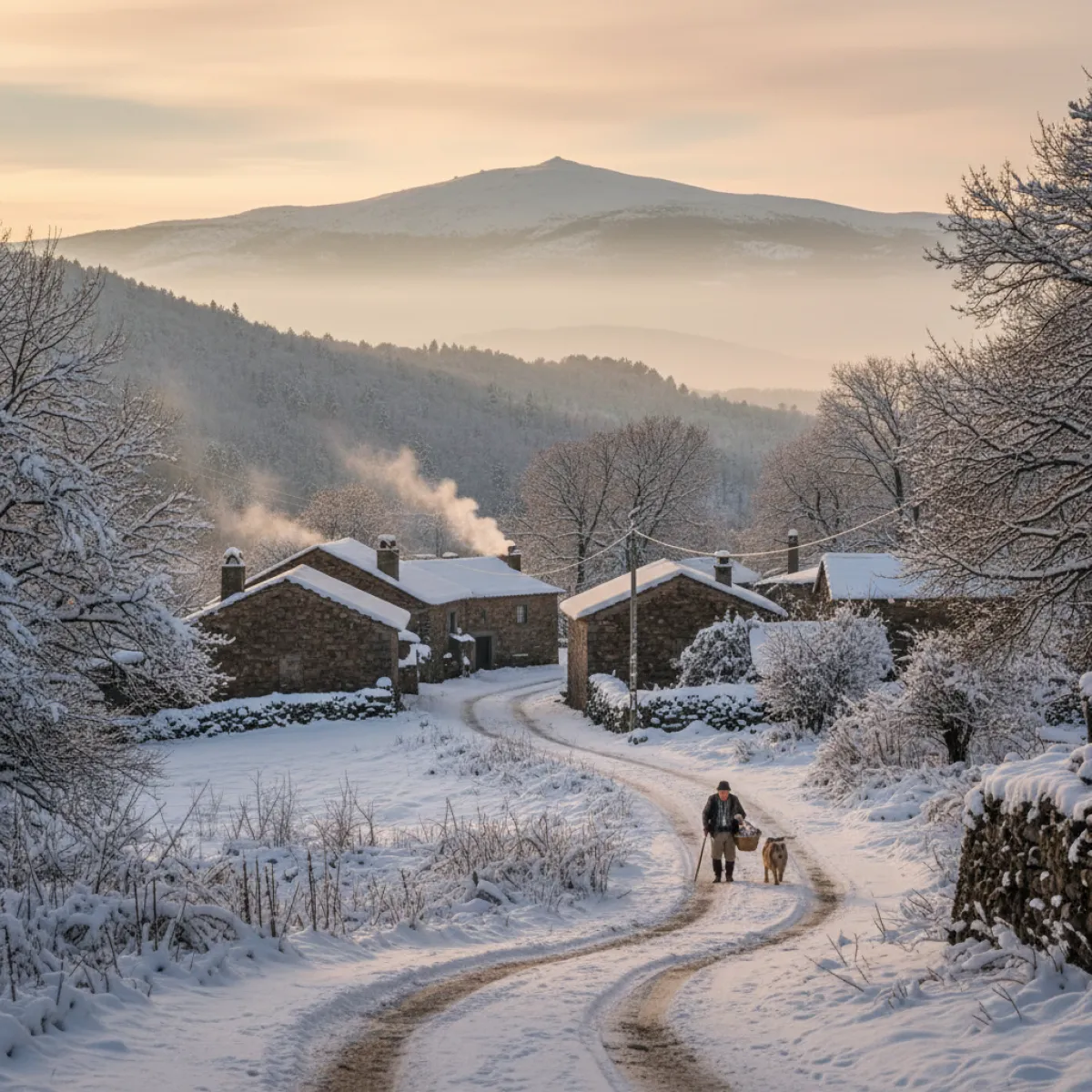
The Mystique of the Northeast
There is a specific moment, somewhere on the A4 highway after passing the Marão Tunnel, where the landscape ceases to be merely mountainous and becomes a manifesto of isolation and resilience. This is where we enter the Terra Fria Transmontana (Cold Land of Trás-os-Montes), a territory where granite and schist dictate the rules of architecture and where time seems to follow its own calendar, oblivious to the rush of the coast. Bragança, the sentinel of the North, appears on the horizon not as a city to pass through, but as the final destination for those seeking what remains of authenticity in deep Portugal.
Winter in Montesinho is not for the faint of heart. It is a season of violent contrasts: the biting cold of frosty mornings against the comforting warmth of schist fireplaces; the sobriety of stone villages against the explosion of flavors from the traditional pig slaughter. It is during this time that the Bragança Castle dons an almost cinematographic aura, with its medieval walls guarding secrets from centuries of border life. The Keep, imposing and stern, dominates the citadel where footsteps echo on the uneven stones, an invitation to contemplation that the noise of modern cities long ago banished.
Where Time Slows Down: The Perfect Perch
For those arriving with the intent to absorb this silence, the choice of accommodation is crucial. One does not come here to stay in a generic hotel. The Pousada de Bragança - São Bartolomeu offers what is undoubtedly the best view over the city and its castle. With an architecture reminiscent of Portuguese modernism, the common spaces are generous and invite you to read a book accompanied by a glass of Port. In winter, watching the sun set behind the citadel from a room's balcony is an experience that, in itself, justifies the trip.
If your preference leans toward something more integrated into the raw nature of the park, the Montesinho Eco-Resort stands as an example of sustainability and comfort. Located in the heart of the Natural Park, it allows for direct contact with the local fauna and flora without giving up contemporary pampering. It is the ideal starting point for morning incursions along the trails that wind through oak forests and chestnut groves, where, with luck, one might spot a deer or the tracks of an Iberian wolf.
Gastronomy as an Act of Resilience
To speak of Bragança without mentioning food would be an unpardonable omission. Here, the table is an altar. In Gimonde, just a few minutes from the city, Restaurante Típico D. Roberto is an institution. Do not expect gimmicks or minimalist decor; here, the focus is on the product. The Posta Mirandesa, thick, succulent, and seasoned only with coarse salt, is mandatory. But it is in the details that D. Roberto truly shines: the Caldo de Cascas, a delicacy made with dried bean pods, is the warm embrace the body craves after a day in the open. Pair it with a regional red wine, full-bodied and characterful, capable of standing up to the intensity of local charcuterie.
In the historic center of Bragança, Restaurante Porta offers a different narrative. Here, tradition is respected but reinterpreted with a modern sensibility. It is the ideal place for those wishing to taste the flavors of the land, such as partridge or wild boar, through cooking techniques that elevate these ingredients to new levels of sophistication. The tasting menu is a sensory journey through the territory, balancing Transmontano rusticity with a cosmopolitan refinement that surprises those expecting only the classics.
The Montesinho Natural Park: The Last Frontier
The Montesinho Natural Park is one of the largest biological sanctuaries in the Iberian Peninsula. In winter, the villages that compose it, such as the village of Montesinho itself or the mystical Rio de Onor, seem like they were taken from a dark fairy tale. Rio de Onor, with its system of communal living that lasted until quite recently, is a living lesson in sociology. Divided by the imaginary line of the border, the village breathes an air of union that defies national conventions.
Walking through the schist streets of these villages is to hear the sound of water running in the streams and the crackling of firewood in the chimneys. There are no convenience stores here, nor the constant noise of engines. There is only the essential. A budget for such a trip should foresee around €120 to €180 per day for a couple, ensuring quality accommodation and memorable meals. It is an investment in mental well-being, a necessary disconnection that only the Northeast can provide so effectively.
Practical Information
- When to go: January and February are the most authentic months, with a higher probability of snow at higher altitudes.
- What to order: Besides the Posta, make sure to try Butelo with Casulas and the Alheiras from Bragança (PGI).
- Getting there: A car is essential for exploring the villages of the Natural Park. The trip from Porto takes about 2h30 via the A4.
