Beyond the Alheira: Mirandela’s Culinary Resilience
Discover Mirandela beyond its famous alheira, diving into a gastronomic culture of resilience where Mirandesa beef and schist-grown olive oil define the identity of the Portuguese Northeast.
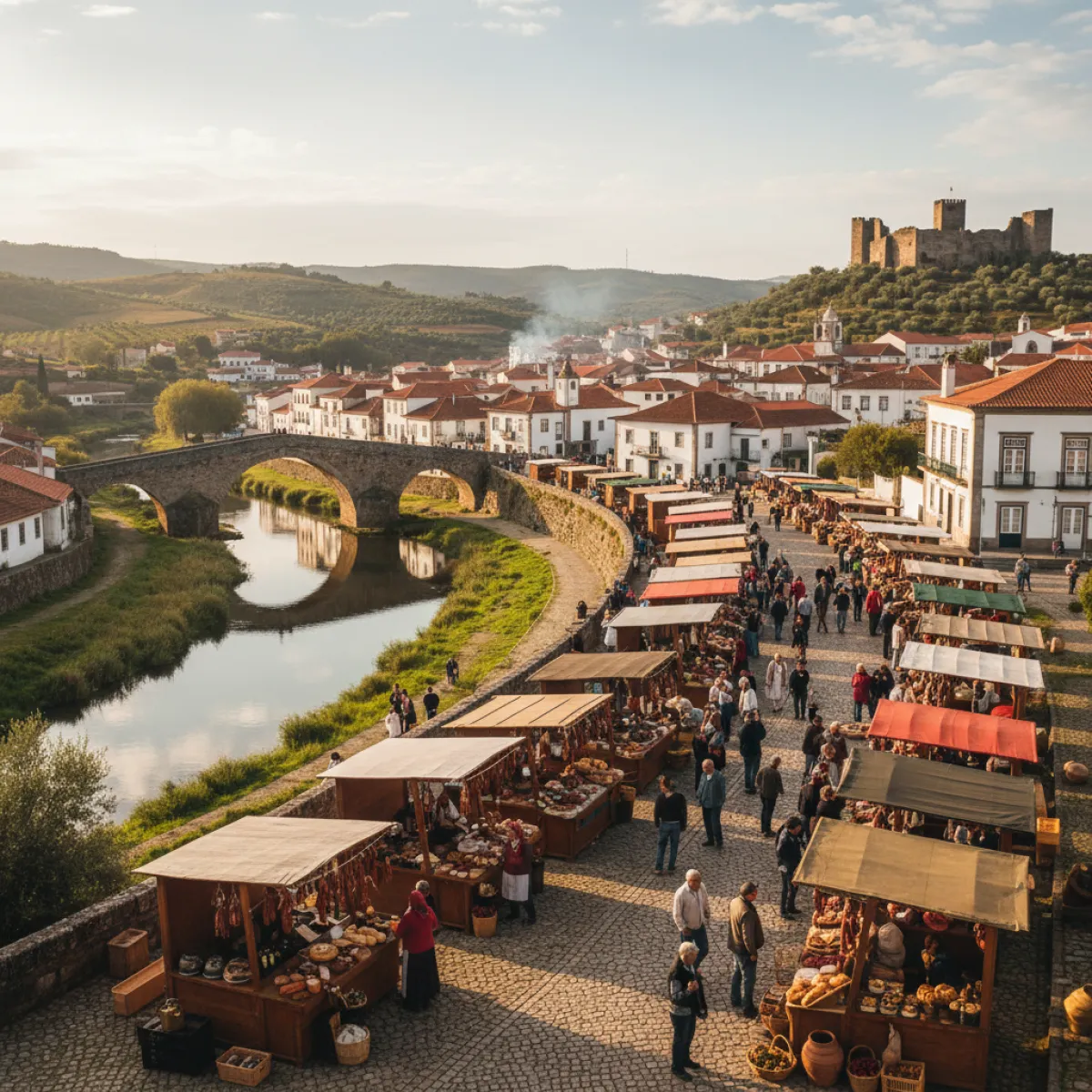
The Geometry of Flavor in the Tua Valley
There is a persistent mist that settles over the Tua River on winter mornings, a fog that seems to shield Mirandela from the frantic pace of the Portuguese coast. Here, in the heart of the northeastern Trás-os-Montes region, gastronomy is not a lifestyle trend but a form of cultural resilience. The common error of the hurried traveler is to reduce this city to its most exportable icon. While the Alheira de Mirandela is, in its own right, a national monument, limiting the local table to this sausage is to ignore the complexity of a culinary ecosystem forged by geographical isolation and a near-sacred relationship with the land.
Mirandela demands time. It requires you to cross the Old Bridge and catch the scent of oak wood fire escaping from chimneys. It is a city that reveals itself in detail: in the rugged texture of wheat bread baked in wood-fired ovens, in the bitter sting of new olive oil, and in the firmness of Mirandesa breed beef. To understand what is eaten here, one must understand the concept of 'fumeiro' (the smokehouse), not just as a preservation method, but as the social calendar that governs regional families during the coldest months.
Anatomy of an Icon: The Real Alheira
The history of the alheira is a lesson in survival. Created by New Christians to simulate the consumption of pork and thus avoid the persecution of the Inquisition, this sausage became the backbone of the local economy. However, the alheira found in Lisbon or Porto supermarkets is a pale shadow of the artisanal reality. An authentic Alheira de Mirandela, protected by the Protected Geographical Indication (PGI) seal, must contain a significant percentage of regional wheat bread, Trás-os-Montes olive oil, and poultry or game meat.
When ordering one at a local institution, such as the contemporary Flor de Sal or the traditional O Grês, forget the side of fries and a fried egg, that is a modern concession to urban canteens. The classic way to consume it is grilled over low heat, allowing the skin to crackle while the interior becomes creamy, almost like a warm pâté. The secret lies in the balance between garlic, paprika, and smoke. It is a dense flavor that calls for a full-bodied regional red wine, capable of cutting through the richness of the fat-soaked bread.
The Cult of Meat: The Mirandesa Breed
Beyond the smokehouse, Mirandela is the realm of the Posta. But do not be fooled by imitations; the true Posta Mirandesa comes from purebred animals raised in extensive grazing systems. The meat is characterized by a marbling of fat that melts over holm oak coals, resulting in a texture that defies the need for a knife. The seasoning is minimalist: just coarse salt and, occasionally, a drizzle of olive oil and vinegar with a touch of garlic.
This respect for the raw product is a constant. In winter, Transmontano Lamb takes center stage, slow-roasted until the skin is golden and the meat falls off the bone. It is a cuisine of patience, reflecting the historical isolation these lands endured. Unlike the technical sophistication of Minho or the Atlantic abundance of the Algarve, here the mastery lies in the selection of the animal and the command of fire. This elegant rawness is what defines Mirandela’s gastronomic identity.
Liquid Gold and the Schist Landscape
One cannot speak of Mirandela without mentioning its olive oil. The olive trees that dot the schist slopes are not merely decorative; they produce some of the most awarded oils in the world. The Verdeal Transmontana and Madural varieties provide a herbaceous profile, with notes of tomato leaf and a spicy, lingering finish. It is the common thread of every meal, from bean soup with kale to the roasted cod dishes that are a staple on Sunday tables.
The landscape that produces this oil is harsh but disarmingly beautiful. For those wishing to explore the surroundings, Mirandela serves as a gateway to even more remote territories. If your journey takes you north, you will find The Silence of Montesinho: A Winter Retreat in the Last Frontier of Portugal, where time seems to have stopped and communal traditions still dictate village life. It is the perfect complement to the Mirandela experience: moving from the commercial centrality of the 'Northeast capital' to the poetic solitude of the mountains.
Conventual Sweets and the Legacy of Sugar
Dessert in Mirandela is a serious matter. Chestnut puddings and the local version of Dom Rodrigos are testimonies to the influence of ancient convents. However, the standout is the Toucinho do Céu, where regional almonds merge with egg yolks and spaghetti squash. It is an explosion of sweetness that should be consumed in small doses, preferably accompanied by a glass of fortified wine from the Upper Douro, which is just a few kilometers away.
For those seeking a wellness-focused itinerary after the caloric excesses of the smokehouse, the short drive to Chaves is justified. There, you can dive into Roman history at The Roman Legions' Legacy: Exploring the Ancient Thermal Springs of Chaves. The connection between these two Transmontano cities is fundamental to understanding the development axis of the northern interior, where water and fire (from the smokehouse) alternate in defining daily life.
Practical Intel: How to Live Mirandela
When to go: Autumn and winter are the preferred seasons. This is the time for the olive harvest, the pig slaughter, and the smokehouse fairs. The intense cold of Trás-os-Montes is part of the experience; food tastes better when there is a wood burner or fireplace nearby. In February, the Alheira Fair attracts crowds, but for a more authentic experience, choose November or January.
What to order: Start with a board of goat cheese and reserve ham. Follow with grilled Alheira de Mirandela PGI. For the main course, the Posta Mirandesa is non-negotiable, served with punched potatoes and turnip greens sautéed in olive oil and garlic. Finish with the Toucinho do Céu.
Budget: Mirandela offers exceptional value for money. A full lunch at a top restaurant costs around €30 to €45 per person, including high-quality wine. In more informal taverns, it is perfectly possible to eat excellently for €20.
Logistics: The most efficient way to arrive is via the A4 highway. Once in the city, everything is accessible on foot. However, having a car is essential to explore the olive groves and neighboring villages, where the true Transmontano soul hides between granite stones and sun-bleached wooden doors.
Mirandela does not try to be what it is not. You will not find Nordic minimalism or pretentious fusions here. It is a gastronomy of affirmation, of strong flavors and honest textures. It is, above all, a celebration of the survival of a people who knew how to turn scarcity into one of the richest and most authentic tables in Europe. Upon leaving, you will take with you not just a few sausages in your luggage, but the understanding that Trás-os-Montes is not a place you visit; it is a place you feel through your palate.
