Lisbon's Best Rooftop Bars and Esplanadas for Summer
There's an exact hour, around half past eight, when Lisbon shifts gears and climbs a floor higher. This is our opinionated map of the rooftops, miradouros and esplanadas where you drink and watch the sun drop over the seven hills, plus the one rule nobody tells you about when to arrive.
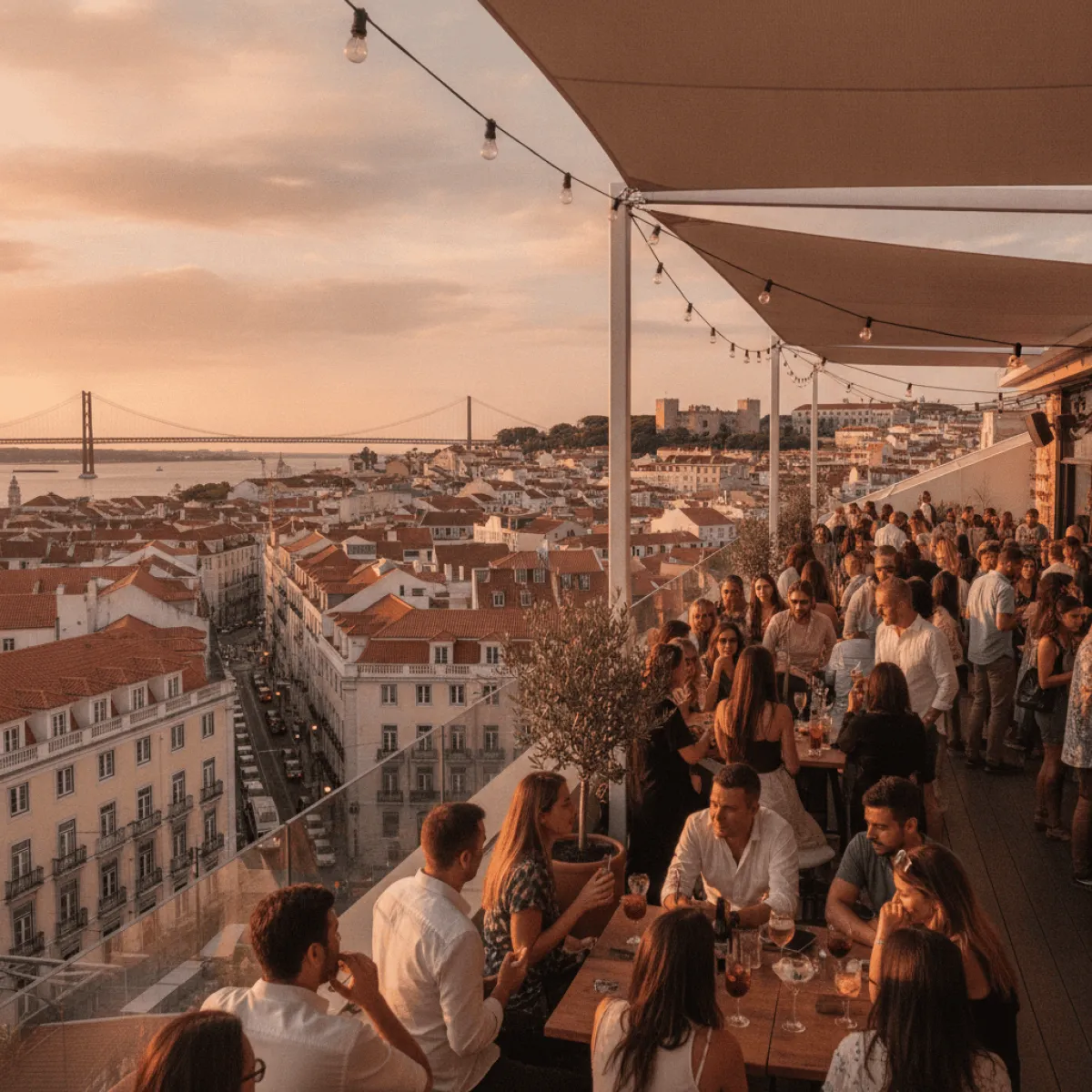
There's an exact hour when Lisbon shifts gears in summer. It's half past eight in the evening, the heat has let go of the cobblestones, and the whole city seems to climb one floor higher. Rooftops fill up, esplanadas push out chairs as far as they'll go, and the Tagus down below catches that burnt orange light that lasts about twenty minutes and that no photograph has ever managed to steal. It's the best hour of the day for a drink in Lisbon, and the worst hour to arrive without a plan. Because everybody had the same idea.
This is my personal map of where to climb, drink, and watch the sun drop over the seven hills. It has opinions. It has a running order. And it carries the warning nobody gives you: the best rooftop in Lisbon is often not a rooftop at all. It's a neighborhood esplanada with a bottle of vinho verde sweating in a bucket.
The half-past-seven rule
Let's start with the essential. Sunset in a Lisbon summer lands around nine at night. Anyone who reaches a popular rooftop after eight does not get a seat. That's the only rule that matters. Arrive early, claim the table, order the first round slowly, and let the place fill up around you. You'll pay the same and keep the best spot in the house.
Park: the secret that isn't one anymore
Park is the rooftop everyone recommends, and rightly so, even if there's nothing hidden about it anymore. It sits on top of a multi-storey car park on Calçada do Combro, in Bairro Alto, and that's exactly the joke: you take a grey, depressing garage elevator, step out on the top floor, and suddenly you're in a hanging garden looking out at the Basílica da Estrela with the river beyond. Cocktails run around ten to twelve euros, beers are friendlier, and there's a DJ in the late afternoon on warm days. My advice: sit on the right-hand side facing the Estrela, and get there before seven. After eight it's elbow to elbow.
Topo Martim Moniz: castle view, square energy
Across the city, on top of a charmless shopping centre in Martim Moniz, is Topo. The view is one of Lisbon's best of São Jorge Castle, framed as if someone designed the angle on purpose. The square below is the most multicultural heart of the city, and that comes through in the music and the energy of the bar. Honest small plates, competent cocktails. Go for the castle view at dusk, when the walls light up. It earns its place.
The alternative I prefer: climb a miradouro
And now the opinion that will get me into arguments. On most summer nights I'd rather have a miradouro than a rooftop. No queue, no minimum spend, no twelve-euro cocktail. You buy a beer from a kiosk, sit on the wall, and you've got the same city at your feet.
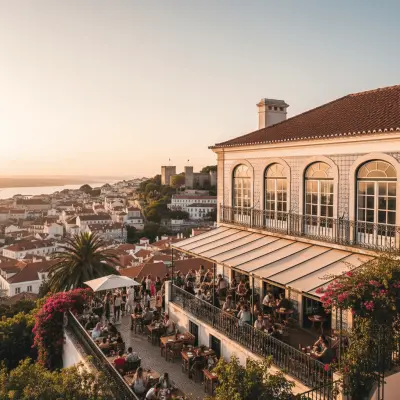
My absolute favorite is the Miradouro da Senhora do Monte, up in Graça. It's the highest accessible viewpoint in the city, and unlike Santa Catarina or the Graça terrace, it usually has room to breathe. Walk up through Graça if your legs allow it, or take the number 28 tram and get off nearby. Bring a bottle of wine from the kiosk, sit under the pines, and wait for nine o'clock. The entire city, from the castle to the bridge, opens up in front of you. It's free and it's better than half the paid bars.
Príncipe Real and the ritual of the esplanada
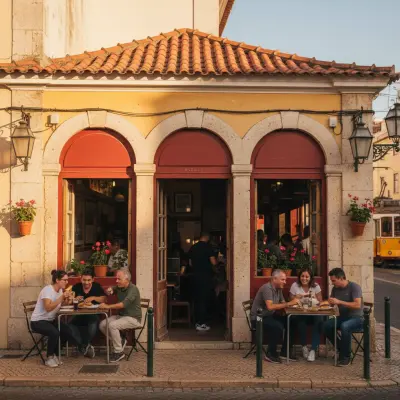
If any neighborhood was built for the summer esplanada, it's Príncipe Real. The garden in the middle of the square has a historic kiosk with tables shaded by a hundred-year-old cedar, that enormous tree whose branches were trained into the shape of a hat. You order an imperial and some olives and sit for an hour watching the neighborhood go by. Around it, Lost In is an esplanada-bar with a view over the lower city and decent cocktails, though it leans more touristy. For me, the garden kiosk wins every time.
To understand why the esplanada is almost an institution in Lisbon, it's worth reading our guide to the city's traditions and neighborhood life. The esplanada isn't just drinking outdoors. It's the theatre where the city watches itself.
Chiado: from historic café to early-evening drink
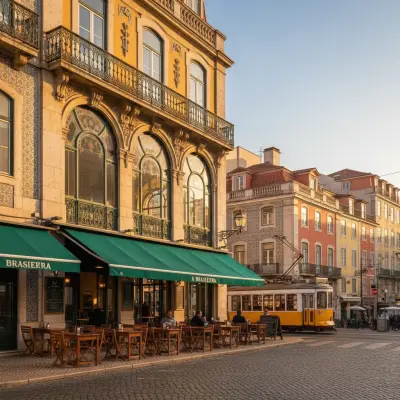
Chiado runs at a different tempo. Before climbing any rooftop, I nearly always stop at A Brasileira, the most famous café in the city, where the bronze statue of Fernando Pessoa is permanently surrounded by phones. Yes, it's touristy, and the espresso costs more than it should. But there's an hour, around six in the evening, when the tourists are at dinner and the locals haven't arrived yet, when you can have that terrace almost to yourself. Order the bica, not the pastry, and use the stop to start the night slowly.
From there you can walk up into Bairro Alto in ten minutes, or drop down to Cais do Sodré to catch the sunset by the river.
Eat before you drink: the mistake everyone makes
Golden rule of any Lisbon night: eat something solid before the third imperial. And in Lisbon that means a bifana. Make a detour to As Bifanas do Afonso, near Rossio, and order a bifana with mustard and a cold imperial. It's cheap, it's fast, and it's exactly the kind of food that holds up a summer night. Eating standing at the counter is part of the experience. Don't sit down waiting for a menu, because there isn't one.
When the night calls for fado instead of a DJ
Not every summer night is cocktails and an electronic beat. There are nights, especially late ones, when the city asks for something else. For those, I head down into Bairro Alto and step into O Faia, one of the most serious fado houses in town. It isn't cheap, there's a minimum spend and dinner, so book ahead and come ready to spend. But hearing fado done properly, after a warm night on the rooftops, is the right way to close the day. A Lisbon summer is this too: moving from the esplanada with its music to the room that falls silent the moment the fadista begins.
Culture by day, drinks by night
If you want to fill the day before the esplanada marathon, two stops pair beautifully with a night of drinking. The Museu Nacional de Arte Antiga, in Alcântara, has what I consider the best museum garden terrace in the city, looking straight out at the Tagus and the bridge. A late-afternoon visit followed by a drink on the museum terrace before closing is a plan few tourists know about.
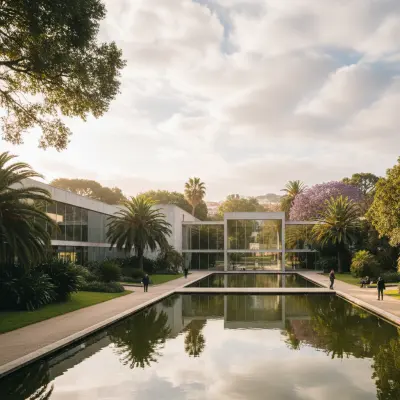
On the opposite side of the city, the Museu Calouste Gulbenkian has one of the loveliest, coolest gardens in Lisbon, perfect for escaping the midday heat before the night begins. Bring a book, sit by the lake, and let the day cool off.
Getting there by bike: the no-sweat version
Lisbon and cycling in summer sounds like a contradiction, especially with seven hills in the way. But there's a smart way to do it: downhill. The From Peak to Pier downhill ride starts at the top and rolls down to the river, which means views, breeze, and zero sweat. If you'd rather stay flat, the Bike a Wish riverside tour follows the Tagus to Belém without climbing an inch. Either one is a good way to spend the afternoon and arrive at the rooftop with a thirst you've already earned.
Escaping the city when the heat bites
When Lisbon pushes past thirty-five degrees and even the esplanadas can't save you, the city empties toward Sintra, where the hills hold a microclimate several degrees cooler and damper. It's worth keeping our Sintra neighborhood guide handy for a day of escape. And for anyone willing to push the trip further north, the route through the traditional sweets of Mafra proves that the best summer esplanada is sometimes the one outside a village pastelaria with a convent pastry on the plate.
My perfect-night plan
Give me one July night in Lisbon and here's how I'd run it: bifana and imperial at six at As Bifanas do Afonso, a slow bica at A Brasileira around seven, up to the Miradouro da Senhora do Monte with a bottle of vinho verde for the nine o'clock sunset, and then, depending on the body, either Park to finish with a beat and a cocktail, or O Faia to close with fado and silence. It costs little, you walk a lot, and you end the night having watched the whole city shift gears. Which is, in the end, what a Lisbon summer does best.