Ericeira in July: Natural Pools, Trails and Festivals
In July, Ericeira runs at two speeds: empty at seven in the morning, impossible to cross by eleven. An honest guide to the natural pools that still have space, the Rota Vicentina trails, and the fresh fish leaving the auction before noon.
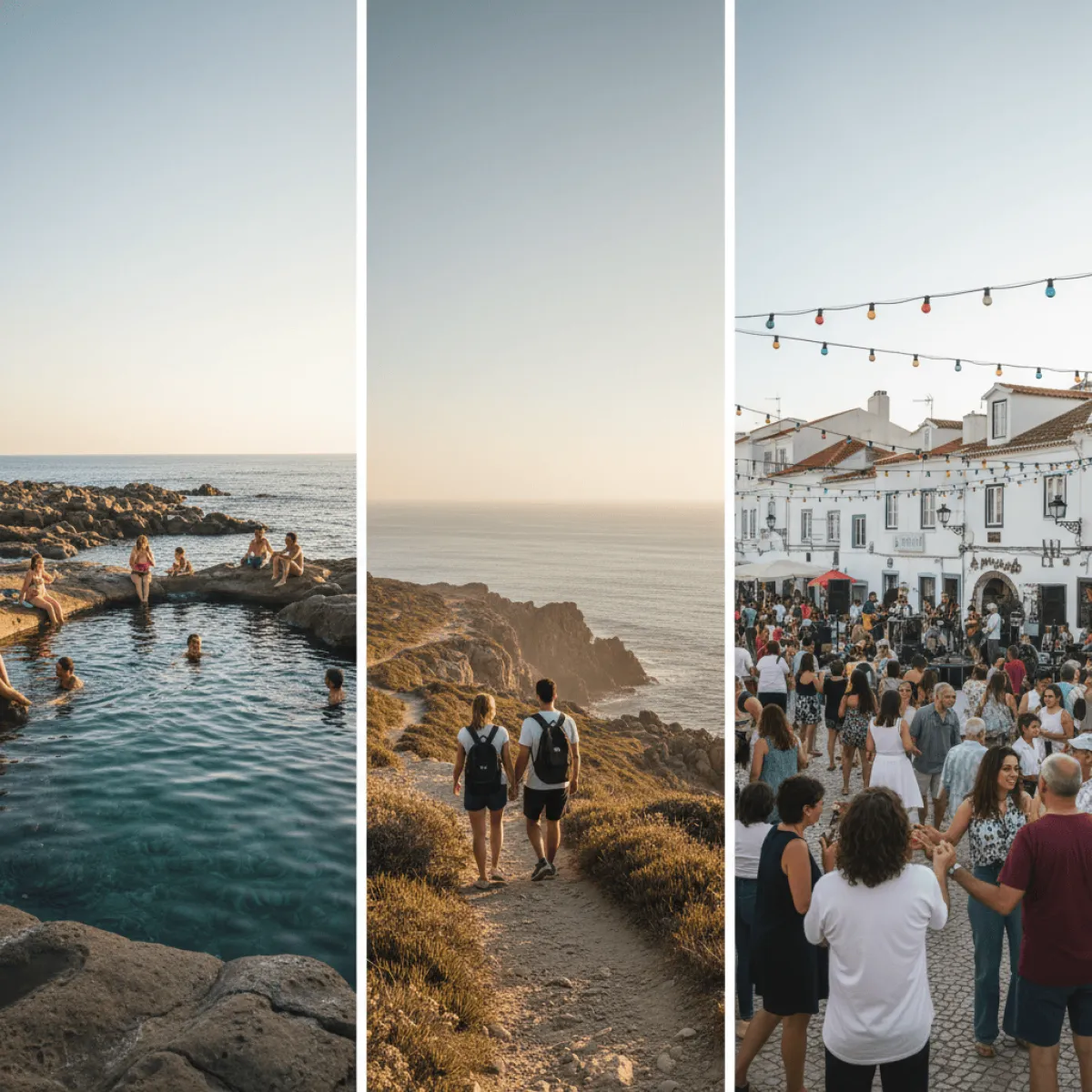
There's a moment around seven in the morning in July when Ericeira still belongs to the fishermen and the surfers. Coastal mist clings to Rua Doutor Eduardo Burnay, the cafes around Praça dos Navegantes are still mid first shift, and the first cars are pulling up at Ribeira d'Ilhas with boards strapped to their roofs. Two hours later, the town will be something else entirely: packed, loud, with queues at Mercearia Nova for fresh bread and kids in swimsuits running toward Praia dos Pescadores. But at seven, there's still room to breathe. That's the secret of July here: arrive early, eat late, and never try to do everything in one day.
July is the hardest month to visit Ericeira, and also the best. The water along the World Surfing Reserve rarely climbs above 18°C even at the peak of summer, which sends rented beach towels packing within half an hour at Praia do Sul and keeps the ocean at a temperature locals call "fresca" and Brazilian tourists call "impossible". Parking near the centre after 10am is a fiction. But plan well and the reward is one of the most concentrated weeks of life on the Portuguese calendar: festivals, fish, coastal trails, and natural pools that stay almost empty if you know the right hour.
The natural pools locals actually use
First thing to understand: "natural pool" in Ericeira means two very different things. There are the human-built tanks like Poça da Maria Pia and the ocean pool below Forte do Cavalar, and there are the rocky reef pools that fill at high tide. The first are predictable and crowded. The second require you to check the tide table every morning.
The Poça is the postcard: a rectangular tank cut into the rock, with views over the fort and the white seafront. In July, forget going between 11am and 5pm unless your plan is Instagram photography featuring unknown heads in the background. It works much better at 8am, with water still settled from the night before, or after 7pm when families head off for dinner and the light turns amber against the whitewashed walls.
To escape the centre, Algés do Norte and Foz do Lizandro have reef pool zones that fill with the tide and where local kids learn to catch crabs. No restaurants, no showers, nothing but dark volcanic rock, small green pools and the distant noise of surfers further south. Bring water, fruit and high SPF sunscreen: the reflection off the rock burns in a way ordinary beach sun does not.
Trails: walk before the heat
If you've never walked the coastal path between Ericeira and Magoito, you don't really understand why this region is a Biosphere Reserve. The Fishermen's Trail, part of the wider Rota Vicentina network, runs past limestone cliffs, blankets of chorão (the pink-flowered succulent that covers the bluffs) and viewpoints over beaches you can barely reach. In July, the rule is simple: start before 8am and be back by 11am, or wait until 5:30pm. Walking between noon and four on the Portuguese summer coast is a mistake paid in sunstroke.
For a structured route, our guide to hiking the Rota Vicentina in Ericeira was written for spring, but most of the trails work in July with the schedule adjustments mentioned above. Distances range from 6 to 14 km and can be done with a small backpack, a 1.5L water bottle and a hat. Trail shoes are preferable to sandals: the rock here is sharp and the dune sections have loose sand that wrecks ankles.
One practical note: several paths cross private land where owners tolerate hikers but not litter or off-leash dogs. If you bring a dog, short leash and a bag. I've seen fines issued by the local justice of the peace and not all judges are sympathetic to distracted tourists.
The historic centre in half a morning
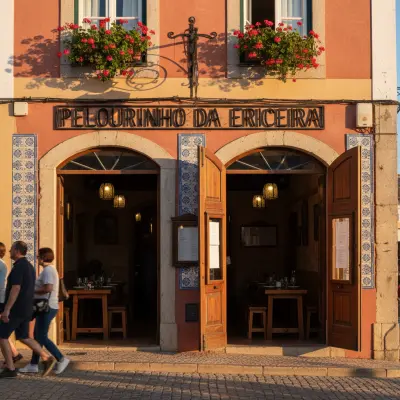
Ericeira has a small centre you can cover in two hours of slow walking. The logical starting point is the Pelourinho da Ericeira, in the main square, the symbol of the town charter granted in 1229 by King Sancho II. It's low, plain, with the typical late Manueline crown, surrounded by cafes that still serve coffee at reasonable prices if you stand at the counter (the terrace costs nearly double in July).
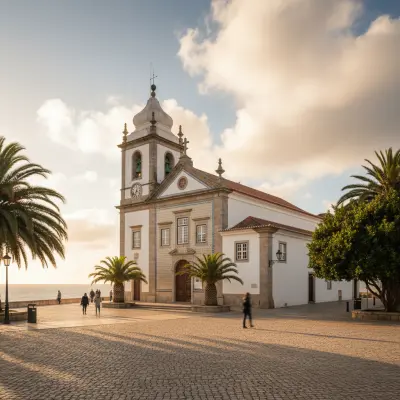
From there, head to the Igreja de São Pedro, the main church in town. Devotion to Saint Peter weighs heavily here, and not by accident: he is the patron saint of fishermen, and the procession on 29 June still floods the streets. In July you can still feel the echoes of the festivities, and it's common to find bunting hung between street lamps at least until the second week of the month. Inside, the 18th-century azulejos are worth a 15-minute stop, especially the lateral panels depicting scenes from the saint's life.
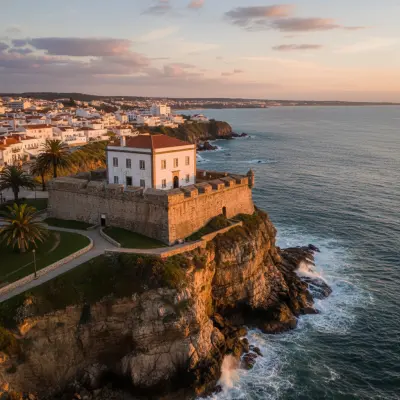
The walk closes well at the Forte de Nossa Senhora da Natividade, built in 1706 to defend the harbour from corsairs. Today it serves mostly as a viewpoint: from there you see the whole bay, the natural pool below and, on clear days, all the way to Cabo da Roca. Climb up at the end of the afternoon, when the sun strikes from the west and the fort stone turns honey-coloured. Bring a light jacket: the north wind known locally as "nortada" does not joke around, even in July.
Popular festivals: what still happens in July
The big São Pedro festivities are in June, but July is not a dead month. The Festa de Nossa Senhora da Boa Viagem, usually celebrated on the first weekend of August, starts taking shape in July with the first stalls arriving at Praia dos Pescadores. The streets fill with cut-paper decorations, the local brass band rehearses and seafront bars stretch their hours past midnight.
More discreet, but equally interesting, are the festivities of the rural parishes around Ericeira. In Carvoeira, Santo Isidro de Pegões and Encarnação, summer street parties offer grilled sardines, live music (expect a repertoire ranging from Quim Barreiros to Tony Carreira without apology), and cheap but effective fireworks. These are festivals for those who want to see real Portugal, untouched by tourism. Arrive before 9pm if you want a proper sardine plate: after that, the queues are biblical.
For historical context, our guide on local culture in Lisbon, traditions and neighbourhoods is worth reading: many of the coastal festivities in this region follow patterns similar to the Alfama and Graça street parties, with local adaptations. The difference is that here there's more fish and less basil.
Where to eat (skipping the tourist menus)
The golden rule for eating in Ericeira in July: never trust a restaurant with a waiter at the door offering you a table in English. The good places don't need to. The town has a small but active fishing fleet, and what comes out of the Ericeira fish auction reaches kitchens in hours, not days. Sardines, sea bream, line-caught sea bass, squid, octopus, percebes in reasonable quantities when they come down from the Sintra coast.
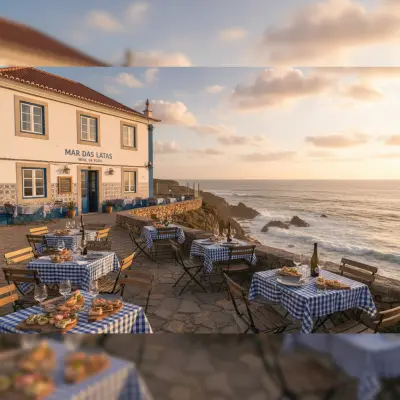
The Mar das Latas Wine & Food is one of the houses where you see that the concept of contemporary Ericeira has moved beyond the traditional grilled-fish restaurant. Quality Portuguese tinned fish, a bottle of wine opened without ceremony, small tables where you graze slowly. It's the kind of place where the couple at the next table orders a tin of mussels in escabeche, slow-fermented bread and a bottle of Alentejo clay-pot wine, and where three hours pass without noticing. Reserve at weekends: the capacity is small and July fills up.
For pure fish, go straight to the market: arrive early (before 11am), buy what looks freshest, and take it to one of the restaurants on Rua das Furnas that grill to order. It costs less than half what you'd pay for the same fish from the menu. Locals have been doing this for decades. Tourists pay three times more 50 metres away.
Easy day trips from Ericeira
The town is a perfect base for exploring the western region and the Sintra hills. Mafra is 12 km away, with its monumental convent worth half an afternoon, and at Easter the local pastry tradition is strong: for visitors at the right time of year, our guide on Easter sweets in Mafra offers leads that work year-round, because several bakeries keep traditional recipes through the summer.
Sintra sits about 30 minutes by car along the coastal road, avoiding the A21 which gets terrifying traffic from 9am onwards in July. If you head to Sintra, go very early in the morning or late in the afternoon, and use our Sintra neighbourhood guide to step outside the Pena Palace, Quinta da Regaleira, Cabo da Roca circuit, which in July becomes a tourist via crucis. There are whole Sintra neighbourhoods that stay empty even at peak summer.
Where to sleep and what it costs
Ericeira in July stopped being cheap about ten years ago. A double room in a decent central hotel rarely drops below €150 a night, and apartments on Booking start at €120 if you reserve in advance. The serious alternative is to stay 5 to 10 km from town, in Mafra, Encarnação or São Lourenço, where rural houses go for €70 to €100 with pool, garden and parking. A car becomes mandatory, but in July a car is mandatory anyway: the Mafrense bus runs, but with reduced frequency on weekends.
For surfers, hostels and surf camps cluster around Ribeira d'Ilhas and São Lourenço, with packages including breakfast, lessons and beach transport. Average costs: €350 to €600 per week, depending on season and comfort. July is high season; book at least six weeks in advance.
What to avoid
Three things not to do in July in Ericeira. First: don't drive into the centre after 10am, leave the car at the peripheral car parks (there's a big one near the fire station) and walk down. Second: don't enter the water without understanding the currents, especially at Ribeira d'Ilhas and Coxos, which are advanced-surfer beaches and not bathing beaches. There are yellow and red flags that get ignored at your own risk. Third: don't order the daily special at restaurants on the main avenue without asking the price first. In July, some take advantage.
Finally, a personal suggestion: set aside one night to stay out past 11pm at a viewpoint like the fort or Santa Marta. In July, with low tide, you can hear the ocean breaking on the rocks at a frequency that gets lost during the day in the noise of the town. It's free, lasts an hour, and is probably the best thing Ericeira offers in the middle of summer.