Visit
€
Igreja de São Pedro
Ericeira
In 1863, the people of Ericeira buried their 16th-century Manueline pillory to protect it from thieves. It stayed underground for 61 years. When it was finally dug up and restored in 1924, it went back to the same square as if nothing had happened.
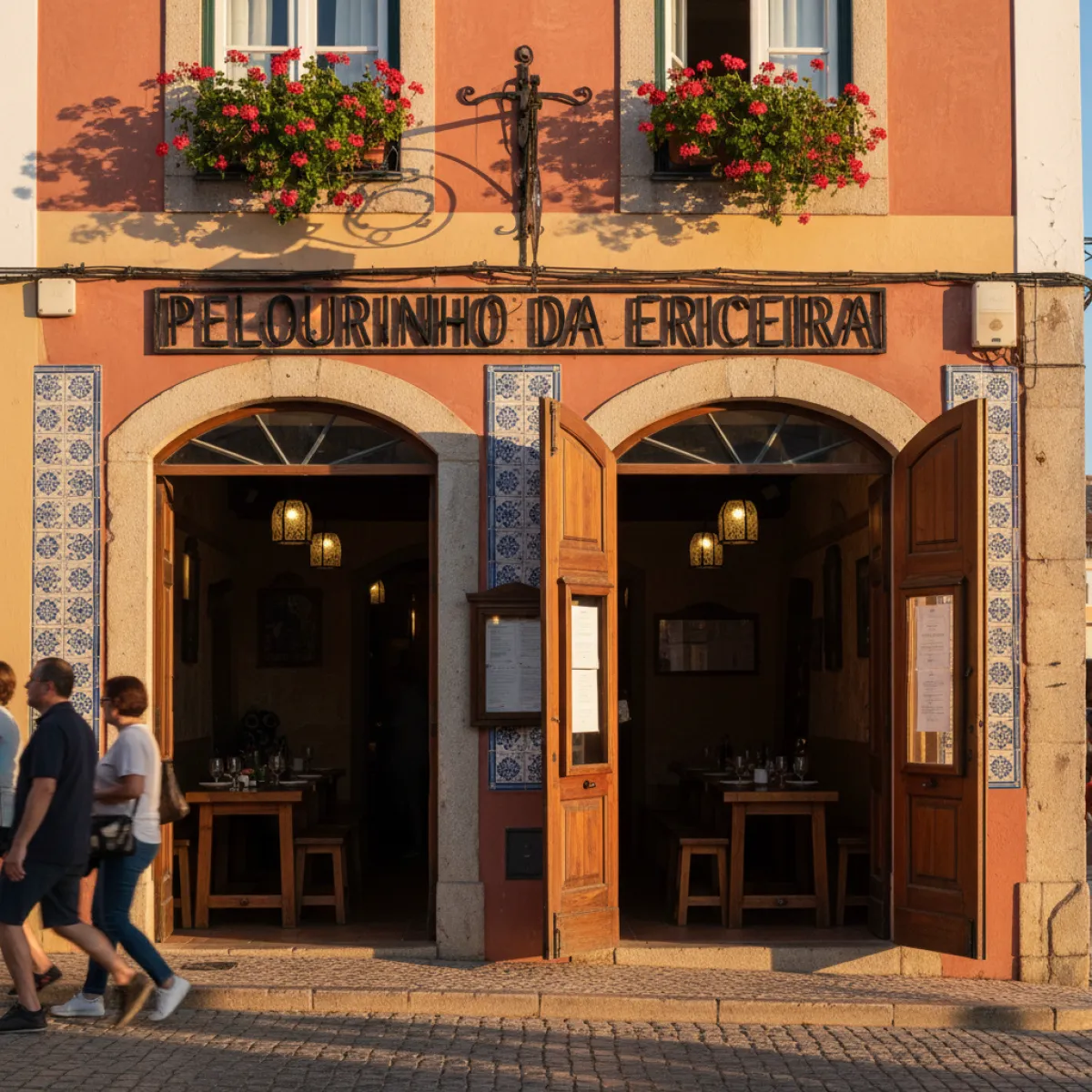
There is a particular irony in the fate of Ericeira's Pelourinho. A monument built to be seen, to project authority, to remind the population of the crown's reach, spent more than sixty years underground. Not by royal decree, not by earthquake, but because the locals decided that the safest place to keep it was out of sight. In 1863, they buried it. In 1924, they dug it back up, restored it, and returned it to the square that now bears its name. That story, compact and a little absurd, tells you almost everything you need to know about Ericeira.
The village has always operated on its own logic. If you want to understand that logic more fully, the guide The World Surfing Reserve: Beyond the Waves in Ericeira's Old Town is a good place to start before you arrive.
A pelourinho is a stone column erected in public squares throughout Portugal during the medieval and early modern periods. It served as the civic marker of a town's legal status: without one, a settlement had no formal autonomy. It was also used as a public shaming post, and occasionally for the physical punishment of minor offenders. Ericeira's example is 16th century and built in the Manueline style, the decorative language Portugal invented during its Age of Discovery, mixing nautical motifs, religious imagery, and naturalistic forms into something that has no real equivalent elsewhere in European architecture.
The column stands in the Largo do Pelourinho, in the oldest part of the village. The square is modest: whitewashed low houses on three sides, the kind of proportions where a single stone column holds the space without effort. You reach it on foot, through narrow streets that descend gradually from the main road toward the port. There are no signs announcing its significance. You simply turn a corner and it's there.
From Lisbon, Ericeira is roughly 50 kilometres via the A8 motorway and then the N116. By car the drive is straightforward, but parking in the historic centre in summer is a reliable source of frustration. The practical approach: use one of the peripheral car parks (they're signposted on the approach roads) and walk in. The village is small and the Largo do Pelourinho is no more than ten minutes on foot from any point in the centre.
By public transport, the Mafrense bus company runs regular services from Lisbon (Campo Grande terminal) to Ericeira. It's not fast, but it's cheap and deposits you close to the centre.
The monument itself is free, open at all hours, and requires no reservation or ticket. It is a public space and it behaves like one. Early morning, before the village stirs, the Largo has a quality that the summer crowds entirely remove. If you're visiting in April, you may find the village in the middle of preparations for Ericeira at Easter: roasted lamb, folar, and the rituals that go with both, which transforms the town into something considerably more animated than its winter self.
The entrance is free. Price is not a consideration here. But the square invites a pause, and for that pause there are decent options nearby. Mar das Latas Wine & Food is one of the more interesting spots in the village if you want to eat well without the theatrics of a tourist-facing menu.
The counterargument writes itself: Portugal has hundreds of pelourinhos, and this is just another old stone column in a small square. That argument is reasonable if you're optimising for immediate spectacle. But if what interests you is how a community understands its own past, the Pelourinho da Ericeira is a genuinely instructive object.
Return to 1863. A group of people decided that the correct response to the threat of theft was to bury their civic monument. Not to build a fence around it, not to move it to a museum, not to petition the government for protection. They put it in the ground and maintained that knowledge through three generations until, in 1924, someone concluded the threat had passed and the column belonged back in the square. There is a particular kind of stubbornness in that decision, a quiet confidence in collective memory over institutional care, that says something specific about Ericeira.
The 1924 restoration was not a tourist project. It happened during a period of considerable political turbulence in Portugal, only fourteen years after the monarchy had collapsed and King Manuel II had left the country from the beach below this very village. Returning the pillory to the Largo was a statement about continuity, about the village asserting its own history at a moment when the national narrative was being rewritten from above.
The Pelourinho da Ericeira is at Largo do Pelourinho, 2655-330 Ericeira. No phone, no website, no opening hours. It is a stone column in a square. That is precisely what makes it trustworthy.