Covilhã on Foot: Serra Trails Ranked by Grit
Five Serra da Estrela trails ranked by real difficulty, with strategic stops at cafés that serve breakfast properly and advice on when absolutely not to come (August, always).
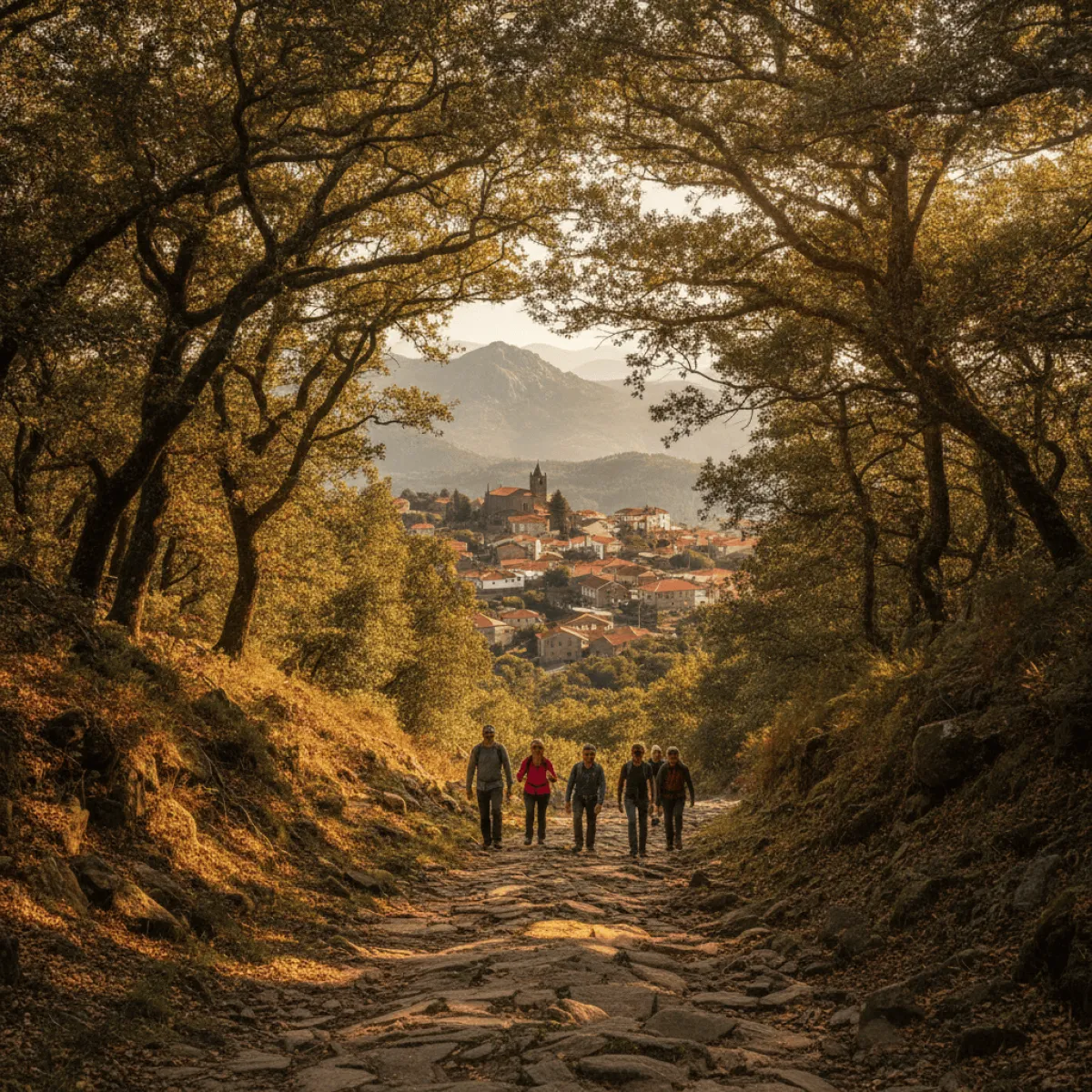
There are two ways to get to know Covilhã. The first is the postcard version: stand at the viewpoint in Praça do Município, look out over the Cova da Beira valley, photograph the schist facades, eat a pastel de feijão and leave. The second is to lace up boots, fill a bottle at a public fountain (yes, they still exist) and head up the trails that climb from the city to the 1,993 metres of Torre, mainland Portugal's highest point. This guide is for the second crowd.
A warning first: the Serra da Estrela is not the Gerês. There are no hidden waterfalls around every bend, no villages with a bifana joint at the end of the trail. What it has is granite, wind, abandoned shepherd's huts and long silences. It's a horizontal landscape, not a vertical one. And it is, without question, the best natural park in Portugal for walking four straight hours without crossing another human being, outside of August.
I've ranked the trails by real difficulty (not the one printed on the panel) and by what I consider the effort-to-reward ratio. I start with the easier ones, doable in half a morning before lunch, and end with the routes that demand food in the pack and respect for the weather. I left out trails that officially exist but haven't been waymarked properly in years, or that end on tarmac. Not worth your time.
Before you start: the Covilhã ritual
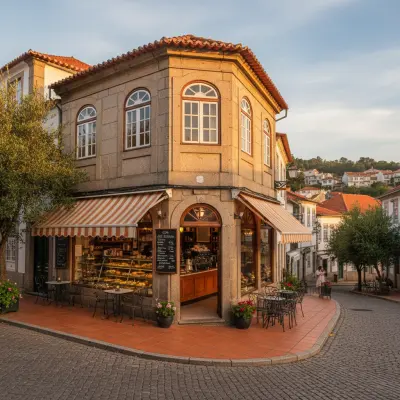
The walk starts before the walk. Locals know this. Breakfast happens at one of three places, and your choice says a lot about the kind of hiker you are. If your trail starts early and you want a serious double espresso and toast that will hold you for four hours, go to Café Primor. It's where parents take kids before school, where retirees read the paper in silence, where the waiter knows your order before you ask. No ceremony, no latte art, no jazz playlist. Perfect.
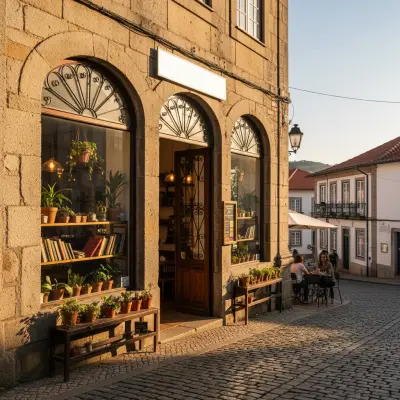
If you prefer something slower, with table space to open the map and argue about the route, Café Saudade is the better call. More room, unhurried service, decent homemade cakes. Don't go for the name (which is a cliché), go because it's one of the few cafés in town where you can sit for an hour without anyone glancing at you sideways.
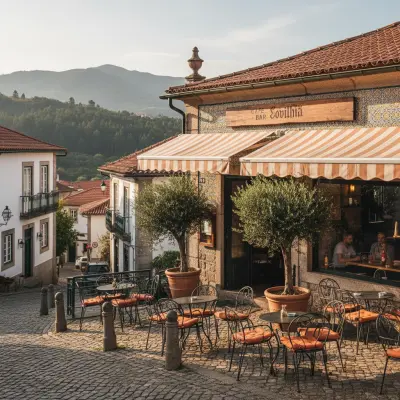
For those who want to start with sun on the face, Café Bar Covilhã Jardim has a terrace facing the public garden. It's also the perfect place for the return: after five hours on granite, sitting there with a cold beer and a plate of olives is the best reward the city offers for under ten euros.
Easy trails: green legs, guaranteed postcards
1. PR3 Covilhã, Cabeço Trail (about 6 km)
This is the trail I recommend to anyone who arrives in town on Friday night and wants to do something on Saturday morning without overcommitting. It leaves from the Cova da Beira side, climbs gently through oak and pine and offers, at the highest point, a clean view over the city and its slate roofs. Two hours at a comfortable pace.
Worth the effort? Yes, but not for the scenery, which is decent rather than memorable. It's worth it as an introduction. This is where you understand the kind of terrain: loose schist flakes, sections of forest track, the occasional bit of dirt road. If this already feels like too much, forget the trails in the next sections. If it feels too easy, you're ready for what comes next.
2. Faias do Pessegueiro Route (about 8 km)
Little known outside the region, this route starts from the village of Sarzedo. The beech trees are the detail that justifies the trip: it's one of the rare beech stands in the Beira Interior, and in October and November, when the leaves shift to copper yellow, the effect is something you don't forget. In January, with frost, it's a different story. In July, with heat, pick another trail.
Wear waterproof boots. There are a couple of sections with springs bubbling up in the middle of the path year-round. Finding good signage is difficult, so download the GPX before leaving home.
Medium trails: where the mountain starts talking properly
3. PR1 MTG, Snow Wells Trail (about 9 km)
This is the most underrated trail in the entire Serra da Estrela, and I say it with conviction. It starts from Manteigas (30 minutes by car from Covilhã), crosses the Zêzere Valley along the left bank and ends at a cluster of 18th-century snow wells that were used to preserve ice through summer. For anyone who wants to go deeper into this route and its history, I recommend reading Manteigas: Hiking the Serra da Estrela Snow Wells Trail, which covers the logistics in more detail and frames the ice industry of the region.
The difficulty is medium because there's a steep climb in the first kilometres, but the rest is comfortable. Do it on an October or April morning, with snacks in the pack, and bring a swimsuit if you're going in May or June: the river pools are freezing, but they work.
3. Loriga Gorge Trail (about 10 km)
The Loriga Gorge is the most spectacular in the entire range, and yet it remains less visited than Covão dos Conchos (which now has a queue for photos). The trail descends along the stream to the river beach of Loriga, crossing a gorge with granite walls over a hundred metres tall. In June and July, with high water, it's cinematic. In August it's packed. In September, perfect.
A warning: there's about 600 metres of negative elevation. The descent is the easy part. The climb back, under the sun, is brutal. If possible, leave one car in Loriga and hitch a ride up to the starting point. Local taxis charge around 15 euros for this service (check locally).
Demanding trails: for those who take the mountain seriously
4. PR1 SEI, Penhas Douradas and Rossim Valley Trail (about 14 km)
Now we need preparation. The route starts at Penhas Douradas, crosses granite plateaus at 1,500 metres, passes through the Rossim Valley (where, in summer, you can swim in the reservoir) and returns via the trail of the old shepherd's huts. Five to six hours of effective walking, with little shelter from sun or wind. In July, 30 degrees below and 22 above, it's still comfortable. In February there can be ice on the rocks.
The scenery is the reason to come: granite, granite and more granite, with yellow lichen breaking the monotony. No trees. Wind always. In return, silences that only exist here and in the Azores. Carry two litres of water per person, even if you'll pass a fountain on the way back: the dry air takes everything.
5. Covilhã, Torre, Manteigas Crossing (about 22 km)
This is the trail that separates the walkers from the strollers. It climbs from Covilhã up the glacial valley (the old Roman road, with visible remains at several points), passes Torre and descends to Manteigas through the Zêzere Valley. Seven to nine hours, depending on pace. It's not technically difficult. It's long, high and exposed.
I recommend splitting it over two days with an overnight at the Torre lodge or one of the rural guesthouses in Manteigas. It can also be done as an integral crossing, but it requires real fitness. Don't try in January or February without snow gear. Torre, remember, sits at 1,993 metres and the weather changes in an hour.
When to go, and when absolutely not to
The worst time to walk in the Serra da Estrela is August. Not because of the heat (manageable) but because of the people. The roads to Torre clog up by 10am, the parking lots at the popular trails fill, and what should be silence becomes conversations in three languages and convoys of motorbikes.
The best time, in my opinion, is mid-September to mid-November. The days still have light, temperatures are mild, there's colour in the beeches and chestnuts, and the tourists have gone home. May and June are good too, with the bonus of high water in the rivers. Winter is for those who know what they're doing: the mountain with snow is majestic but unforgiving.
Logistics: getting there, sleeping, eating at the end of the day
Covilhã has a direct train from Lisbon, with a stop in Coimbra. Around four hours. By car, you take the A23 and A25, and it's three and a half hours from Porto. For anyone arriving without a vehicle, renting a car is essentially mandatory if you want to do more than one trail: public transport to the trailheads is almost non-existent.
For sleeping, the city has decent options. There's the Pousada Serra da Estrela, in the former sanatorium, worth the night even if you're not hiking. There are also local rentals in renovated houses in the historic centre, generally much cheaper. If you want to be closer to the trails, stay in Manteigas: the village is small, the rural guesthouses are genuine, and breakfast with mountain cheese is better.
At the end of the day, after the shower, the best place to eat in Covilhã isn't any of the tourist restaurants in the centre. It's any tasca in Cova da Beira that has arroz de feijão com couves and a couple of daily specials chalked on a board. Order house wine: the Dão region begins right next door, and the wines served by the glass are often better than many Reserva bottles on supermarket shelves.
For the days when the legs say no
Not every day of the week needs to be a trail day. For the rest days, or when the weather doesn't cooperate, Covilhã has its own identity worth exploring. The city was, for over two centuries, the Portuguese Manchester: this is where the wool that clothed Portugal and half the world was spun, woven and dyed. That legacy is alive in the chimneys, the facades of old factories, and the street art that covers the disused buildings.
The guided walk Wool and Walls: A Guided Tour of Covilhã's Industrial Heritage and Mural Art does exactly that route, and is the best way to understand why the city has the mural density it does. For a deeper, museum-grade version, Covilhã's Wool Museum, housed in a former industrial complex, tells the story with original machinery and pieces. Worth two calm hours.
If you still have days to spend and the mountain is closed by snow or rain, two regional detours make sense. The guide Covilhã to the Schist Villages: A One-Day Road Trip proposes a circuit through rural villages that look suspended in time, with a stop for lunch at a decent tasca. And in March, if luck is on your side, there's no better outing in the region than the one I describe in The Ephemeral Bloom: the cherry blossoms in Fundão last barely a week, but they're worth the trip.
One last note
Covilhã isn't Sintra and it isn't Gerês. It doesn't have dozens of boutique hotels or sea views or a Michelin restaurant opening every month. It has granite, wind, idle factories and people who still say good morning to strangers. For walkers, it's the best the country has to offer: serious silence, scenery that doesn't tire, and a discreet city to come back to at the end of the day, with a beer on a terrace and punished legs. There is no better combination.