Manteigas: Hiking the Serra da Estrela Snow Wells Trail
Between the 17th and 18th centuries, stone pits high in Serra da Estrela stored compacted snow to supply Lisbon with ice. The trail from Manteigas climbs 800 meters to these forgotten ruins, rewarding every step with views across the Zêzere Glacial Valley.
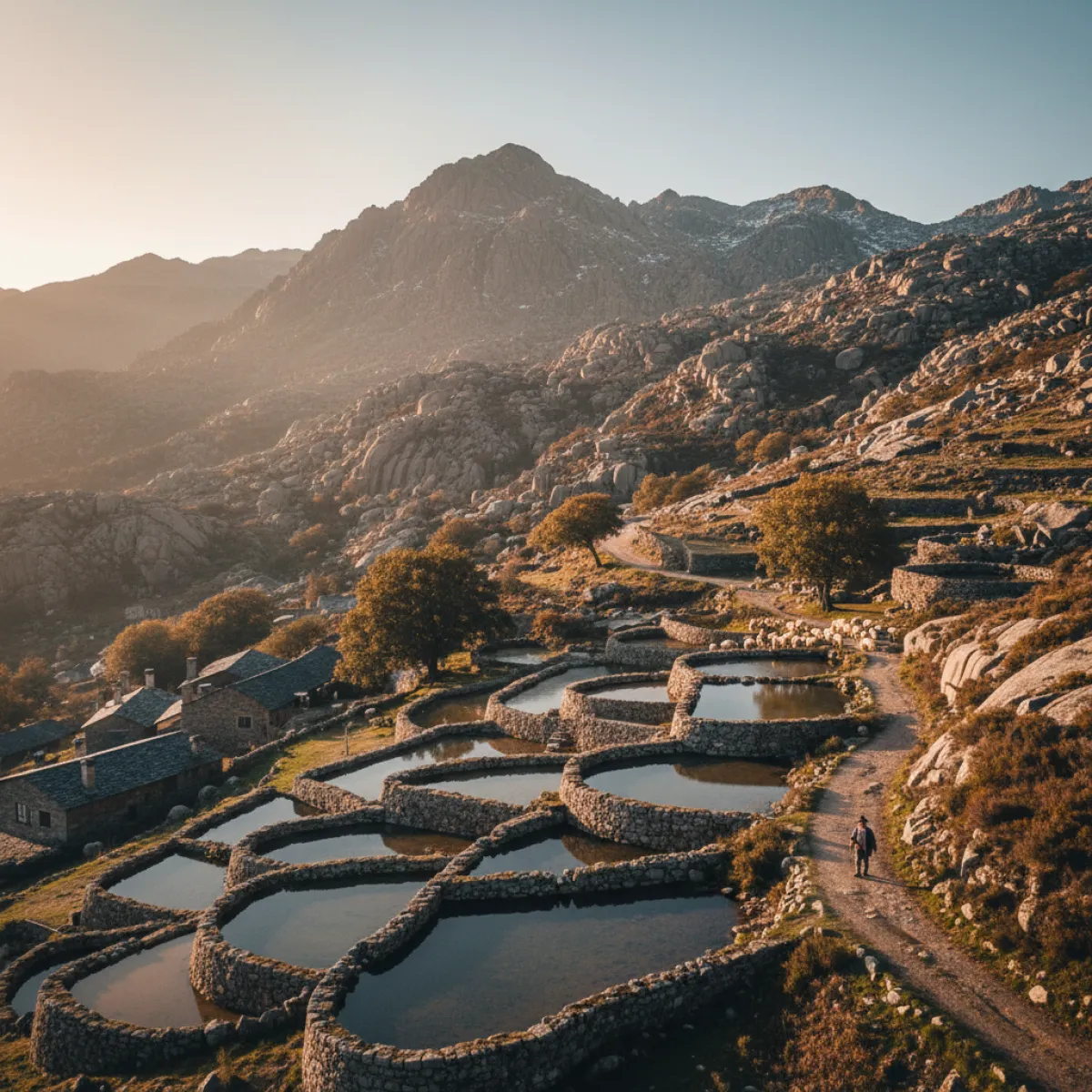
There's a trail in Serra da Estrela that most visitors never hear about. While everyone drives up to Torre for the obligatory photo at mainland Portugal's highest point, or strolls to Covão d'Ametade for the Instagram shot, the Poços de Neve trail out of Manteigas quietly delivers something better: a proper mountain walk to the ruins of a forgotten ice industry, with views that make the effort worthwhile and a story that makes the ruins fascinating.
Snow Wells: Portugal's Forgotten Ice Trade
Before refrigeration, someone had to solve the ice problem. Between the 17th and 18th centuries, Serra da Estrela was the main supplier of snow and ice to Lisbon, Coimbra, and other Portuguese cities. The poços de neve, circular stone pits dug into the high plateau above 1700 meters, were used to store compacted snow, which was then transported downhill on mules, wrapped in straw and ferns to slow the melting. The ice served to preserve food, make sorbets, and was even used medicinally. A brutal logistics operation, carried out by hand, in conditions that would get a modern workplace shut down.
Several of these structures survive on the plateau today, in varying states of repair. They're essentially circular stone-lined pits, two to three meters deep, slowly being reclaimed by mountain scrub. Don't expect polished interpretive panels, part of the appeal is arriving and having to piece together what you're looking at, with only the wind and your imagination for company.
The Trail: Manteigas to the Plateau
The classic route starts in Manteigas and is, let's be honest, demanding. We're talking roughly 16 kilometers round-trip, with over 800 meters of cumulative elevation gain. This is not a walk for someone who bought their boots yesterday. That said, the trail is reasonably well-marked and presents no technical difficulties, it's simply long and steep.
The ascent begins in the village and follows the Zêzere river valley, passing through forest zones before opening onto the high-altitude landscape. It's at this transition that the walk changes character entirely: the trees vanish, granite takes over, and the horizon extends in every direction. On clear days, the view from the plateau is absurd, you can see the Gardunha range and, beyond it, the plains of Beira Baixa stretching south. If you've ever thought about catching the cherry blossoms in Fundão, know that from up here, on a clean spring morning, you can almost make out the white of the trees below.
The descent follows the same path, or, if you've arranged transport, you can continue across the plateau toward Nave de Santo António and descend via a different trail. This second option adds logistical complexity but spares your knees the punishment of retracing the climb.
When to Go
The ideal window runs from May to October. In winter, the plateau can have genuine snow, not the decorative flurry that occasionally makes news in Lisbon, and conditions change rapidly. Even in summer, bring an extra layer. At 1800 meters, the wind cuts through everything and the temperature can drop ten degrees compared to Manteigas.
Best advice I can give: start early. At seven in the morning, as you leave Manteigas, the village still smells of fresh bread and the Zêzere valley catches that low-angle light that does the photography for you. More importantly, you reach the plateau before the heat sets in and have the entire afternoon for a leisurely descent.
What to Bring
Water. More water than you think you need. There are no springs on the plateau, no cafés, no nothing. Carry at least two liters per person, more on hot days. Pack lunch, sunscreen (altitude is deceptive), and boots with proper soles, the high-altitude terrain is rocky and uneven.
Manteigas: More Than a Trailhead
Most hikers treat Manteigas as a logistics base and nothing more. That's a mistake. The village deserves at least an afternoon of attention, preferably after the hike, when your legs are asking for a terrace and a glass of wine.
Manteigas is one of the few mountain villages in Serra da Estrela that has maintained a life of its own without turning into a stage set for tourists. There are working grocery shops, people on the streets, a health center and a school. That gives it a character that's missing from other spots in the range that exist solely for the weekend crowd.
Food-wise, the star is Serra da Estrela cheese, and here you buy directly from producers, not in souvenir shops with inflated prices. Ask at the village cafés who has fresh cheese to sell. Roast kid goat and arroz de carqueja (a rice dish made with a local mountain herb) are other regional staples worth seeking out. As for specific restaurants, the ones along the main street generally offer good value, check locally what's open, as outside peak season not all operate every day.
The Zêzere Glacial Valley
The Snow Wells trail follows, in its initial stretch, the Zêzere Glacial Valley, one of the most impressive examples of glacial geomorphology on the entire Iberian Peninsula. This isn't a fact you read and forget: when you're inside the valley, the scale is self-evident. The lateral walls rise steeply, the floor is flat and wide, and you immediately understand that this was carved by a force far greater than a river.
Covão d'Ametade, halfway up the valley, is the point where most visitors arrive by car and turn back. If you do the route on foot from Manteigas, you pass through it with the advantage of seeing it without the usual crowd, especially if you followed the advice to start early.
Extending the Trip: The Serra and Beyond
If you have more than one day, Manteigas works as a base for exploring the entire eastern face of Serra da Estrela. The Zêzere Valley offers other trails, some shorter and more accessible, and the road to Torre (N338) is an experience in itself, winding, dramatic, and with stops that justify bringing the camera.
For those wanting to complement the mountains with something different, a road trip from Covilhã to the Schist Villages is the perfect contrast: from the granite and altitude to the warm, dark schist of the valleys. Covilhã is less than 40 minutes from Manteigas and serves as a gateway to that other world entirely.
And if you're in Portugal in March and want a radical change of scenery after the mountains, know that the west coast is at the peak of wave season. It might seem like a strange transition, from snow to surf, but that's one of the beautiful things about a country this size. Check our guide to surfing Portugal in March if the idea appeals.
Practical Information
Manteigas has accommodation across budget ranges, from simple guesthouses to rural houses with more comfort. Book ahead on long weekends and in summer, the village is small and fills up fast.
By car, Manteigas is roughly 3.5 hours from Lisbon via the A1 and A23, or 2 hours from Porto via the A25. There are no practical public transport options to the village, this is a car destination, full stop. Parking in the village is generally easy, except on high-traffic days.
For the Snow Wells trail, you don't need a guide, but consider downloading the GPS track before setting out, network coverage on the plateau is patchy. The Wikiloc app has several recordings of this route with reliable directions. There's no entry fee, but treat the plateau with the respect it deserves: carry your rubbish out, don't light fires, and remember you're inside the Serra da Estrela Natural Park.
One final thought: if you do this walk and catch the mountain trekking bug, know that Serra da Estrela has a trail network that could keep you busy for weeks. But start with this one. The Snow Wells tell a story that no other trail in the range tells, of people who worked in extreme cold so that, hundreds of kilometers to the south, someone could have a cold glass of lemonade.
