Manteigas in Winter: Where to Sleep When Snow Falls
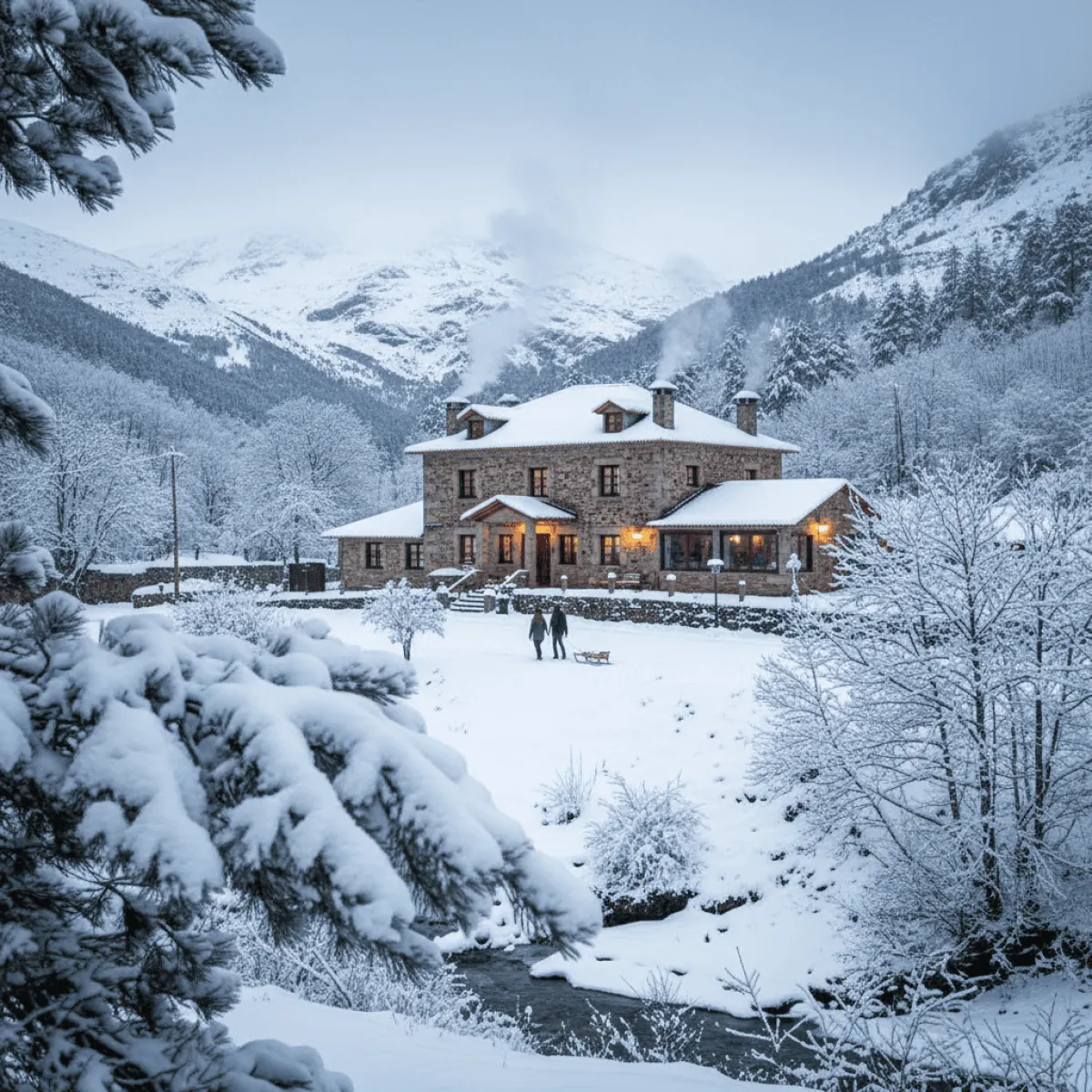
In January, the mistake is sleeping in Covilhã and driving up every day. From Manteigas, you walk out in your boots and in twenty minutes you are in the Zêzere Valley before the buses arrive.
Here is the thing nobody tells you about Manteigas in January: the cold is not the problem. The problem is that half the country decides, on the same Friday morning, that they want to see snow. They all drive up the N232 together, in a chain of cars winding through the Zêzere Valley to Torre, with summer tyres and crying children in the back seat. People who know do the opposite. They sleep in the village, wake up early, and by the time the buses from Lisbon reach the plateau at eleven, they are already back at the café, boots drying next to the heater.
Manteigas is the only Portuguese town entirely inside the Serra da Estrela Natural Park. It sits at 700 metres, on the floor of a textbook glacial valley, which means two practical things: first, it is warmer than Torre (at 1993 metres, where it tends to be snowing when Manteigas just gets rain); second, it is strategically placed as a base for everything from the Snow Wells to Loriga, by way of Penhas Douradas. In short, it is where you should sleep. Anyone basing themselves in Covilhã or Guarda loses an hour each way, and that hour, on a short winter day, is expensive time.
Why sleep in Manteigas instead of Seia, Covilhã or Guarda
Let me be direct: Covilhã has more restaurants, Guarda has more hotels, Seia has the bread museum. But none of those three towns puts the Zêzere Valley at your doorstep at dawn, when frost is still on the meadows and mist curls along the slopes. From Manteigas, you walk out of your accommodation with boots on, drive twenty minutes, and you are at Covão d'Ametade, or forty minutes from Torre. Sleeping in Manteigas is playing the home game.
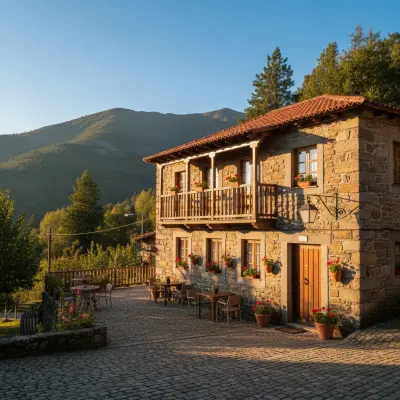
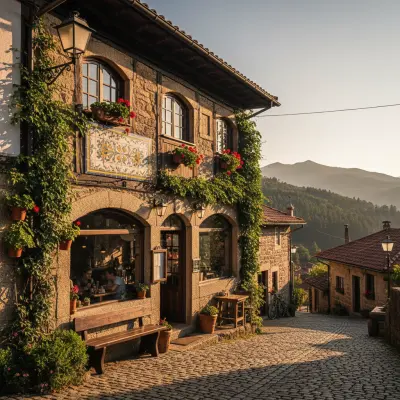
The place I recommend without hesitation is Casa da Vila, a restored stone house in the historic centre, near the parish church. It has the kind of central heating that makes all the difference when it is two below outside and you want to take your gloves off to write a message. The location is the trump card: you are walking distance from everything that matters in the village, including the bakery where, at seven in the morning, the smell of warm bread drifts out the door. Book ahead for January and February weekends. Manteigas has limited capacity, and when serious snow is forecast, rooms sell out by Tuesday for the following Saturday.
What to expect from the cold (and what to bring)
January and February are the most reliable months for snow. December is possible but a lottery. March is too late to guarantee snow at low altitudes, although Torre almost always has something white into April. The essentials: waterproof boots (no, trainers will not do, even if they are Salomons), tyre chains if you plan to drive up high, gloves that are not the wool kind that get soaked in five minutes, and layers. A thermal base layer, a wool or fleece mid-layer, a windproof waterproof shell. If you bring one of those huge down parkas, you will sweat going up and freeze standing still.
Eating in Manteigas: where the locals go
Beira Interior winter cooking is an exercise in well-spent calories. Roast meats, hearty stews, bean and cabbage soup, Serra cheese spread on rye bread. About the cheese: real Queijo Serra da Estrela DOP is made between November and March, with raw bordaleira ewe's milk and thistle as the coagulant. Eating a properly runny amanteigado in Manteigas, in February, with a spoon and a slice of broa, is one of those moments that justifies the trip on its own.
For breakfast and for those mid-morning coffees that turn into half an hour staring at the valley, go to Café Caramelo. It is the kind of place where firemen come in mid-morning for a coffee and a pastry, where you can hear the man at the next table complaining about the weather, and where you realise quickly that you are in Manteigas, not at a winter resort. For lunch, the honest advice is to ask the host at Casa da Vila or the man at the bakery where they are eating that week, because the village restaurants rotate with the season and depending on who has a table free. There is no Michelin star to defend here, and that, I promise you, is an advantage.
What to order (and what to skip)
- Order whenever it is on: chanfana (slow-braised goat in wine), bean and cabbage soup, wild boar (in hunting season), grilled Zêzere trout, anything with chestnuts.
- For dessert, requeijão (fresh ricotta-style cheese) with pumpkin jam is a classic that works. Skip the industrial papos de anjo.
- The wine: the Dão region is right next door and the value is absurd. Order the house red before splashing on a bottle, it tends to be better than you expect.
- Avoid restaurants with menus in four languages and photographs of the dishes. You know the ones I mean.
What to do with the snow (and when there is none)
The classic mistake is to assume that going to Serra da Estrela in January means going to Torre. Torre is, let us be honest, a strange place: a rudimentary ski station, a giant shop selling cheese and sausage, and hundreds of people trampling brown slush where there should be snow. Go up once, see the view, buy a chouriço, come back down. The rest of the range is where the magic happens.
The Zêzere Valley, right on Manteigas's doorstep, is the best-preserved U-shaped glacial valley in Europe. On clear winter days, with snow on the ridges and the river running black between frozen meadows, it is one of the most spectacular landscapes in the country. To get into the terrain seriously without getting lost or underestimating the weather, take a guided walk with Estrela Outdoor, who know the trails, can read the weather, and bring gear if you need it. In winter this is not a luxury, it is common sense. Trails can be iced over on shaded sections and conditions change in twenty minutes.
If you prefer to go on your own and have some mountain experience, the guide we wrote about the Snow Wells and the serious side of the range gives you the historical and practical context: these circular stone structures, scattered across the plateau, were used centuries ago to store compacted snow that was then sold in Lisbon as ice. Today they are a remarkable hiking destination, and seeing the structures half buried in actual snow, in January, is something that stays with you.
The day there is no snow: plan B (which can be plan A)
Accept it: not every winter weekend brings snow. It can rain for three days, or simply be grey and dry. That is not a disaster. Manteigas in winter has a quality of light that is worth the trip on its own, and the range is still beautiful without white on top. But if you want to escape the fog, there are alternatives half an hour away.
One is to drop down to Belmonte or follow the road trip from Covilhã to the schist villages, one of those itineraries that fills a whole day cleanly. Another, if you are travelling in February or early March and the bloom calendar is kind, is to head south and see the cherry blossoms in Fundão, which sit an hour from Manteigas and offer the most violent contrast you can fit into a single trip: from the white of snow to the white-pink of cherry trees in the same morning.
Logistics: getting there, getting around, surviving
Manteigas has no train station. The closest are Fundão and Guarda, and both then require a bus or car. The realistic solution is to rent a car in Lisbon or Porto and drive. From Lisbon it is about three and a half hours up the A23. From Porto, three hours via the A24 and A25. In both cases, add buffer time when snow is forecast, because there is always someone on the road who does not know how to brake.
Driving in snow: the essentials
- Tyre chains are not legally required in Portugal, but if you plan to drive up to Torre on a day of snowfall, bring them. They cost around 50 euros and shops in Seia and Covilhã sell them.
- Use dipped headlights, never full beams, in fog. Full beams reflect off the water droplets and blind you.
- If conditions get bad enough, the GNR closes the N339 (the road up to Torre) and it stays closed. There is no clever workaround. Accept it.
- Keep your fuel tank above half. Petrol stations in Manteigas are few and may close early on Sundays.
An ideal weekend, hour by hour
Friday evening: arrival in Manteigas, check in at Casa da Vila, late dinner in the village with a soup and a roast. Bed early.
Saturday: breakfast at Café Caramelo at eight. Morning walk in the Zêzere Valley with Estrela Outdoor, three to four hours. Lunch back in the village, slowly. Afternoon up to Torre if the weather is clear, or a sauna at the accommodation if it is foul. Dinner with a Dão red.
Sunday: breakfast again at Caramelo (it becomes a habit in two days). Morning at the Snow Wells if conditions allow, or a drive down to Belmonte. Farewell lunch with Serra cheese. Drive home before dark, because the A23 at night in fog is unnecessarily unpleasant.
What it actually costs
A two-night weekend for two, with decent lodging, three dinners, three lunches, petrol from Lisbon, one guided hike and a reasonable bottle of wine, comes in between 350 and 500 euros. Not cheap, but not expensive either for what you get: the only Portuguese village fully inside a serious natural park, with a real chance of waking up looking at snow. Compared to flying to the Alps for a weekend, it is a bargain. Compared to Lisbon in high season, it is half the price. And no one asks if you want a photograph on the rooftop.
Manteigas in winter is not a destination for people who want to be served. It is for people who want to wake up, put on boots, and go see what the mountain decided to do that day. Sometimes it is white magic. Sometimes it is fog that will not lift. Both are worth it, as long as you slept in the village.