Covilhã on a Tight Budget: Eat, See, Walk
Covilhã is the Portuguese city where twenty euros a day still buys you a real day, if you know where to go. An honest guide: eighty-cent espressos, set-menu lunches under ten euros, and the funicular trick most tourists miss.
There's a theory among the people who work at the University of Beira Interior: Covilhã is the Portuguese city where you live best on twenty euros a day. I'd add a corollary: it's also the one where the most tourists waste their money, locking themselves into spa hotels at the foot of the mountain and missing the actual city, the one that climbs and falls in stone staircases, smells of coffee at seven in the morning and damp wool by late afternoon. This guide is for travellers who want the opposite: stay in town, eat where the professors eat, take the funicular instead of an Uber, and leave with your wallet still breathing.
A warning: Covilhã is not Lisbon or Porto. The temptations to overspend are few, and that's an advantage. The risk here isn't price, it's boredom if you don't know where to go. I'll fix that.
Getting there without overpaying
The Intercidades train from Lisbon to Covilhã takes around four hours and, if you book five days ahead on CP, usually comes in under twenty euros in second class. From Porto, you can take a Rede Expressos coach via Guarda, or train with a transfer in Guarda, slower but with views that earn the patience. Check schedules locally, because frequency here is, let's say, Beira-style: not many, but punctual.
From the station to the centre, one detail most people ignore (and which alone justifies this article): the Covilhã funicular, linking the train station to the upper town, costs cents and saves you a brutal climb with a backpack. If you arrive with heavy bags, it's the best coin you'll spend in town.
Where to sleep without mortgaging the trip
Forget the spa hotels at the foot of the serra. For a cheap stay, there are three honest options. First, the Covilhã youth hostel run by Movijovem, with dorm beds and private rooms at prices that remain among the country's best. Second, look at guesthouses in the historic centre, which in low season (October to mid-December, outside long weekends) drop to almost ridiculous numbers. Third, for stays longer than three nights, rent a room in a student flat during holidays, advertised in UBI Facebook groups. Not for everyone, but it's the real Covilhã.
Practical tip: avoid weekends from January to March, when the mountain opens for skiing. Prices double and the town fills with people from Porto with sled trays strapped to their roof racks. If you want snow, go on a weekday and sleep in town the Thursday before.
Breakfast: the religion of coffee
Covilhã takes coffee seriously, and thank goodness, because it's where you make the trip's best investment: eighty cents for a decent espresso, two euros for coffee and toast, and the whole town walking past you.
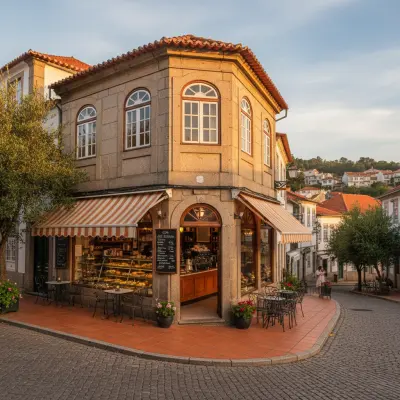
My favourite place to start the day is Café Primor, an institution where mornings still happen the way they should. Order toast with butter, a double espresso, and listen to the retirees argue about the city council. It's a master class in spoken Portuguese, with that Beira accent that drags the final "e" sound as if it weighed something.
For a younger crowd and wifi that survives a work call, Café Saudade has become the meeting point for UBI students and digital nomads with taste. The house cakes are honest, the coffee is better than average, and you can sit two hours with a milky coffee without anyone glaring at you. Seven or eight euros buys you breakfast, a light lunch, and the feeling that you haven't done any tourism.
Lunch: the ten-euro rule
Here's the rule worth memorising: in Covilhã, any lunch over ten euros at a regular restaurant is overpriced. Plenty of places along Rua Direita and the university area run a daily set menu between six and nine euros, including soup, main, dessert, coffee and sometimes a drink. You won't eat badly. You'll eat simply, in the Beira way, with portions you'll struggle to finish.
What to order, when you spot it: bacalhau à Brás, duck rice, veal hand with chickpeas, and on days when it's fresh, anything with melted Serra cheese on top. Serra da Estrela DOP cheese is the region's accessible luxury: five to eight euros at a small grocery in town buys you half a buttery wheel you'll eat with a spoon, with bread, on a park bench. Pair it with a Beira Interior wine, light, with an acidity that cuts through the fat, around four euros a bottle at the supermarket.
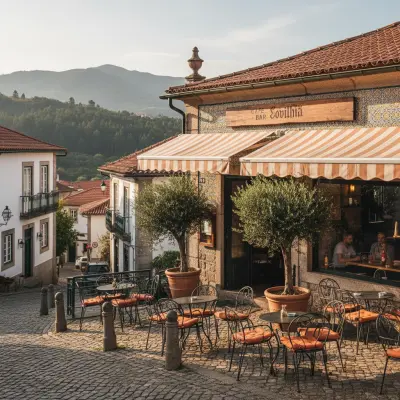
For a proper end of afternoon, climb to the gardens area and settle in at Café Bar Covilhã Jardim, the best terrace view in town for the price of a beer. Below you the Cova da Beira valley, to your right the Gardunha, and in front a draft beer for around a euro fifty. Do the math: an hour there at sunset costs less than a cocktail in Lisbon and you watch the light change over the mountain. It's the kind of moment that gives meaning back to the trip.
Afternoon programme, free or close to it
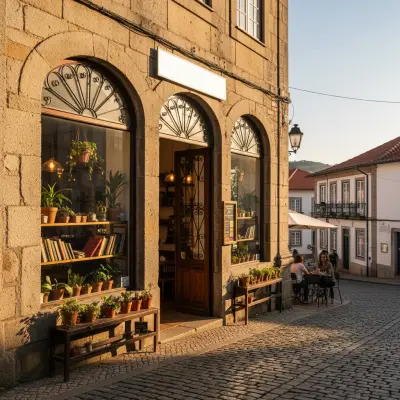
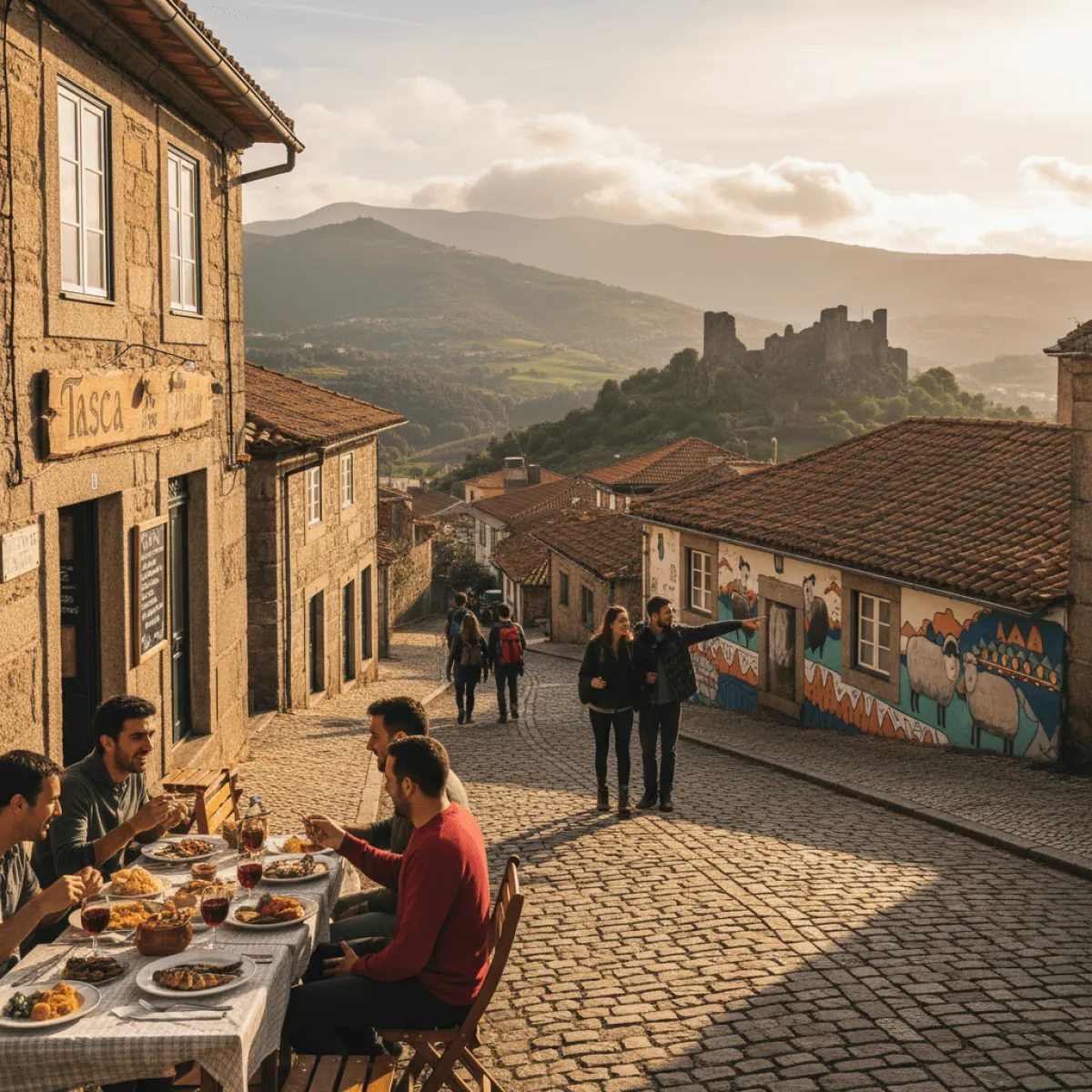
Covilhã is a walking city, and the best plans are free. The historic centre, in the upper town, takes about two unhurried hours: narrow streets, houses with iron balconies, small churches, and the urban art the town has become known for in recent years. Murals are scattered across abandoned industrial buildings, converted wool factories, and surprising corners for anyone who looks up.
If you want to understand what you're seeing, two investments are worth their modest cost. First, the Wool and Walls guided walk, which connects the city's textile past to the contemporary murals over a two-hour route. It's the best way to do more than photograph facades without understanding why that factory is there, why that mural exists, and what happened to the industry that made Covilhã rich.
Second, the UBI Wool Museum, set in a former royal factory and one of the best-curated museums in the interior. Entry is symbolic, and the visit pays off in full: machines running, rooms with honest explanations of working conditions, and a clear sense that Covilhã is what it is because of wool, not despite it. Block out a full morning or afternoon.
Day trips: the public transport trick
This is where most guides fail: they tell you to rent a car, and you, with a hundred euros for a week, start wondering if it's worth it. Sometimes it is, but there are alternatives.
For Fundão, there are regional trains several times a day and the trip costs little more than a coffee. In March and April, go. The cherry blossom in the Serra da Gardunha lasts two to three weeks and most people from Porto and Lisbon have never seen it. Bring bread, cheese, fruit, and picnic among the trees. Total cost for the day, transport included: under fifteen euros.
For Manteigas, it's harder without a car: there are buses, but their timetables demand respect. If you organise yourself, sleep one night in the village and do the Snow Wells hike, which leads into the serious part of the serra, away from ski runs and Sunday tourists. It's the Estrela as it deserves to be known: rock, silence, and a history of industrial ice. From June to September, you can do it in trainers. Outside that, you need proper gear.
If you can hitch with someone driving (UBI has rideshare groups, ask around), the trip I recommend is to the Schist Villages. The one-day route from Covilhã to the Schist Villages covers four or five villages with logic, without forcing you to drive three hundred kilometres in a day. Fuel split three ways, lunch at a village tavern for ten euros, and you come back feeling like you've seen another Portugal. Total: twenty-five euros per person, comfortably.
Cheap dinner without regret
For dinner, the rule is simple: dodge restaurants that print menus in four languages and look for the ones with only a daily special chalked on the wall. Shared petiscos, a soup, a homemade bifana, a draft sangria, and you're at twelve to fifteen euros per person.
If you want one proper dinner (in Covilhã that means a family-run restaurant with roast kid or oven-baked bacalhau), book and budget twenty to twenty-five euros. Not more. Walk out after dessert, ten minutes through the sleeping town, and you'll understand the quiet pride of the locals: they live well, they eat well, and they don't need to prove anything.
Realistic three-day budget
- Train Lisbon, Covilhã, return: around 35 to 45 euros if you book ahead.
- Lodging, three nights in youth hostel or simple guesthouse: 60 to 90 euros.
- Breakfasts at the town's cafés: 10 to 15 euros total.
- Set-menu lunches: 25 to 30 euros total.
- Mixed dinners (two light, one proper): 40 to 50 euros.
- Funicular, wool museum and guided walk: around 25 euros.
- Train day trip to Fundão: 10 to 15 euros.
- Buffer for beers at the Jardim, Serra cheese and surprises: 20 to 30 euros.
Honest total, three days in town: between 175 and 245 euros, travel included. Strip out the train and you're under one hundred and fifty. It's one of the cheapest trips you can take in Portugal without eating poorly, sleeping poorly, or dodging opportunities. Covilhã doesn't ask for your money. It asks for time, attention, and the patience to climb a street. It returns more than it charges.