Wool and Walls: A Guided Tour of Covilhã's Industrial Heritage and Mural Art
Explore the intersection of textile industrial heritage and contemporary urban art on this guided tour of Covilhã. A route revealing murals by Vhils and Bordalo II while traversing the historic wool factories of the 'Portuguese Manchester'.
The Awakening of the Portuguese Manchester
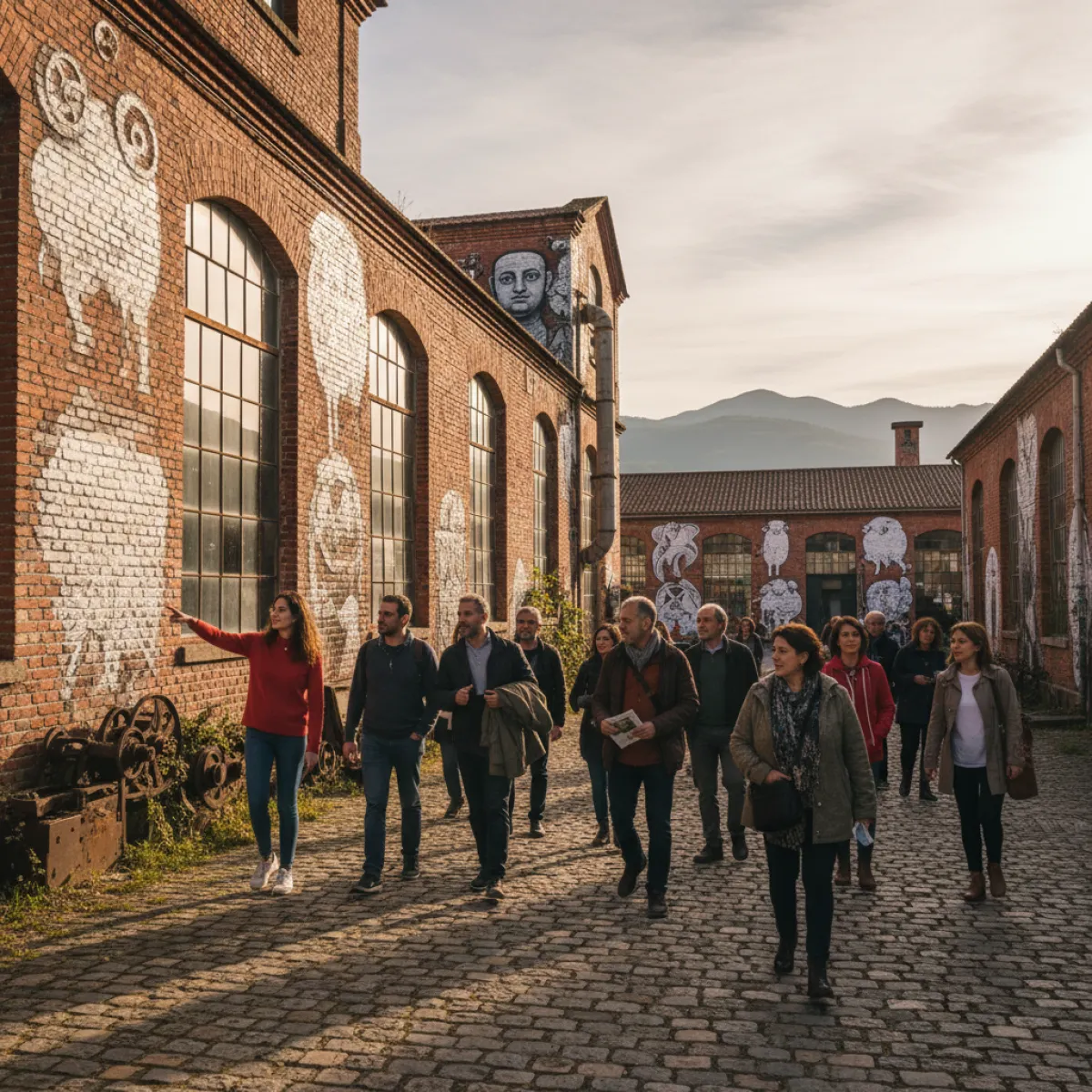
Covilhã does not reveal itself at the pace of flat cities. Here, the geography imposes a physical effort that is rewarded by the historical density of every corner. Known for decades as the "Portuguese Manchester," this city nestled in the foothills of the Serra da Estrela built its identity around the loom and the stream. The "Wool and Walls" tour, organized by the cultural association Mistaker Maker, is the thread that binds the manufacturing past, often austere and gray, to the chromatic explosion that now defines the historic center.
The experience begins at Praça do Município, where the granite of institutional buildings contrasts with the verticality of the streets climbing toward the castle. The guide, often one of the curators of the WOOL festival (Portugal's first urban art festival), introduces the narrative not as a mere tourist visit, but as an exercise in collective memory. Wool, which once sustained thousands of families and fueled the national economy, is the starting point for understanding why these walls, now covered in murals, tell stories of workers, sheep, and ancestral machines.
The Urban Art Route: More Than Just Color on Concrete
Walking through Rua das Portas do Sol, the group encounters interventions that challenge human scale. A highlight is the mural by Bordalo II, titled "Owl." Built entirely from industrial waste and scrap, this giant owl with a piercing gaze serves as a visual metaphor for regeneration. The artist used plastics, metals, and machinery parts to create a work that symbolizes wisdom and vigilance, but also the need to give a new life to what industry discarded.
Further ahead, the technique of Vhils (Alexandre Farto) reveals itself in its purest form: subtraction. Instead of adding paint, the artist carved the plaster of an old wall to bring forth the face of a former textile worker. It is a silent and powerful tribute to those who, with calloused hands, built the city's wealth. The tour details the technique of explosives and jackhammers used by the artist, allowing participants to touch the textures and feel the roughness of the medium.
Industrial Heritage and the Echo of Factories
The tour is not limited to the surface of the facades. The foray into industrial heritage takes visitors to the banks of the Ribeira da Goldra and Ribeira da Carpinteira. It is here that the sound of water, essential for washing and dyeing wool, still echoes. The visit includes passages through old factory units, some in ruins, others converted, such as the New Hand Lab. This space, located in the former António Estrela Factory, now functions as a creative hub where contemporary design coexists with original 19th-century looms.
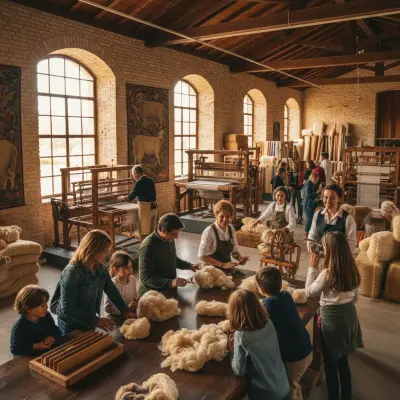
Inside the New Hand Lab, the experience becomes tactile. One can see the processes of carding, spinning, and weaving, understanding the technical complexity that transformed raw wool into fine fabrics exported worldwide. Participants learn about the introduction of steam engines and how Covilhã's rugged topography influenced the architecture of these factories, which spread vertically across the slopes.
Practical Tips for the Traveler
For those planning to take this tour, the choice of footwear is the most decisive factor. Covilhã's pavements are steep and, on humid days, can be slippery. Hiking boots or sneakers with good traction are recommended. The climate in the Beira Interior is known for its extremes; even in summer, a light jacket is useful, as the mountain wind can cool the city quickly in the late afternoon.
Booking should be made at least 48 hours in advance, especially if you want a personalized visit that includes the interior of buildings not open to the general public. The best time to take the route is during spring or autumn, when the soft light highlights the colors of the murals and the temperature allows for the two-hour walk without the exhaustion of summer heat.
Logistics and Bookings
- Provider: Mistaker Maker / WOOL Festival
- Meeting Point: Praça do Município, Covilhã
- Duration: Approximately 120 to 180 minutes
- Necessary Equipment: Water, mountain footwear, camera
- Price: From €25 per person (in small groups or scheduled visits)
- Booking: info@woolfest.org