Covilhã's Wool Museum: Where Looms Tell the Story
Covilhã's Wool Museum occupies two former royal factories where fleece became military uniforms from 1764 onward. The €2 guided tour takes you through original stone dyeing vats, mechanical looms, and the story of how one mountain city dressed Portugal's army for three centuries.
Covilhã was never a quaint mountain town. It was a factory city, Portugal's wool capital for three centuries, where thousands of workers turned raw fleece from Serra da Estrela's sheep into uniforms for soldiers and sailors. The Museu de Lanifícios (MUSLAN), run by the University of Beira Interior, sits inside the actual buildings where that happened. Stone dyeing vats from the 1700s are still in place. The looms still have their teeth. This isn't a museum that tells you about industry, it's one you can feel underfoot.
Two Sites, One Story
The museum is split across two former royal factories, both within walking distance in central Covilhã. Start at the Real Fábrica de Panos on Rua Marquês d'Ávila e Bolama, the building commissioned by the Marquis of Pombal in 1764. This is the older, more atmospheric space. Massive stone dyeing vats dominate the ground floor, with wall panels and video installations tracing wool's journey from shearing to finished cloth. There's a strong archival collection here too: maps, trade documents, and fabric samples that show how Covilhã dressed Portugal's military for centuries.
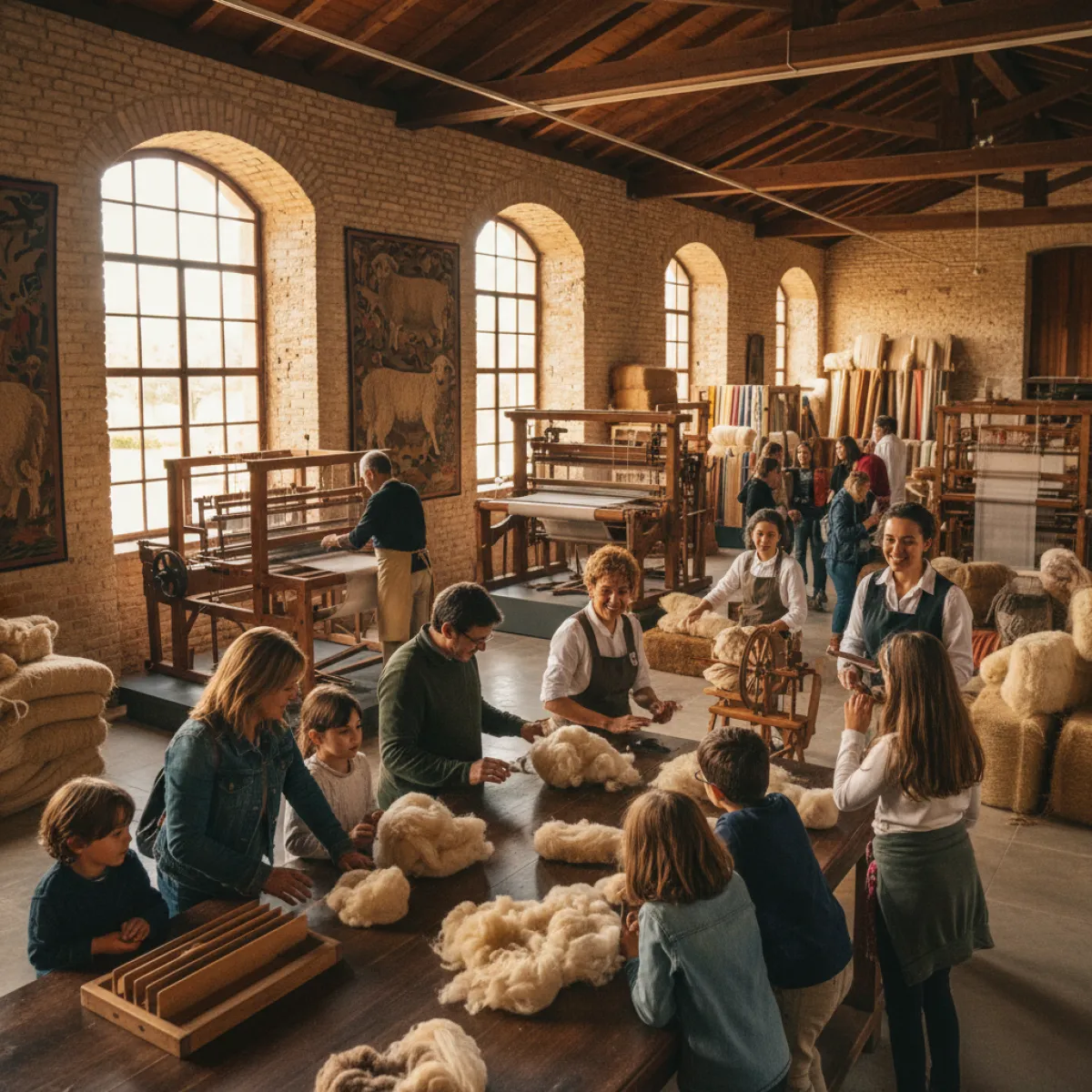
The second site, Real Fábrica Veiga, covers the 20th-century chapter and houses the Wool Interpretation Centre. This is where the machinery lives, wooden spinning frames, mechanical looms, carding machines. Seeing them lined up in the old factory hall, you start to understand the scale of what this city produced. If you're interested in how Covilhã's textile ruins became a canvas for world-class street art, seeing these original spaces first gives the murals outside a completely different weight.
Why the Guided Tour Is Worth Every Cent
You can walk through both sites for free, and the exhibitions are well-presented enough to enjoy independently. But the guided tour, just €2 per person, is what turns a good visit into a great one. The guides here aren't reciting scripts. They're passionate about the textile heritage and connect the dots between the transhumance routes on Serra da Estrela (sheep going up in summer, wool coming down in winter) and the factory floors where it all converged.
On one visit, the guide demonstrated how different comb types created different textures in burel, that thick, weather-resistant wool fabric you'll see in mountain villages. Suddenly, something you'd glanced at in craft shops made sense. That kind of detail doesn't come from reading a plaque.
Guided tours need a minimum of 4 people and a maximum of 20, and must be booked in advance by phone (+351 275 241 411) or email (muslan@ubi.pt). My tip: book the morning slot, right when doors open at 9:30. Organised groups tend to arrive after 11:00, and these vaulted factory halls are better appreciated without the echo of thirty voices.
Textile Workshops
MUSLAN also runs occasional textile workshops where you can try traditional techniques hands-on. These are tied to special events or the museum's educational programme, so ask when you book your tour whether any workshops align with your dates.
Walking the Industrial Heritage Trail
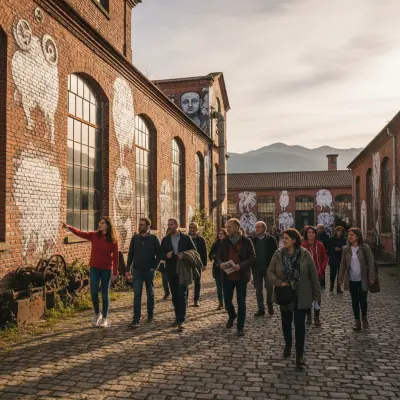
Beyond the museum walls, MUSLAN offers walking routes through Covilhã's historic centre, tracing the footprint of the old factories. Chimneys, façades, buildings that were once packed with looms, some are ruins now, others have been reinvented. Our guide to Covilhã's industrial ghosts and aerosol dreams covers what you'll find on those streets in detail.
For the truly committed, the Rota da Lã (TRANSLANA) is a two-day route connecting Castelo Branco to Covilhã via Malpartida de Cáceres in Spain, retracing the medieval wool traders' paths. It's a separate adventure entirely, but one worth knowing about.
Practical Details
- Address: Rua Marquês d'Ávila e Bolama, 6201-001 Covilhã
- Hours: Tuesday to Sunday, 9:30–12:00 and 14:30–18:00. Closed Mondays and holidays (Jan 1, May 1, Dec 25).
- Admission: Free for self-guided visits
- Guided tour: €2/person (ages 6+), min. 4 / max. 20 people
- Bookings: +351 275 241 411 or muslan@ubi.pt
- Website: museu.ubi.pt
Tips for Getting the Most Out of It
Wear comfortable shoes. The two museum sites are a short walk apart, but Covilhã is built on steep slopes, this is not a flat city. In winter, bring a jacket: the old factory halls retain the cold, which, in a way, helps you appreciate the working conditions those textile workers endured.
Budget at least two hours for both sites with a guided tour. If you add the heritage walking route, plan for a full morning. And if you want to keep exploring the region afterward, our one-day road trip from Covilhã to the Schist Villages makes an excellent afternoon follow-up.
One more thing: the museum shop sells burel products and serra wool items made by local artisans, not generic souvenirs, but actual craft pieces with provenance. If you want something to take home that means something, look here.
What stays with you after MUSLAN isn't any single machine or display. It's the realisation that Covilhã wasn't a town that happened to have wool factories. It was a city built by wool, every street, every building, every family connected to the looms. That story is still being told, even if the tools have changed from spindles to spray cans.