Beja Hiking Trails: Walking the Deep Alentejo
Five trails through the Baixo Alentejo, ranked by real difficulty and by what they actually deliver in scenery. From the Pulo do Lobo to shaded creeks south of Ferreira, an honest guide to walking in Beja without frying at two in the afternoon.
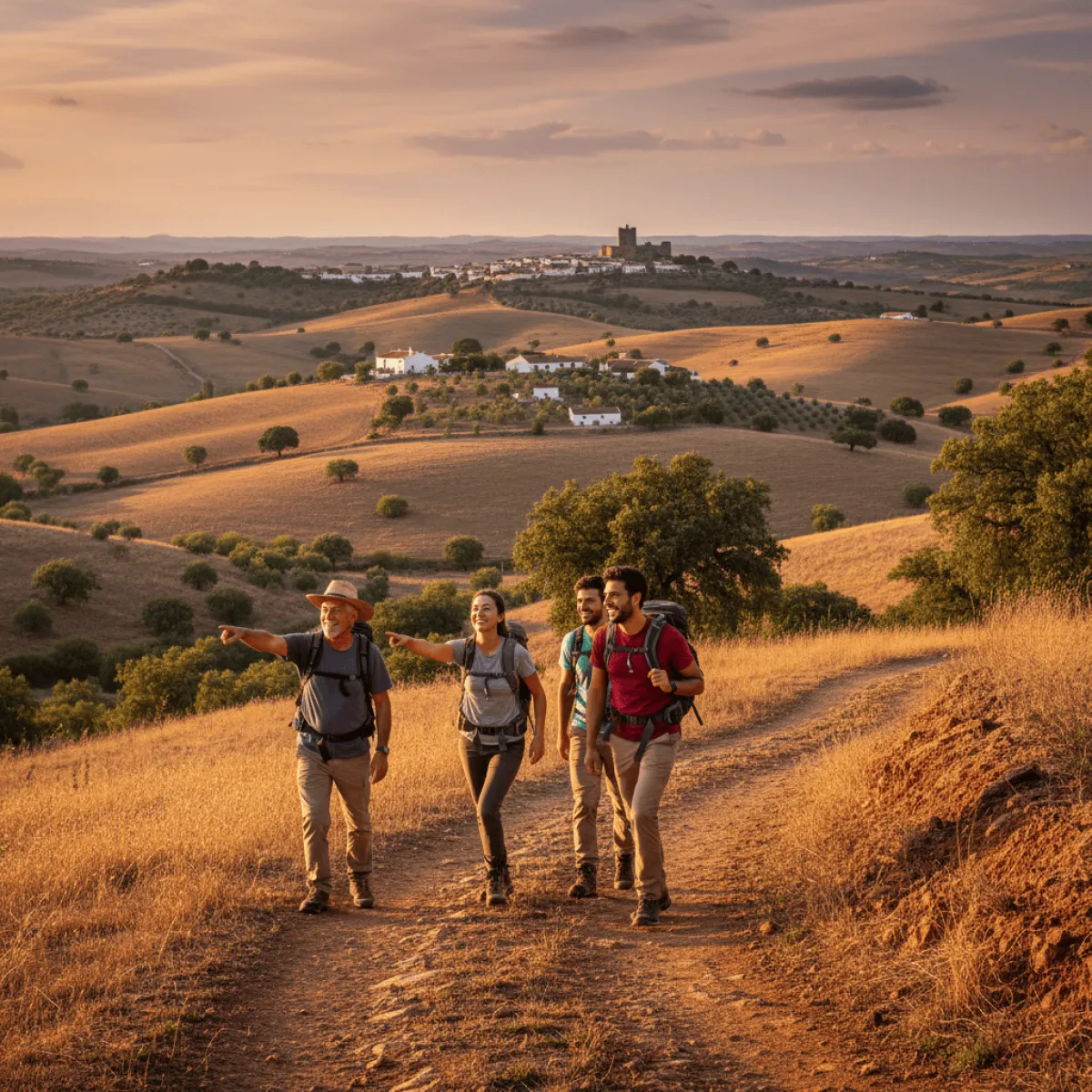
Anyone hiking in Beja at two in the afternoon in August is making a mistake. I say this bluntly because it's the first thing nobody tells you: the Baixo Alentejo is not the Serra da Estrela, it's not the Gerês, and it definitely doesn't forgive anyone who confuses open landscape with easy walking. Here the sun lands like a hammer, shade is theoretical, and the most beautiful trails are also the most exposed. The good news? If you go early, or in March and October, you'll discover one of the most underrated walking regions in the country.
This is an honest ranking. Five trails, ordered by real difficulty (not the kind printed on the council leaflet) and by what they actually deliver in scenery. No "unspoiled nature" cliché, no pretending every stone has a story. Where a trail is weak, I say so. Where it's extraordinary, I say that too.
Before you lace up: what nobody tells you about walking in Beja
Beja is plain, and plain is deceptive. It looks easy to the eye, but twenty kilometres without a single decent tree are twenty kilometres that will remind you of that with every step. Bring more water than you think you need. Two litres per person is the minimum between April and October. Bring a serious hat with a wide brim, not your football team cap. And bring food, because between villages you can go three hours without seeing an open café.
Footwear: light hiking boots are enough. This is not mountain country, it's rural track, beaten earth, some stretches of old cobblestone. Anything that handles heat well and breathes is better than winter technical gear.
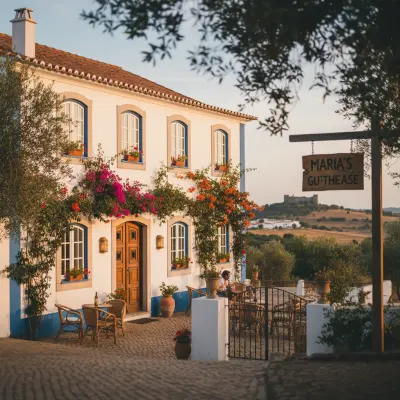
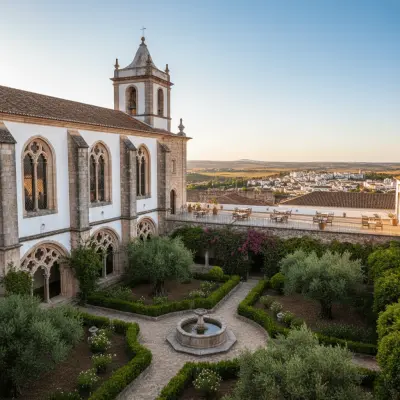
Where to sleep before you start? There are two honest options in town. Maria's Guesthouse is the choice if you want a real breakfast before heading out at seven in the morning, in a family-run setting without the boutique-hotel theatre. For those who prefer waking up inside a 15th-century cloister and pretending to be a monk for a night, the Pousada Convento de Beja does the job. It's pricier, but the inner courtyard at the end of the day, after a trail, is worth the entry fee.
5. Beja Urban Walk (3.5 km, easy)
Let's start with the weakest in natural scenery, but maybe the most useful. The pedestrian route through the historic centre, from the Castle to the Convento de Nossa Senhora da Conceição, isn't really a trail. It's an urban walk of an hour, an hour and a half if you stop for coffee at Largo dos Duques.
Why is it on this list? Because if you arrived in Beja the night before and want to acclimatise legs and eyes before facing the countryside, this is the right warm-up. Climbing the Torre de Menagem, on uneven limestone steps, gives you a sense of the scale of the plain ahead. See the Alentejo from above before walking through it from inside. It's cheap (tower entry is a few euros, check locally) and it helps you calibrate expectations.
Scenery score: 4/10. Pre-hike usefulness score: 9/10.
4. Ribeira de Odivelas Loop (8 km, easy-moderate)
South of Ferreira do Alentejo, in the neighbouring municipality but half an hour from Beja by car, the Odivelas creek offers what the rest of the Baixo Alentejo rarely gives: shade. There are poplars, ash trees, that kind of filtered light you associate with regions further north.
The route is circular, follows the creek one way and returns through cereal fields. In March, when the wheat is still green, it's one of the most beautiful agricultural landscapes you'll see in Portugal. In July, when the wheat is cut, it looks like Tunisia. Both versions are worth the trip.
Logistics: park in Odivelas village (not the one north of Lisbon), start early, count three hours with stops. Bring lunch, because nearby restaurants are scarce and Alentejo opening hours are what they are. Scenery score: 7/10.
3. Mértola Watermill Route (12 km, moderate)
Mértola is almost an hour by car from Beja, and technically isn't Beja, I know. But any honest article about walking in the region has to include this route, because it's probably the most photogenic trail in the south. The ruined watermills along the Guadiana, with the Islamic fortress in the background, are one of those landscapes that look staged and aren't.
The trail is demanding only because of distance and heat. Little elevation change, good ground, but zero shade most of the way. Do it between October and April, or at sunrise. Halfway through there's a stretch where you can drop down to the river to cool your feet. Do it.
For anyone wanting to combine walking with bird watching, this is the ideal trail: along the Guadiana you'll see black storks, kites, and in April and May, bee-eaters. If you want to take the ornithological side seriously, the bird watching experience with Salva Fauna is a good entry point to understanding what you're looking at. Without a guide, you'll see a lot and identify little.
Scenery score: 9/10.
2. Mira Valley to Vila Nova de Milfontes (15 km, moderate)
Here we're stretching the definition of "Beja" to its limit, because the trail starts in district territory but ends on the Alentejo coast. Justified? Yes. It's the best transition walk between the inland plain and the ocean that exists in Portugal.
The route descends through the Mira river valley, with a technical stop in Odemira for coffee and a bifana at one of the market cafés (I won't tell you which one, choose by the number of men in caps sitting outside, it's a rule that never fails). It continues to the river mouth in Vila Nova de Milfontes, where the landscape changes completely: the red colours of the inland earth give way to the white and blue of the coast.
If you can chain this trail with a night on the coast, do it. Praia da Zambujeira do Mar, to the south, is the obvious reward. The cliffs there are some of the most dramatic in the country, and diving into freezing water after fifteen kilometres of inland heat is one of the most Alentejo experiences there is, even if that sounds contradictory.
Logistics: you need return transport. There are buses, but they're rare. The most civilised solution is to leave the car at the start and arrange a lift with someone driving the route. Or, more honestly, split the trail into two days and sleep halfway.
Scenery score: 9/10.
1. Pulo do Lobo (10 km, moderate-hard)
If you only do one trail in the region, do this one. The Pulo do Lobo is the largest natural waterfall in southern Portugal, and the trail that leads there, starting from Mértola or São Miguel do Pinheiro, is the best I've found in all the Baixo Alentejo.
The route passes through schist landscape, low scrubland, several viewpoints, and ends in that narrow canyon where the Guadiana throws itself off a considerable height and produces that continuous roar you hear before you see it. No photograph does it justice. The scale only registers when you're standing above it.
Serious warnings: don't descend to the riverbed without knowing what you're doing. There have been accidents, and the terrain is treacherous. Stay on the marked viewpoints. The climb down is tempting but not for amateurs.
When to go: between October and May, ideally after rainfall to see the falls at their peak. In summer the falls almost disappear, and the trail turns into a solar inferno. Leave at dawn or don't bother.
Scenery score: 10/10.
Walking with your head on: practical rules for the Alentejo on foot
Three things I learned from my own mistakes.
- Always start before seven in the morning between May and September. By ten it's already too hot for anything decent.
- Don't trust phone GPS. Coverage in the Alentejo interior is patchy. Bring a paper map or an offline app with trails downloaded.
- Talk to local people before setting off. The village café owner knows whether the creek is dry, whether that bridge fell down last winter, whether there's a bull in the field on the trail. Information no website has.
Where to eat after walking
In Beja town, the food scene is decent but not spectacular. The classics of the inland Alentejo (sopa de cação, açorda à alentejana, lamb ensopado, black pork) are on most menus, and any tavern full of locals at lunch is a safe bet. Avoid anywhere with photos of dishes on the menu, universal rule.
For anyone planning a wider walking trip through the Alentejo, it's worth pairing Beja with Portalegre, in the Alto Alentejo, which offers the more mountainous and cooler side of the region. I recommend our Portalegre weekend guide without tourist traps if you want to alternate the Beja plain with the Serra de São Mamede. For those who prefer walking inside the city itself, there's also our walk through Portalegre's neighborhoods worth the walk, and for the food side, our guide to where locals actually eat in Portalegre avoids the tourist menu traps.
Honest summary
Beja isn't an obvious hiking destination, which is exactly why it's interesting. It lacks the infrastructure of the Gerês, the signposting of Madeira, the fame of Sintra. What it has in surplus is space, silence (the real kind, no tourists on the horizon), and landscapes that change radically with each season. Do it outside of summer, do it early, do it with time on your hands. And stop walking before lunch. The Alentejano doesn't rush, and whoever comes here shouldn't either.