How to Beat the Heat in Lisbon: Viewpoints, Terraces and Pools
At 38 degrees on Avenida Almirante Reis, the asphalt melts and tourists clump in Rossio's meagre shade. This is the guide to staying in Lisbon in summer and doing it right: sunrise viewpoints, cool museums at midday, and where to swim when nothing else works.
Lisbon in August doesn't play around. At 38 degrees, the asphalt of Avenida Almirante Reis melts slowly, tourists clump in the meagre shade of Rossio, and any locals who haven't yet fled to Costa da Caparica all wear the same expression: that of someone mentally calculating how many steps remain until the next air-conditioned café. The good news is that this city, built on seven hills facing the Tagus, has known for centuries how to breathe when the heat strikes. The bad news is that half the places international guides recommend are exactly where you shouldn't be between 2pm and 5pm.
This guide isn't about escaping Lisbon in summer. It's about how to stay and do it properly, alternating between the breeze of a high viewpoint, the coolness of a museum with decent air conditioning, a terrace under centenary plane trees, and, when nothing else works, a swim. There's a correct rhythm to the day, and Lisboeta know it.
The golden rule: live backwards
In July and August, the classic visitor mistake is sightseeing between 11am and 4pm, exactly when locals disappear. The city runs on a Mediterranean rhythm you ignore at your peril. Get up early, do everything outdoors before 11am, take refuge during the bad hours, and come back out at 6pm when the light softens and the Tagus begins to give back some breeze.
In practice this means viewpoints at sunrise, museums or covered terraces at midday, a pool or siesta in the afternoon, and a late dinner on a well-ventilated terrace. Anyone who inverts this logic ends up sobbing from heat exhaustion in a queue for the Santa Justa Lift at 3pm. Don't be that person.
Viewpoints: 7am or never
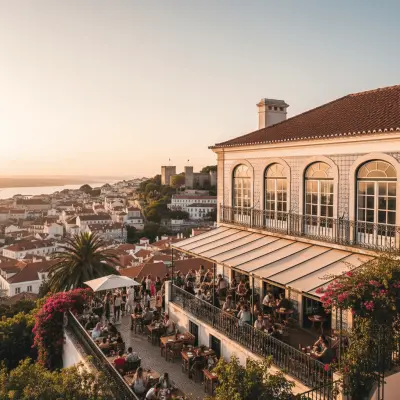
The Miradouro da Senhora do Monte, at the top of Graça, is the highest point in the city and where you should start your day. Walk up Rua da Senhora do Monte if your legs are still working, or catch the number 28 tram before 8am, when there are still seats. Up top, at this hour, it's practically empty: two or three professional photographers, a woman walking her dog, and the view over the castle, the Sé cathedral, the Baixa and the Tagus opening up in the early morning light, still golden and not yet crushing.
Bring a coffee from along the way, or buy a pastry at any kiosk. Stay half an hour, max. By 9am the sun begins hitting head-on and the magic vanishes. Coming back at sunset is tempting, but in summer it's also when everyone else has the same idea, and the viewpoint becomes practically impassable. Stick to sunrise.
There are other viewpoints, of course: Graça, Senhora da Glória, São Pedro de Alcântara, Santa Catarina. Each has its own character. Santa Catarina, with its marble Adamastor statue and the young people sprawled on the grass at dusk, is the most bohemian. São Pedro de Alcântara, with its formal garden and direct view of the castle, is the most postcard-perfect. But if you only have time for one and really want to escape the crowds, stick with Senhora do Monte early in the morning.
Midday is saved indoors
Between 11.30am and 4pm, the plan is simple: be inside something with thick walls, high ceilings, and ideally some form of climate control. Lisbon has an unfair advantage here, because many of its best museums were built precisely to withstand the heat.
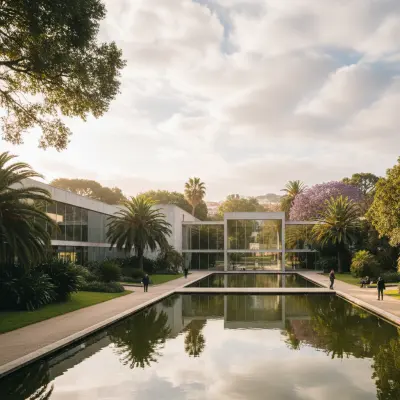
The Museu Calouste Gulbenkian, in Sete Rios, is the perfect refuge for an entire day. The 1960s modernist building is set within a park with ponds, eucalyptus shade and scattered benches, and the interior is cool, quiet and generous. The founder's collection, from ancient Egypt to Lalique, takes two unhurried hours to see. Then walk out into the garden, take your shoes off on the grass, and watch the ducks. It's the most civilised thing you can do in Lisbon at three in the afternoon in August.
The Museu Nacional de Arte Antiga, near Janelas Verdes, is the more classical alternative, and still undervalued by tourists who all funnel into MAAT or the Berardo. The Panels of São Vicente de Fora, the Hieronymus Bosch Temptations of Saint Anthony triptych, and the garden with its terrace facing the Tagus, all justify the trip. The museum's terrace, in fact, is one of those relative secrets worth the visit on its own: proper shade, river breeze, decent coffee.
If you want a cultural plan without a ticket, step into any church in the centre: São Roque, the Sé, São Vicente de Fora. The baroque stone interiors sing with immediate coolness. Five minutes seated on a dark wooden pew, with the smell of old incense, and your body thanks you.
Terraces that actually work
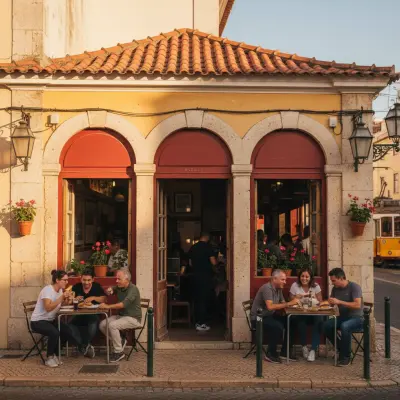
The Lisbon terrace is an art form. There are terraces in full sun at two in the afternoon that call themselves terraces but are instruments of torture. And there are hidden ones, with the right awnings, old plane trees, and cross-breezes that exploit the topography. Knowing which is which is half the battle.
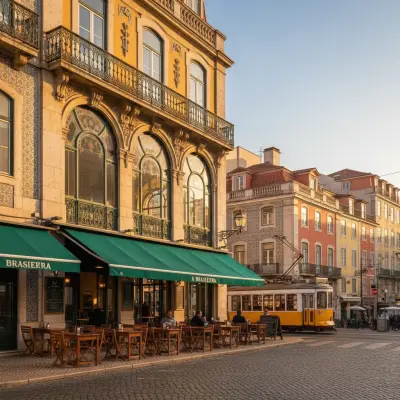
The A Brasileira café, in Chiado, is the absolute cliché, with the bronze Pessoa and the tourist prices. But if you go through the main door, cross the old salon to the back, and sit in the rear room (instead of the street terrace), you get air conditioning, cool marble, and a reasonably priced pingado coffee. Do this at lunchtime, when the buses dump visitors and the street becomes unliveable. Emerge restored around 4pm.
For a serious lunch, As Bifanas do Afonso, on Rua da Madalena, is the right answer when you want to eat fast, well, and cheaply. A good bifana, with the bread soaking up the sauce, an ice-cold imperial beer, twenty minutes seated, and you're done. In summer, ask to sit inside: it has proper ventilation and you stay cool while the Baixa outside cracks open.
Jardim da Estrela, with its centenary kiosk-terrace, is another sanctuary. Huge plane trees, ducks, children, a peacock wandering through. Order a sparkling water and stay an hour reading. Jardim do Príncipe Real and Jardim da Cerca da Graça work on the same logic: dense shade, kiosk, patience.
Where to swim: Lisbon's pools
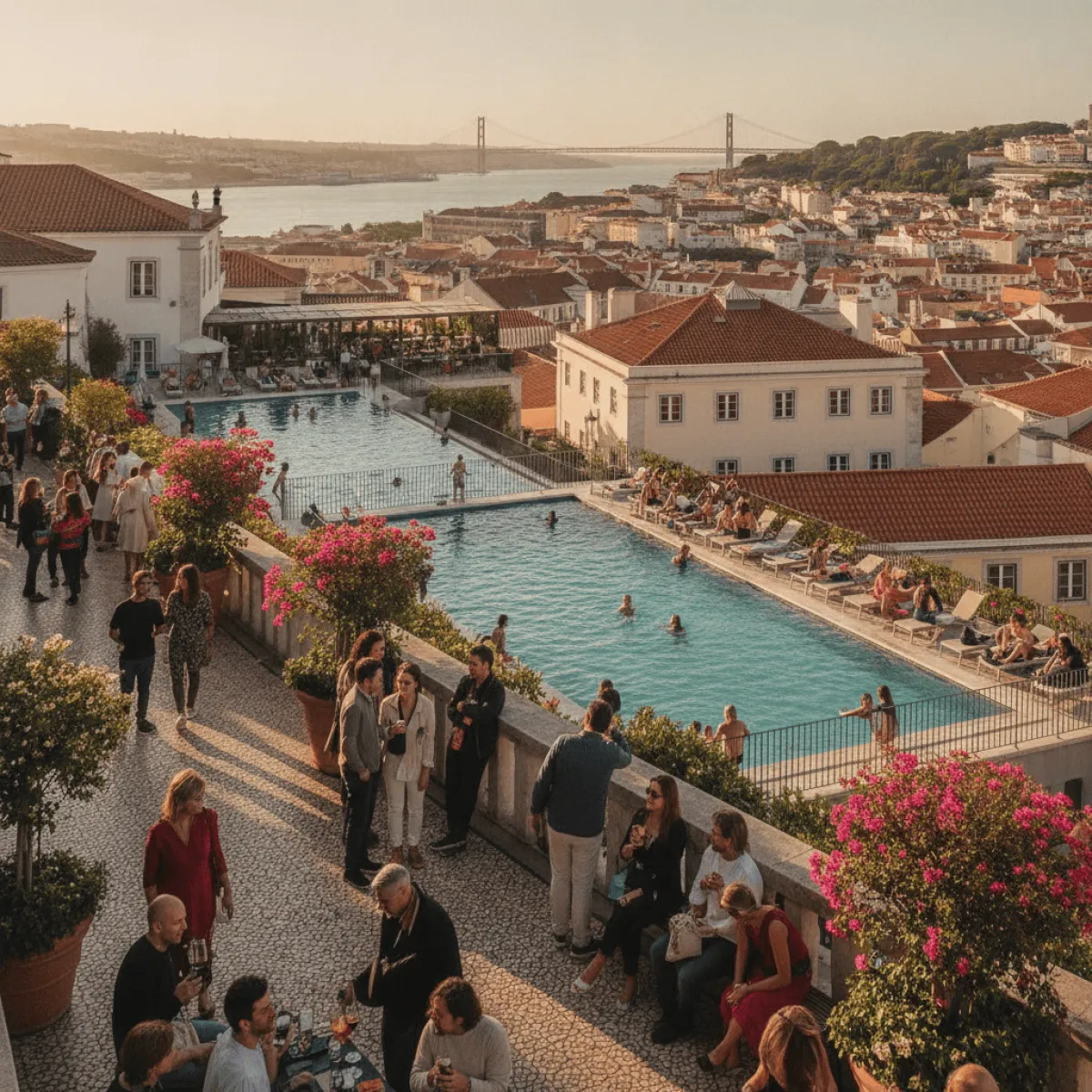
This is the part guides rarely cover properly. Lisbon doesn't have sea within the city, but it does have serious municipal pools and a few hotel surprises. For a quick midday dip, three decent options:
- Piscina Oceânica de Oeiras: saltwater pumped from the Tagus, view of the bridge, and easy train access (Cascais line, get off at Santo Amaro de Oeiras). It gets packed on weekends, but midweek in the afternoon you can breathe. Confirm hours and prices locally.
- Areeiro, Olivais and Restelo municipal pools: options for those who actually want to swim laps, not lounge. Cheap, clean, well run. Bring flip-flops and a swim cap.
- Urban beaches an hour by train: for days when you really need the Atlantic, Carcavelos is the beach. Train from Cais do Sodré, 35 minutes, and your feet are in the sand. Go after 11am to miss the morning surfer crowd.
Anyone with wheels, or who wants to combine exercise with river coolness, should consider the waterfront cycling experience along the Tagus, done early in the morning before the heat sets in. The cycle path from Belém to Cais do Sodré, flat and ventilated by the river breeze, is an honest way to see the city without dying of heat. For the more ambitious, the downhill cycling route from the top to the river solves Lisbon's classic problem, which is going uphill.
The end of the day: when the city resurrects
Around 6.30pm, something shifts in Lisbon. The sun lowers, the light turns apricot, the terraces start filling, and the Tagus gives back the breeze it had been hoarding all day. It's the best hour of the day, and it's when you should head back out.
Walking along the riverfront, from Santos to Cais do Sodré, in late afternoon, is one of the few activities in Lisbon that still functions even in deep August. There are kiosks, there is shade, there is water cooling the air. Stop at Ribeira das Naus, sit on the stone steps half a metre from the water, and watch the boats.
For dinner, always prefer interiors with open windows or terraces on narrow streets (which retain the night cool). Avoid terraces in open squares, which keep radiating the day's heat. And if you want to end the night with something truly Lisbon, go to O Faia, the fado house, in Bairro Alto. Cool stone room, careful dinner, and serious fadistas (not the version laid on for tour buses). Book days in advance, especially in August.
Small tricks of those who live here
- Drink water seriously: 2 to 3 litres a day in August isn't excess. The city's public drinking fountains exist and are reliable.
- Use the metro instead of the 28 tram: it has air conditioning, it's faster, and it saves you the queue and the pickpocketing.
- Late lunch, very late dinner: learn the rhythm. Lunch at 1.30pm, dinner at 9pm. Before that, you'll be in half-empty places with no atmosphere.
- Buy water bottles in neighbourhood mini-markets, not tourist kiosks: you pay half.
- Linen or fine cotton clothes, closed but light footwear. The Portuguese cobblestone pavements are beautiful but slippery and hot.
For anyone wanting to understand what makes Lisbon pulse beyond the views, the local culture guide to Lisbon gives context to the neighbourhoods and traditions you'll cross. And if you have a few days to spare, it's worth escaping the capital's heat by heading up to the mountains: the Sintra neighbourhood guide shows how to make the most of the magical town, where the temperature is systematically four or five degrees lower, and where the late-afternoon mist is almost guaranteed in any month of the year. For something quieter and further off, the guide to Easter sweets in Mafra points to a town that stays surprisingly cool even at the height of summer.
Lisbon in August is hard, yes. But if you get into the right rhythm, take a guilt-free one-hour nap in the middle of the day, drink more water than you think possible, and choose your spots with the patience of someone who lives here, you'll discover a city others don't see. The city of those who stay.