Fado ao Centro
Forget Lisbon fado: Coimbra's is sung by men, in capes, with weeping guitars. At Fado ao Centro on the steep Rua do Quebra Costas, a daily 50-minute concert at 18:00 comes with a glass of port and musicians who explain everything between songs.
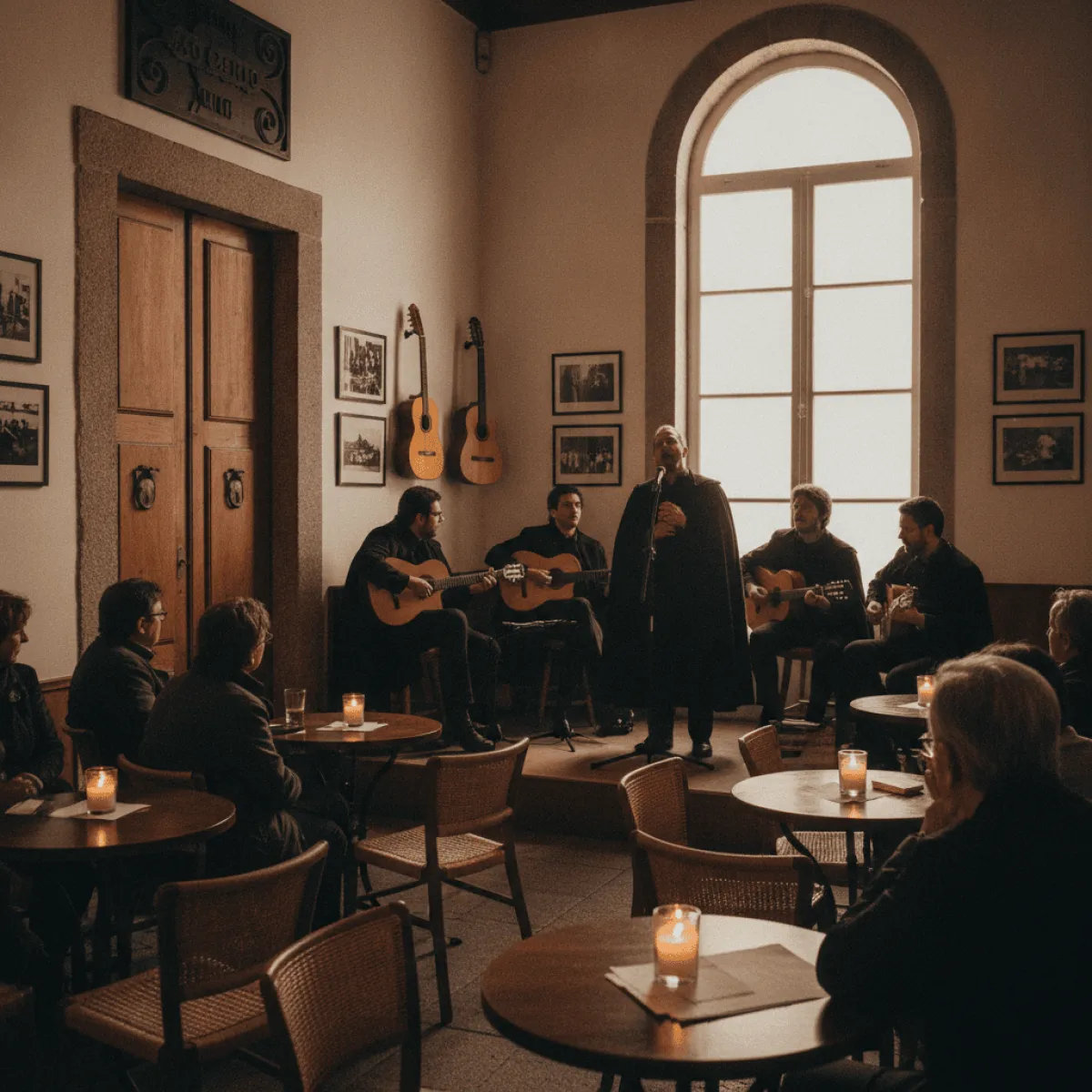
Here is something most visitors don't know before they arrive in Coimbra: the fado here is not the fado of Lisbon. There are no women singing of heartbreak between dinner tables. The Fado de Coimbra is sung by men, by students, in black capes, with guitars tuned for serenades under windows. It is academic, it is masculine, and it is performed standing up. If there is one place to understand that difference without committing to a whole night or a degree in musicology, it is Fado ao Centro.
Where it is and how to get there
Fado ao Centro sits at Rua do Quebra Costas 7, and the street name is not decorative. "Quebra Costas" means "back breaker," and it is exactly what this steep cobbled lane did to anyone climbing from the Baixa up to the Alta for centuries. It runs right beside the Old Cathedral, the Sé Velha. Walk up from Praça do Comércio or down from the University. Forget driving: the Alta is a medieval maze where parking is a form of penance. To frame the visit, read our guide to Coimbra and its relationship with time first, because this city makes more sense when you know where you are standing.
What it actually is
This is not a restaurant with background music, nor a fado bar where tourists clap in the wrong places. It is a small, dedicated cultural centre with a daily concert at 18:00 that runs about 50 minutes. You sit, you listen, and you understand. Between songs the musicians explain what is happening: the difference between a Coimbra guitar and a Lisbon Portuguese guitar, why the serenade is sung in the dark, what it means when the audience taps a foot on the floor instead of applauding. It is the smartest way to initiate someone into the genre without boring them.
A glass of port wine is included. It sounds like a small thing, but it is the gesture that turns the 50 minutes into an experience rather than a lecture. You sip slowly while the Coimbra guitar makes that weeping, metallic sound that exists nowhere else.
The guitar that makes the difference
Pay attention to the instrument. The Coimbra guitar has a deeper, more melancholic tone than its Lisbon cousin, and the instrumental solos, the "falsetas," matter as much as the voice. There are moments when the singer falls silent and the guitar speaks alone. That is where Fado de Coimbra shows its purpose. It is not there to make you cry; it is there to impress you.
Practical tips
- Book ahead. The room is small and seats fill, especially in high season. Confirm directly through the official site fadoaocentro.com or by phone at +351 239 837 060. Don't count on walking up and getting in.
- Arrive early. The concert starts promptly at 18:00. Climb the Quebra Costas with time to spare, particularly if your knees have opinions.
- Price: €€. For what it is, an honest guided introduction to a UNESCO-listed tradition with a drink included, it is money well spent.
- Dress code: none. Come comfortable. Shorts and trainers are perfectly fine.
- Hours: the concert is at 18:00. For other opening hours of the shop and venue, check directly.
What to do nearby
The 50 minutes end around 19:00, exactly the right time for dinner, and you are in the right spot. Climb the hill to Zé Manel dos Ossos, the tiny tavern where the plates come generous and the walls are papered with handwritten notes from customers. It is the face of Coimbra that doesn't fit in brochures. If you want to breathe first, climb a little higher and find the Miradouro do Vale do Inferno to watch the city fall toward the Mondego at the end of the day.
For those staying longer, the Alta of Coimbra is good for days. The street art that reshaped the Alta deserves its own walk, and if you come in May you will catch the Queima das Fitas, the student week when the whole city turns itself inside out. That is when fado leaves the room and spills into the streets, in serenades sung at dawn.
Is it worth it?
It is, for one simple reason: few places in Portugal explain a tradition this well in so little time. Don't go expecting an epic fado night with dinner and three hours of music. Go expecting 50 honest minutes, well played and well explained, with a glass of port in your hand and the Sé Velha just outside. It is the perfect cultural aperitif for a city that takes very seriously what it sings.
