Visit
€
Praia Fluvial de Segirei
Chaves
Out on the Estrada Nacional 213, beyond the centre of Chaves, this viewpoint hands you the whole Tâmega valley and, on clear days, the Spanish border in the distance. No café, no opening hours, no crowds: bring water, go at late afternoon, and check the forecast first.
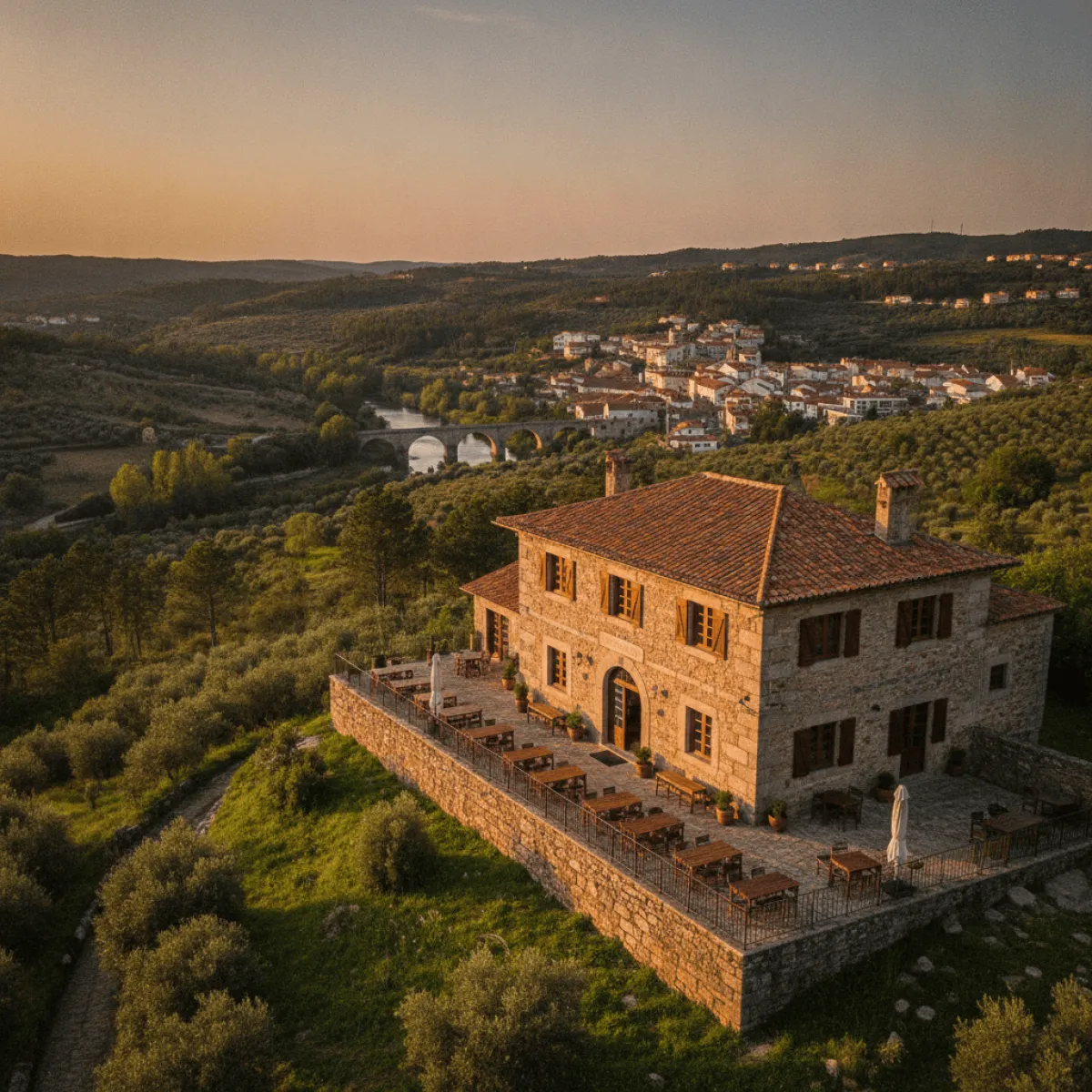
Some viewpoints in Trás-os-Montes sell themselves. Others nobody bothers to announce. The Miradouro de São Lourenço, out on the Estrada Nacional 213 in Ribeira de Pinheiro (5400-612), belongs firmly to the second group. It sits outside the centre of Chaves, a few minutes by car along the 213, and that is exactly why it is almost never crowded. That is the first good thing to know: you pull up, park at the roadside, take a few steps, and the whole valley opens in front of you with no tour buses to elbow past.
The view is the entire argument, and it is an honest one. From here you see Chaves laid out across the plain, the Tâmega river cutting through the city, and the patchwork of fields climbing towards the border. On clear days, with no haze, your eye crosses the frontier and lands in Spanish territory. That is not a figure of speech: Galicia really is right there, a few kilometres off, and standing here you finally understand why this stretch of country spent centuries balancing between two nations.
The rule is simple: go when the sky is clear. On a foggy day, and Trás-os-Montes gets plenty of those in winter, you will see nothing and the detour is wasted. Late afternoon is the sweet spot. The low light flattens the shadows across the valley and the sun sets on the right side for anyone facing the city. Early summer mornings work too, with the air still cool before the Transmontano heat clamps down.
Bring a layer even in summer. The plateau catches the wind and the temperature drops fast at the end of the day. There is no café, no toilet, nothing built for tourists here: it is road, a low wall, and landscape. Bring your own water and carry your rubbish out with you.
By car is the obvious answer. Leaving Chaves, follow the Estrada Nacional 213 towards Ribeira de Pinheiro and the viewpoint appears at the roadside. There is room to pull over, but this is a national road: park well clear of the lane and watch the traffic when you step out. Without a car it gets awkward. Do not count on useful public transport up here; a taxi from Chaves will do it, but agree the return trip in advance, because hitching a ride back is not a given.
Entry is free, which here simply means the only cost is your fuel or the taxi fare. There are no opening hours, no gate, no barrier: the spot is open at any time, though there is no lighting after dark and no reason to come without it.
Treat the viewpoint as a complement, not a standalone destination. Chaves fills a day or two, and this is the kind of stop you make on arrival or departure, to place the city in its setting before you drop down into it. Once you have seen the valley from above, the history makes more sense when you explore the city, its Roman roots and the border trails and grasp why so many fortifications line this frontier.
Chaves is, above all, hot-spring country. Anyone coming this far should set aside time for the thermal waters the Romans already knew, a perfect contrast to the dry air at the viewpoint. And if you like to walk, the region is laced with routes: it is worth checking the best trails between the border and the river to pair the high view with real walking across the ground you have been looking at.
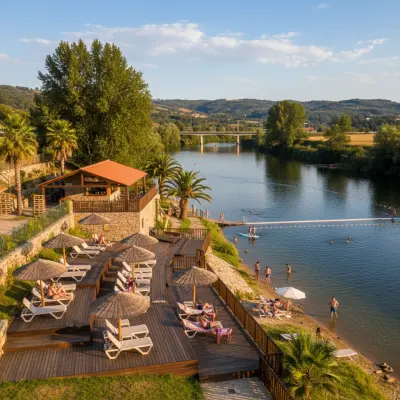
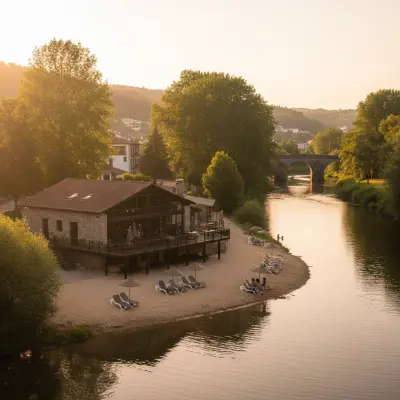
In summer, swap heat for water: river beaches like Segirei and the one at Açude de Vila Verde da Raia are the logical next move after a morning in the sun. If you are staying over, the Castelo Hotel makes a practical base for the city and its surroundings.
Let us be blunt: this is a viewpoint, not a ticketed attraction. Anyone arriving expecting an interpretation centre, a terrace café or a souvenir shop will leave disappointed. Anyone who comes for the view, and only the view, comes out ahead. It is one of those places to stop for fifteen or twenty minutes, take the photo of the valley, breathe, and move on. The value lies precisely in the simplicity: road, low wall, Chaves below and the border in the distance.
For photography, late afternoon gives the best light over the city. A tripod helps if you want to catch the sunset cleanly. And if your visit happens to land on a regional event, see what is going on down in town: things like the N2 Festival 2026 or organised walks such as the Rota dos Lameiros hike in Fornelos give you an extra reason to climb up here and then drop back into the city.
Always check the forecast before you set off. On the right day, the Miradouro de São Lourenço is the best place to take in Chaves at a single glance. On a hazy day, it is just a bend in the 213.