Chaves on foot: the best trails between the border and the river
Forget the thermal baths for a moment. In Chaves, the real adventure is found on the trails crossing the Spanish border and flanking the Tâmega River. From gentle riverside strolls to the brutal climbs of Santo Estêvão, this is a guide for those wanting to discover Trás-os-Montes through the soles of their boots.
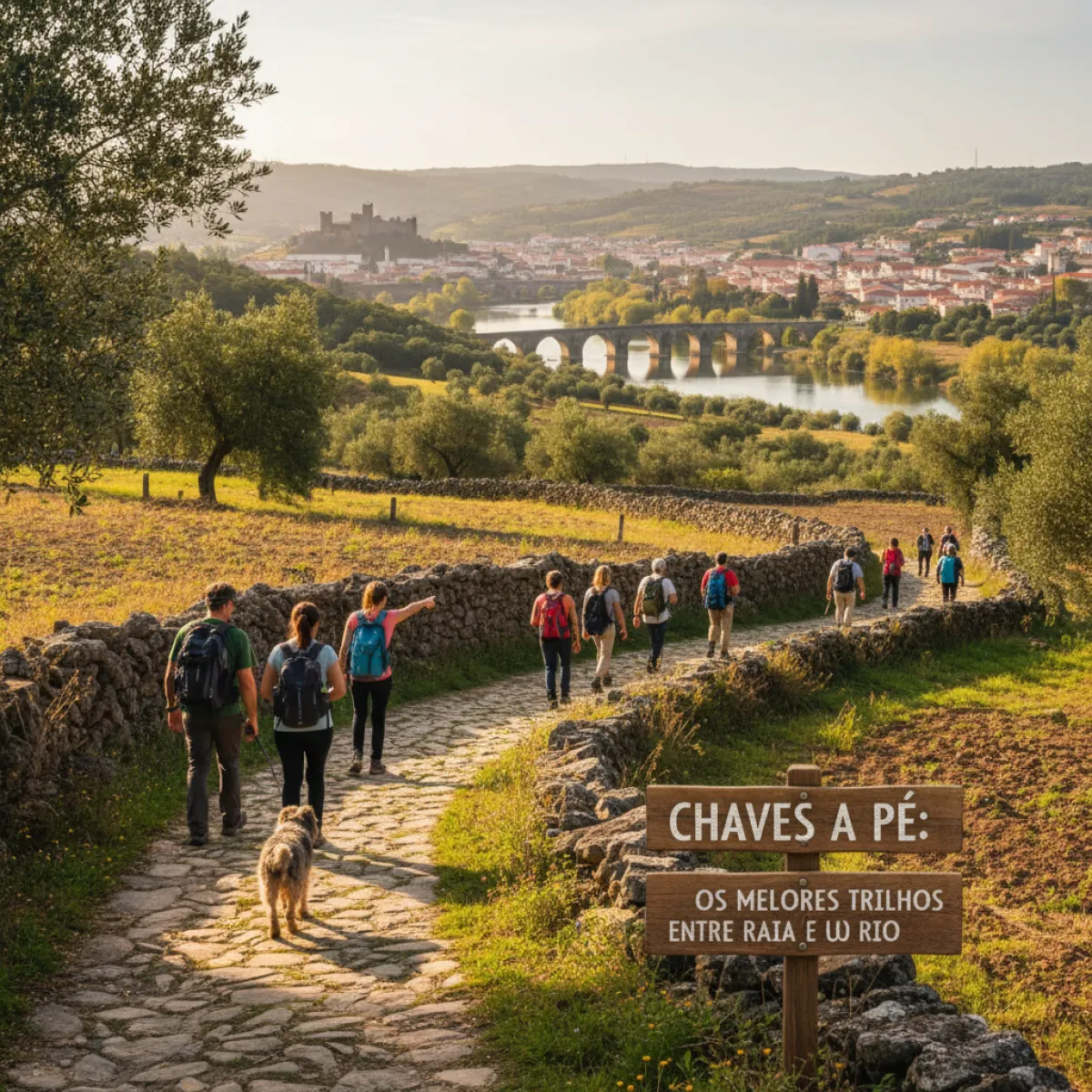
The Path as Reward: Chaves Beyond the Spas
To arrive in Chaves and not walk is like going to a banquet and only eating the bread. Yes, the 73-degree thermal waters are the historical draw, but the true texture of this Transmontane city reveals itself on the soles of your boots, in the dust of the paths that wind through oak forests and the grey granite of the villages dotting the valley. In Chaves, the landscape isn't a static backdrop; it's a living organism that changes its mood as you climb toward the border or descend to follow the lazy curve of the Tâmega river.
For those who like to measure the world by their own steps, Chaves offers a varied menu. We have everything from the civilized, flat Sunday stroll by the river to the punishing climbs that demand iron lungs and steel knees. Forget the generic descriptions in tourist brochures. Here, the climbs are steep, the August sun is unforgiving, and the final reward is almost always a Pastel de Chaves hot enough to burn the roof of your mouth, bought at D’Chaves or any corner bakery in Largo do Arrabalde.
1. Ecovia do Tâmega: The Contemplation Route (Difficulty: Low)
Let’s start with the obvious, yet necessary. The Ecovia do Tâmega is the city’s green spine. If you’re looking for a trail to clear your head without ending the day needing a leg transplant, this is the place. The path hugs the riverbanks, linking the city to the surrounding rural areas. It’s an exercise in natural geometry: the soft curves of the river against the straight line of the asphalt or fine gravel.
What makes this path special is the light. Go in the late afternoon, when the sun starts to dip and the Roman Trajan Bridge casts long shadows over the water. It’s a route shared by joggers, grandmothers debating the price of potatoes, and cyclists. If you prefer to save your physical effort for the mountain climbs, you can opt for Cycling the Border: A Journey on the Ecovia do Tâmega with Tamega E-bike, a smart way to cover more ground without reaching your final destination dripping in sweat. The stretch toward Vidago is particularly scenic, crossing old railway bridges and areas where the vegetation closes over the path, creating a natural green tunnel.
2. PR1 CHV - Santo Estêvão Trail: History with a View (Difficulty: Moderate)
If the Ecovia is for meditating, the Santo Estêvão Trail is for seeing. At about 14 kilometers, this circular route takes you to the village of Santo Estêvão, dominated by its high-standing castle. The climb is not for the faint of heart, but the view over the Veiga de Chaves justifies every drop of sweat. From up there, the city looks like a miniature surrounded by mountains that, in winter, dress in a metallic blue.
Halfway through, stop in the village. Don’t look for designer cafes or tasting menus. Look for the shade of a porch and observe the silence. In the local cafe, an espresso costs €0.70 and comes with a conversation about the weather, which is the most serious topic of all here. The trail winds through agricultural paths where the smell of manure and damp earth is the olfactory soundtrack. This is the real Portugal, no Instagram filters applied.
3. Vilarelho da Raia: The Smugglers' Trail (Difficulty: Moderate/High)
The 'raia', that invisible line separating us from Spain, is Chaves’ great geographical fetish. Walking in Vilarelho da Raia is walking over centuries of smuggling stories. The terrain is rugged, marked by schist and granite, with low brush peeking between the stones. Here, the difficulty kicks up a notch due to the elevation gain and sun exposure.
This trail isn’t just about physical exercise; it’s about the sensation of being on the edge. One moment you're in Portugal, the next in Galicia, and the only thing that changes is the language on the stone markers. If the isolation of this route whets your appetite for even more austere landscapes, it's worth reading about The Silence of Montesinho: A Winter Retreat in the Last Frontier of Portugal, a park that takes this concept of isolation to the absolute extreme.
The Recovery: Spas and Seafood
After 20 kilometers in your legs, your body demands maintenance. Chaves is generous in this regard. Your first stop should be the Fonte do Povo. Drink the hot, sulfurous water with the egg-like taste that everyone swears cures everything from stomach troubles to heartbreaks. It's a mandatory ritual. For a more serious treatment, dive into history at The Roman Legions' Legacy: Exploring the Ancient Thermal Springs of Chaves. The modern spa offers hydro-massage circuits that will make your quadriceps thank you in silence.
And because walking works up an appetite, forget the diet for a few hours. Chaves has a curious relationship with food. Being a mountain city, ham is king, but there’s a ritual that defies geographical logic: the 'mariscada' (seafood feast). Yes, we are miles from the sea, but the fish and seafood arrive here fresh via Galicia with a quality that shames many coastal cities. The Seafood Feast Ritual in Chaves: A Coastal Celebration in the Heart of the Mountains is the final prize for those who traded the sofa for hiking boots.
Advice from Someone Who Knows the Ground
- Footwear: Use boots with good grip. Wet granite is treacherous, and loose schist on descents is an invitation to a sprained ankle.
- Water: Don’t assume you’ll find fountains on every trail. Carry at least 1.5 liters. At the spas, water is free, but on the border trails, it's gold.
- Timing: In summer, leave at 7:00 AM. By 11:00 AM, the heat in the valley becomes oppressive. In winter, wear layers; the wind coming from Sanabria cuts like a razor.
- Cost: Walking is free. A robust lunch with house wine in Chaves rarely exceeds €15 per person.
Chaves doesn't reveal itself to those in a hurry. It’s a city that demands time and effort. But when you’re at the top of a hill, with lungs full of cold air and eyes set on the border line, you’ll realize that the best stories of Trás-os-Montes aren’t in books, but etched into the hardness of these paths.
