Miradouro do Castelo
At 1,000 metres on the Castro Laboreiro plateau, this viewpoint-restaurant serves wood-oven roast kid to anyone who remembers to call the day before. The view runs from the medieval castle to Gerês, with Spain for dessert.
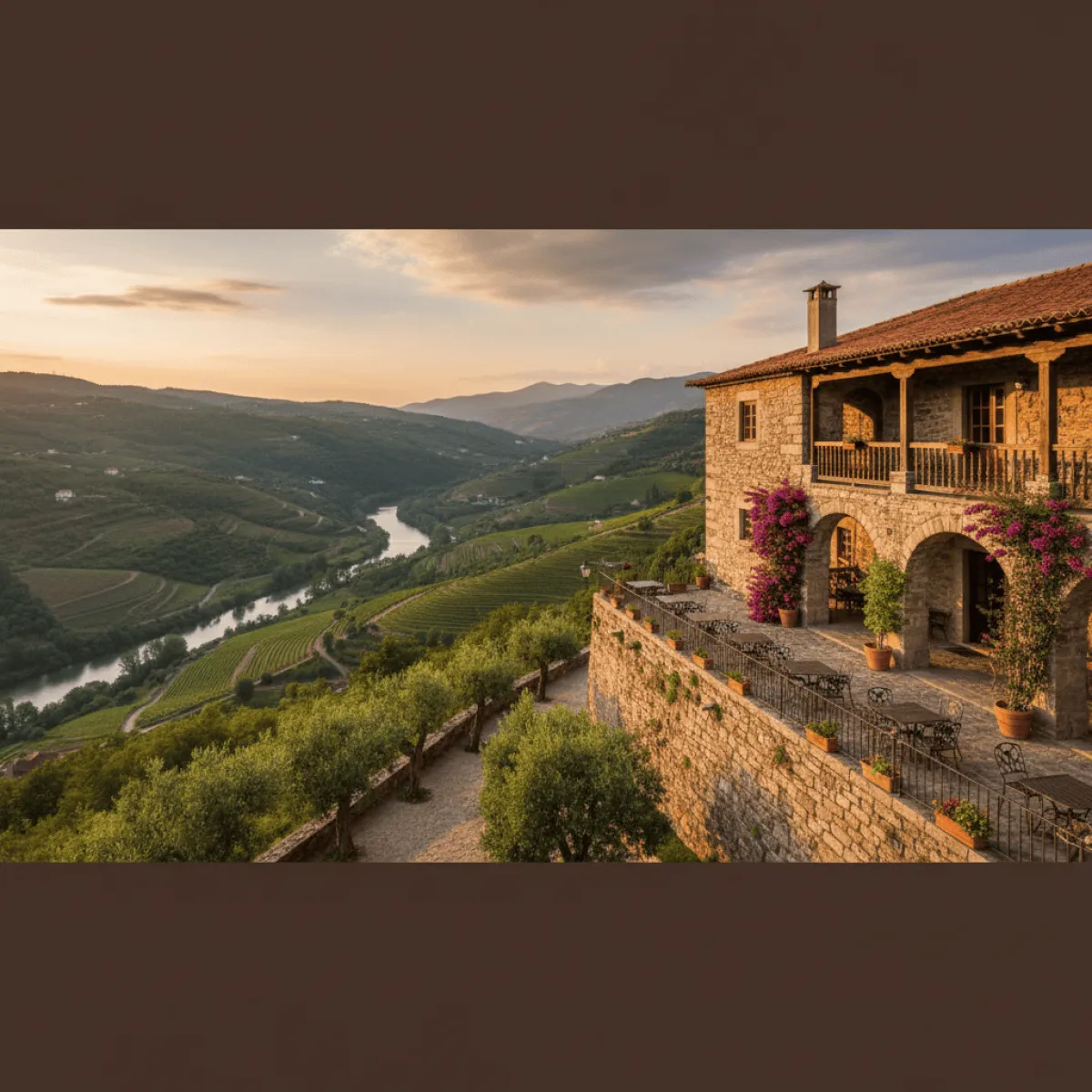
Castro Laboreiro sits at 1,000 metres, leaning against the Spanish border, and for a long time it was the kind of place you reached by mistake or by stubbornness. The Miradouro do Castelo, at the top of the village, is the first argument for treating this corner of the Minho borderlands as a destination rather than a detour on the way to Gerês. It is a viewpoint and a restaurant, and the two jobs rarely combine this well.
Where it is and how to get there
The official address is Castro Laboreiro, 4960-061 Castro Laboreiro, Melgaço, which means almost nothing if you have never driven up here. The town of Melgaço is about 25 kilometres away, via the EN202 and then the EN202-1: half an hour of serious mountain road where the phone signal disappears and the GPS starts inventing shortcuts. Ignore the shortcuts. The main road climbs through the Serra da Peneda, crosses open pastures where loose cattle wander across without warning, and drops you in the centre of Castro Laboreiro. The viewpoint is just beyond, beside the ruins of the medieval castle, marked with discreet signage. Public transport is brutal: there are buses from Porto to Melgaço with Salvador, but the onward connection up to Castro Laboreiro is thin and tied to the school calendar. A taxi from Melgaço, round trip with waiting time, will cost you 40 to 60 euros depending on how you negotiate. It is worth it.
The place
The name is honest. In front of the dining room, a south-facing terrace opens over the Laboreiro river valley, with the 13th-century castle on the right and the green mass of Peneda-Gerês National Park stretching all the way to the Soajo range. On clear days you can see into Spain without trying; on misty days, and there are many, you hear the livestock guardian dogs barking at shapes nobody can see. That detail changes the meal entirely: you either eat with the view, or you eat inside a cloud. Both versions have their charm, and anyone who books a window table gets both options for the price of one.
Inside, it is a converted village house: exposed stone, a working fireplace from October to May, and around 50 covers. It is not stage-set rustic. It is just a working dining room that does its job.
What to order, what to skip
The menu sticks to what makes sense on this plateau: roast kid from the wood oven, salt cod (à Brás, with cornbread crumbs, or simply roasted), Barrosã veal steak, and house-made cured meats. The roast kid is the main reason to drive up here, and it should be ordered ahead. Call the day before on +351 251 465 469 to reserve a portion; on weekends it sells out early. It comes with smashed potatoes, seasonal greens and oven rice, the sort of dish that demands a nap afterwards. The roast cod is honest and unfussy. The kid is what justifies the trip.
What to skip: the default openers of frozen cod fritters and industrial croquettes turn up automatically and quietly land on the bill. Wave them away politely from the start, and keep only the bread, which is good, from a local bakery, and the house cured meats, which are actually made nearby. For dessert, the leite-creme burnt at the table beats the rice pudding. On wine, ask for a glass of Melgaço Alvarinho: every list in this region carries it and this one is no exception. The house reds are fine without being memorable.
What it costs
Expect 25 to 35 euros a head with a starter, a main, dessert, a glass of wine and a coffee. For what you eat, and for the view, that is fair. Cards work, but on local festival days the terminal often fails: bring some cash as a backup.
When to go
Lunch beats dinner, no argument. The view is the main asset and dinner halves the experience, especially in winter when the mountain goes dark by five in the afternoon. If you come on a weekend between May and October, book ahead. In August, with the Nossa Senhora da Peneda pilgrimage a few kilometres away, the place fills up with returning emigrants and Spanish visitors driving in from Ourense: without a reservation, you eat at whatever time is left over. On weekdays out of season you can walk in and eat slowly, which is the right pace.
Opening hours are not published consistently. What holds in practice is daily lunch service and dinner only on some days, mainly weekends and high season. They close one day a week, usually Tuesday. Check directly by phone or on miradourodocastelo.com before you commit to the climb: it is an expensive regret to find a closed door after thirty minutes of switchbacks.
Before and after
Castro Laboreiro is not worth driving up just for lunch. Use the morning for the short walk up to the castle ruins right next to the restaurant: 20 minutes uphill between granite outcrops, a 360-degree view at the top, and the same path back down. With more time on your hands, drive back down to Melgaço and visit the Museu do Cinema de Melgaço, one of the most surprising museum collections in the country for a town this size. To make better sense of what you just ate, read our guide to Melgaço's markets and street food before driving home, or pair the visit with 24 hours in Melgaço if you have a night to spare.
Practical notes
- Reservation: effectively required on weekends and throughout August. For kid, order the day before.
- Phone: +351 251 465 469.
- Average price: 25 to 35 euros per person.
- Payment: cards accepted but bring cash as backup.
- Children: welcome, no kids' menu but the kitchen will adapt.
- Accessibility: the viewpoint has uneven ground and the restaurant entrance has a step; wheelchair access is possible with help.
- Clothing: bring a sweater even in July. At 1,000 metres, the wind does what it wants.
Castro Laboreiro is not on the way to anywhere. That, largely, is the point. The Miradouro do Castelo is the best place to eat up here and one of the best places to understand why this forgotten frontier deserves a serious detour.
