Quinta do Furão: rural Madeira with the Atlantic at your feet
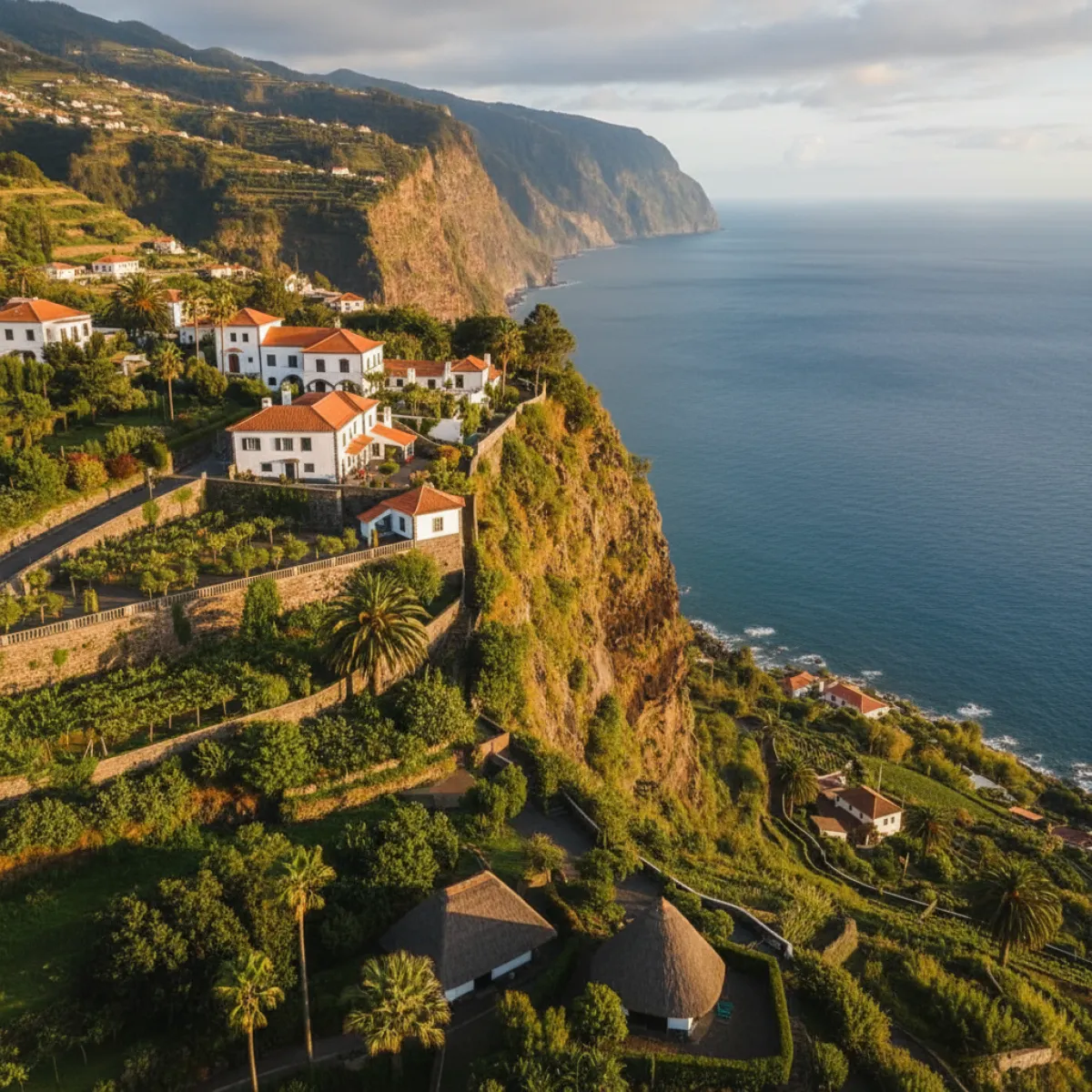
Plenty of Madeira hotels sell the sea. Quinta do Furão sells what comes before the sea: terraced vineyards plunging towards the cliff, the dry rasp of pruning shears in January, wet earth on a misty morning. The address is Estrada da Quinta do Furão nº 6, 9230-082 Santana, and it is probably the most honest thing you can do on the north coast of the island without putting on hiking boots.
It is not cheap. The price band is €€€, which here translates to a serious country-hotel rate, with home-grown breakfast and the sense that someone actually thought about the place. In return you get a working farm two hundred metres above the Atlantic, with Ponta de São Lourenço on one side and Pico Ruivo at your back. It is one of the best views on the island and you can drink it from a deck chair.
Where it is and how to get there
Santana sits on the northern coast, about 50 minutes by car from Funchal via the VR1 and VE1 motorways. The road passes Machico and Faial, and the final stretch climbs along a local road up to the Achada do Gramacho plateau. The hotel is well outside the village of Santana, isolated on farmland, and there is no useful public transport to the door. A rental car is essentially mandatory, or a pre-booked taxi for arrival and departure. Parking on site is free and there is plenty of space.
From Madeira Airport you are looking at roughly 35 minutes on the VR1. Fair warning: the last climb is narrow and twisty, and if you arrive late with mist coming in (you will, at least once), drive slowly. The fog up here is not postcard atmosphere, it is real cloud crossing the road.
What makes a farm a farm
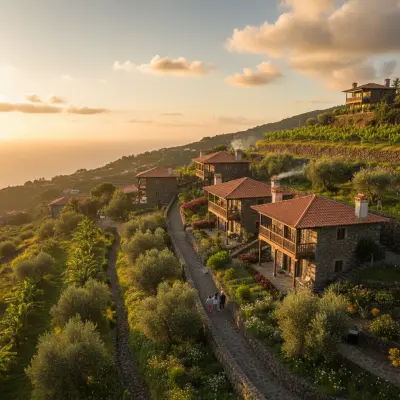
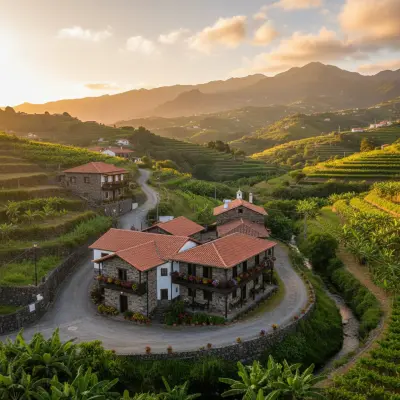
This is where most reviews go wrong: Quinta do Furão really is a working farm. There are vineyards planted with Verdelho and Sercial, vegetable plots, fruit trees, an orchard, and a small winery that produces estate wine in partnership with Henriques & Henriques. In September you can ask to join the harvest, which is still done by hand and carried in baskets down the slope. It is not a guest performance, it is the year's labour.
The hotel itself is a low building of stone and wood, with terraces facing north. The rooms are not international five-star luxury, they are comfortable in a well-kept Madeiran country-house way: decent linen, proper balconies, a fireplace in the public lounge for the rainy months. Ask for a sea-view room when you book. It is the difference between sleeping in a hotel and sleeping in a viewpoint.
The restaurant: where you eat well and quietly
The restaurant is open to non-guests and is one of the best reasons to drive up here. The kitchen takes regional cooking seriously: espetada threaded on a bay-laurel skewer and grilled over wood embers, tuna steak with fried corn, wheat soup, bolo do caco hot from a stone oven. The vegetables come from the kitchen garden right next door and it shows. Order the house white, made from Verdelho. Resist the temptation to chase international dishes on the menu.
Practical advice: book ahead. Sunday lunch in particular fills up with families coming up from Funchal to escape the heat. To confirm hours and availability call +351 291 570 100 or check quintadofurao.com directly, because restaurant times shift with the season. Dress code is casual, nobody will demand a shirt, but flip-flops and damp swim shorts are obviously off the table. Cards are accepted without fuss.
What to do nearby
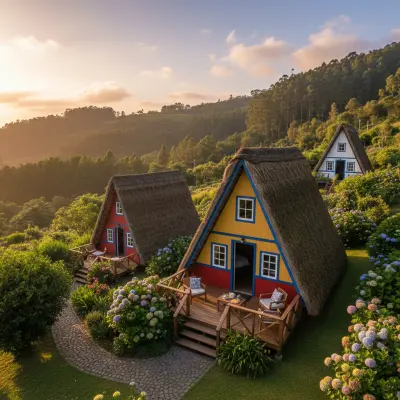
Santana is one of the most underrated parts of Madeira and the quinta makes a good base for unhurried exploration. Start with the village centre and its triangular thatched houses (everyone photographs them, almost nobody understands them), walk the levadas of Caldeirão Verde or Ribeira do Faial, then drop down to the coast to discover the wild beaches that almost nobody visits, places like Faial and Porto da Cruz. If you want a tight 24-hour plan, our slow day in Santana itinerary handles the logistics.
If you want to take something physical home, look at the local crafts that earn their suitcase space: embroidery, wicker basketry and small-batch liqueurs that survive the flight. And if the quinta is full or you fancy a more independent setup, Aldeamento Turístico Casas de Campo do Pomar is a few minutes away and offers stand-alone cottages instead of hotel rooms.
When to go
The best window runs from May to mid-October, with the high point in September during the grape harvest. January and February are wet, cold and waterlogged, but that is also when the place fills with locals escaping the Funchal tourist circuit. The outdoor pool is sun-warmed and unheated, so unless you are coming between June and September, do not bother. Spa and treatments shift through the year, so check directly before you book.
Who it is for (and who it is not for)
Come if you like agricultural landscapes, long dinners, slow mornings and silence at night. Skip it if you want nightlife, a beach at the door or flawless international hotel service. Things slip here, phones ring out, receptionists chat instead of moving the queue. It is part of the package. The view earns its keep, the wine earns its keep, the kid goat earns its keep. The rest, you take with patience.