Santana: Crafts Worth the Suitcase Space
In Santana, willow grows by the streams and honey cake is still baked at home. An honest guide to what's worth buying, and what to skip, in Madeiran craftsmanship.
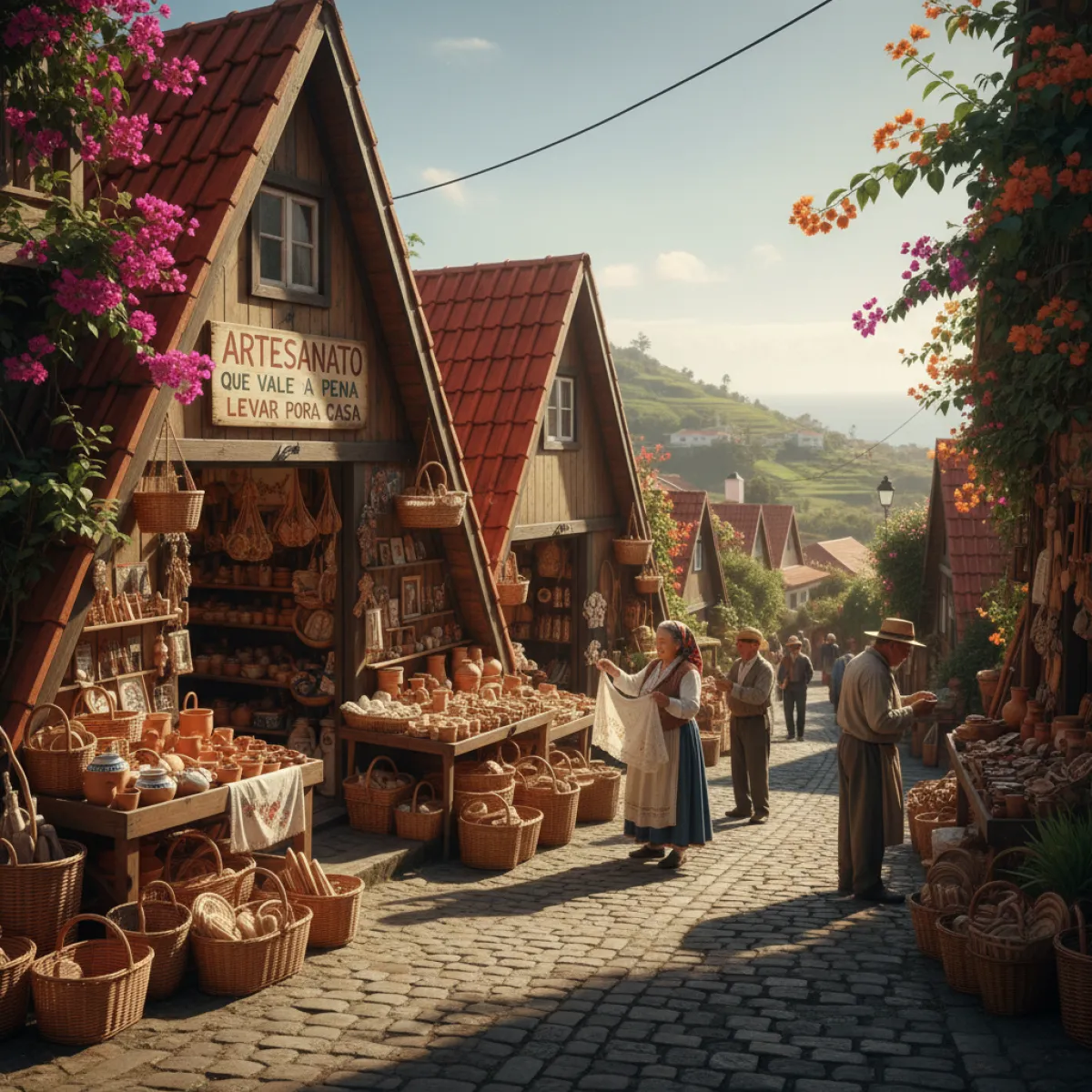
Let me be blunt: ninety percent of souvenir shops in Madeira sell the same things. Fridge magnets shaped like thatched houses, ceramic roosters that aren't even Madeiran, and bottles of poncha with labels that look like an afterthought. If that's what you're after, any shop in Funchal will do. But if you want to understand what's actually made in Santana, and bring home something with a real story, you need to get off the main road and pay attention.
Wicker: Santana's Raw Material
Wickerwork is probably the most honest craft in Madeira. No tricks, no machinery, just hands, damp willow, and hours of repetitive work that demands absurd precision. In Santana and the neighbouring municipalities on the island's north coast, willow grows naturally along the streams, and the tradition of weaving it goes back centuries.
What separates a good piece from a tourist piece? Weight and finish. A well-made basket is surprisingly light for its size, with an even weave and no loose ends. The most experienced weavers achieve a consistency that seems impossible for handmade work. The large baskets, the ones that were used to carry grapes or fish, are museum pieces, but a bread basket or a fruit tray is perfectly portable and costs between €15 and €40, depending on size and complexity.
The simplest way to check if you're buying something authentic: if the artisan is there and can explain how they made it, it's probably genuine. Be suspicious of shops selling wicker alongside magnets and t-shirts, real wickerwork needs space and context.
Madeira Embroidery: Beautiful, But Know What You're Buying
Madeira embroidery has a protected designation of origin and is, without exaggeration, one of the finest needlework traditions in Europe. But here's the uncomfortable truth: most pieces sold in tourist shops aren't embroidered in Madeira at all. They're Asian imports with a sticker slapped on. The price difference tells you everything, a genuine hand-embroidered tablecloth can cost several hundred euros. If you find "Madeira embroidery" for €20, it's not Madeira embroidery.
Look for the seal from IVBAM (the Institute for Wine, Embroidery and Handicrafts of Madeira). It's a small hologram, usually sewn onto the piece or attached to a label. Without that seal, there's no guarantee of authenticity. For more affordable options, an embroidered handkerchief or a set of napkins are reasonable choices that fit in your luggage without drama, expect €30 to €80 for something small but genuine.
In Santana, you won't find the same concentration of embroidery shops as in Funchal, but that can actually be an advantage. The few pieces that turn up at local fairs or craft houses tend to come from actual producers, not middlemen.
The Thatched Houses and What They Represent
You can't talk about Santana without talking about the casas de colmo, the traditional A-frame houses with straw roofs that reach down to the ground. They're the symbol of the municipality and, honestly, one of the most photographed images in Madeira. The ones you can visit near the town centre are preserved as architectural examples, and they're worth seeing up close to understand the simple but effective engineering behind the construction.
Now, this generates an entire miniature industry. And here my advice is clear: if you're going to buy a miniature thatched house, buy one made from wood by a local artisan, not a plastic one manufactured overseas. The handmade versions are hand-painted, have beautiful imperfections, and cost between €10 and €25. They're the kind of souvenir that looks good on a shelf and actually says something about where it came from. If you're planning a full day in Santana, set aside time to hunt for these pieces properly instead of grabbing the first one you see.
Edible and Drinkable Souvenirs
Here's the best souvenir advice I can give you: the best ones are the ones you eat. And in Madeira, the options are excellent.
Bolo de mel, Madeira's honey cake, isn't actually made with honey. It's made with sugarcane molasses, and it's dense, dark, and spiced with cinnamon and fennel. The traditional version keeps for months without refrigeration, making it perfect for travel. Buy it whole and wrapped, not in pre-sliced supermarket portions. In the north of the island, including Santana, there are still people who bake it at home to sell locally, ask at cafés or small grocery shops.
Then there's Madeira wine, which is perhaps the smartest souvenir you can bring home. A 5-year Sercial costs between €15 and €25 and is a dry, elegant aperitif that surprises anyone trying it for the first time. A Malmsey of the same age is sweet and intense, perfect with dessert. If you want to spend more, the 10 or 15-year wines are extraordinary, but we're talking €40 to €80. In any case, buy from specialist shops or directly from the lodges in Funchal, the bottles sold in souvenir shops aren't always the best value.
Poncha is another classic, but transporting it is trickier. Some shops sell sealed bottles, and the passion fruit version is probably the most popular. Check locally that the bottle is properly sealed before putting it in your checked luggage.
Where to Stay and How to Plan the Day
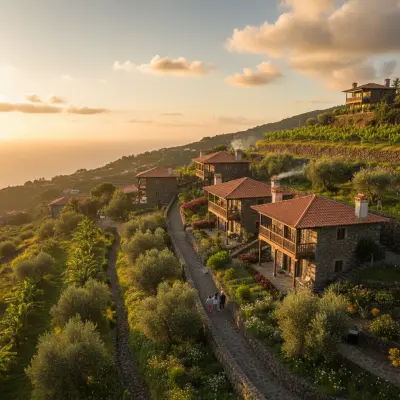
Santana deserves more than a two-hour stop on the way to somewhere else. If you want to explore local craftsmanship properly, consider spending the night at Aldeamento Turístico Casas de Campo do Pomar, which offers accommodation in traditional country houses surrounded by farmland. Waking up in Santana, with no rush, completely changes the experience.
The Madeira Theme Park in central Santana has a section dedicated to local crafts and traditions that, despite the touristy name, is surprisingly informative. It's not the kind of attraction I'd normally recommend, but the context it provides about the history of wickerwork and traditional construction helps you understand what you're buying.
For those combining Santana with hiking, and you should, the island's levada walks are the perfect complement. The Levada do Caldeirão Verde, accessible from Santana, is one of Madeira's most spectacular. Do the trail in the morning, have lunch in town, and spend the afternoon exploring shops and workshops.
What Not to Buy
This is just as important as knowing what to buy. Avoid:
- Anything with the word "Madeira" plastered in bold letters over a generic image, that's marketing, not craftsmanship.
- "Artisanal" liqueurs in plastic bottles, if it were artisanal, it wouldn't be in plastic.
- Ceramics claiming to be Madeiran but with no potter's mark, Madeira isn't particularly famous for its ceramics, so much of what's sold comes from the mainland or abroad.
- Resin replicas of thatched houses, spend a little more and get a wooden one.
The Golden Rule
The best souvenir is the one you can't find anywhere else. In Santana, that means hand-woven wicker, locally baked bolo de mel, or a miniature thatched house carved by someone who lives there. You don't need to spend a lot, you need to pay attention and ask questions.
And if on the way back you want to explore the southern coast, Câmara de Lobos offers an interesting contrast, a fishing port with a completely different energy from Santana's quiet green. But that's another story.