Santana's Wild Coast: Beaches Without the Crowds
Santana doesn't do golden sand beaches, it has volcanic rock, natural pools, and miles of coastline without the crowds. A practical guide for anyone who wants to swim in the Atlantic without fighting for towel space.
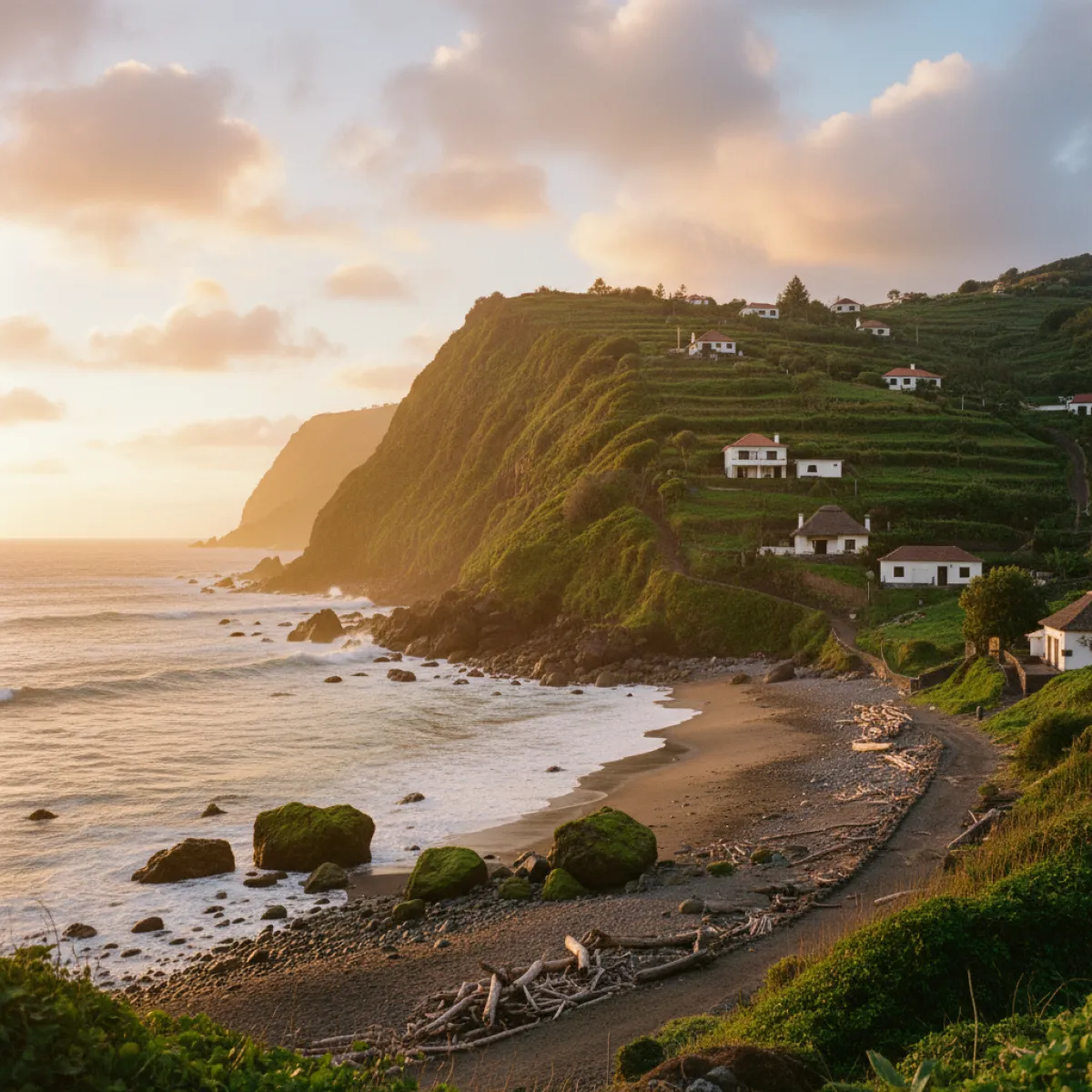
Let's get something out of the way: if you're looking for white sand and sun loungers, Santana will disappoint you. The north coast of Madeira doesn't do tropical beach fantasies, and that's exactly why it's worth your time.
What Santana offers is something else entirely: dark volcanic rock plunging into the Atlantic, natural pools carved by centuries of ocean force, and the increasingly rare experience of having a stretch of coastline almost entirely to yourself. While Funchal's hotel strip buzzes with cruise ship passengers and Calheta's artificial beach fills to the point where you can't lay down a towel, Santana's shoreline remains the territory of those willing to look.
What to actually expect from Santana's coast
First, recalibrate your idea of "beach." Forget golden sand. Here, we're talking about black basalt platforms, steep descents to small coves where the sea rushes in with force, and natural rock pools that erosion has sculpted over millennia. It's beautiful in a raw, honest way, no manufactured scenery.
The municipality of Santana stretches along several kilometers of coastline between São Jorge and Faial, with scattered and not always signposted access points to the sea. That's what keeps the crowds away. No massive car parks, no beach bars pumping music, no hawkers. Just rock, ocean, and quiet.
Where to get in the water
Swimming on Madeira's north coast works differently from the south. The water is colder, expect 18 to 20°C in summer, and the sea tends to be rougher. On days with strong northern swell, forget it. But when the ocean calms down, the natural pools along Santana's coast are some of the best on the island for a peaceful swim.
The area around São Jorge, on the western side of the municipality, has coastal access points that locals know well but rarely show up in tourist guides. Ask at the village café, it's more reliable than any app. Toward Faial, there are rock platforms where you can lay out your towel and spend an entire morning seeing no more than half a dozen people.
An important note: always respect sea conditions. The north coast can be treacherous, and there are no lifeguards at these more remote spots. If the sea looks rough, admire the view from above, it's still worth it.
Natural pools: the smart alternative
If you prefer some safety infrastructure, natural pools are the way to go along the entire north coast. Several localities across Madeira have invested in improving and protecting these rock formations, creating bathing areas with easier access. It's not the same as a beach, but on a hot day, with fresh Atlantic water rushing in between the rocks, it's hard to complain.
The trick to avoiding people, even at the better-known pools? Go early. At nine in the morning, you'll have the water to yourself. After eleven, the organized groups and families with coolers and parasols start arriving. The early swimmer gets the pool.
When to go: the sweet spot
July and August are the warmest and driest months, but also when Madeira gets the most visitors. If you want coastal swimming without crowds, June and September are your months. Temperatures are comfortable enough for bathing, the sea tends to be calmer, and accommodation prices drop considerably.
May and October are riskier bets for swimming but perfect for exploring the coast on foot. The coastal trails near Santana offer spectacular views over the ocean, and if you combine them with the region's levada walks, you've got a full day between mountain and sea.
Day of the week matters too: avoid Saturdays and Sundays in summer. Madeirans go to the coast as well, and rightfully so. Tuesday through Thursday are your quietest options.
Getting the logistics right
Santana is about 35 minutes from Funchal via the Via Rápida and then the ER101. A rental car is essentially mandatory if you want to explore the coast freely, the Horários do Funchal buses reach Santana, but sea access points are almost always off the main routes.
Car rental in Madeira starts at around €25-30 per day in low season, potentially doubling in August. Book ahead in summer. And note: some descents to the coast involve narrow, steep roads. Nothing a regular car can't handle, but if you've never driven mountain roads, take it easy.
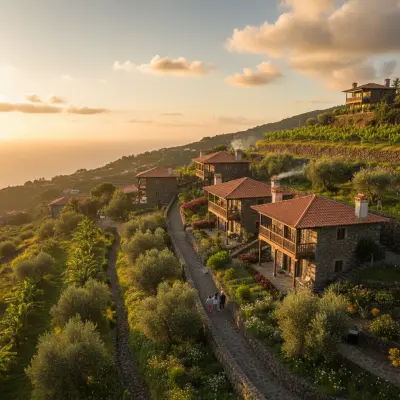
For anyone wanting to base themselves in Santana for several days, and I recommend it, because one day isn't enough, Aldeamento Turístico Casas de Campo do Pomar is a solid option. It's set inland, surrounded by green, giving you a quiet base to explore both coast and mountains without depending on Funchal.
What to do when the sea won't cooperate
There will be days, especially on the north coast, when the ocean simply says no. Heavy swell, wind, or that kind of surge that sends waves crashing violently against the rocks. On those days, Santana has plenty to offer out of the water.
The famous casas de colmo, the triangular thatched-roof houses that have become the municipality's symbol, are in the town center and worth a quick visit. You don't need more than half an hour, but it's one of those things you should see at least once.
If you want to bring something home, check our guide to Santana's crafts, there's wicker work and embroidery that's genuine artisanship, not airport souvenirs.
And if you have a full free day, our 24-hour Santana itinerary covers the essentials at a relaxed pace, including food stops and the viewpoints that are actually worth pulling over for.
Eating after the beach
After a morning in the water (or admiring the sea from above), you'll be hungry. The good news is that Madeira's north coast is honest-food territory with generous portions. Expect fresh fish, black scabbard, tuna, grilled limpets, and the ever-present espetada on laurel wood skewers, which is basically religion on this island.
At the smaller restaurants in the coastal villages, a full lunch with fish, sides, and a drink runs between €12 and €18. Skip the tourist menus and order what the locals are having, it's usually the daily special, and it's usually better.
Bolo do caco, sweet potato bread baked on stone, shows up on practically every table and is addictive, especially when it arrives hot and slathered with garlic butter. Don't say no.
The essentials before you go
- Bring footwear that can handle wet rock, flip-flops on damp basalt is a recipe for disaster
- Sunscreen is non-negotiable even under clouds, Madeira's sun is deceptive, especially reflected off water
- Pack water and snacks, there are no kiosks at most of Santana's coastal access points
- Keep a towel and dry clothes in the car, the north breeze dries you fast, but the drive back can be cool
- Check sea conditions before heading out, IPMA's website gives swell forecasts for the north coast
- Leave no trace, these spots stay beautiful because few people visit them. Keep it that way
The verdict
Santana is not a beach destination in the classic sense, and any article telling you otherwise is lying. But if what you want is to escape the crowds, swim in clean water surrounded by dramatic landscape, and come away feeling like you've found something most tourists never see, then Madeira's north coast is exactly where you want to be.
The secret isn't really a secret. It's just that most people prefer soft sand and warm water. Let them have Calheta. Santana is for people who actually like the sea.