Visit
€
Miradouro da Ponta da Vigia
Torres Vedras
Perched 125 metres above the Oeste countryside, Miradouro do Varatojo offers a full panorama of Torres Vedras with no ticket, no crowds, and no agenda. Bring water in summer, there's zero shade.
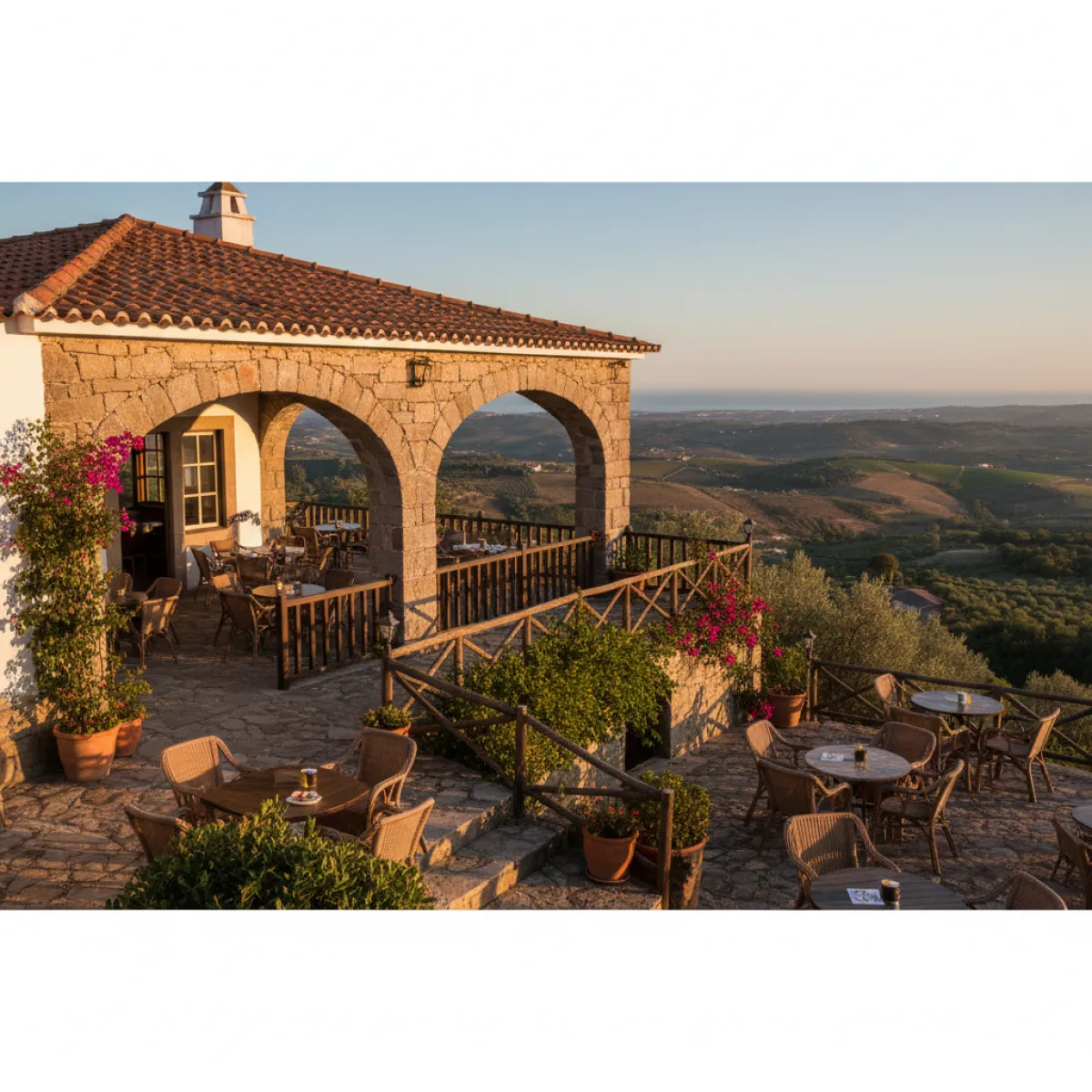
Torres Vedras gets attention for two things: its raucous Carnival and the defensive lines that stopped Napoleon's army in 1810. Both deserve the spotlight. But the town has a quieter draw that rarely makes it into travel itineraries, a hilltop viewpoint in the hamlet of Varatojo that offers one of the most complete panoramas of the city and the surrounding Oeste countryside.
The Miradouro do Varatojo sits at 125 metres above sea level, on Rua do Miradouro, Varatojo, 2560-279 Torres Vedras. It's a public viewpoint, no ticket, no opening hours, no gift shop. You drive up, park on the street, and look out over a town that suddenly makes geographic sense.
From the miradouro, Torres Vedras spreads out across the valley below, church towers, terracotta rooftops, the castle perched on its own hill, and the less poetic but very real concrete apartment blocks from the 1970s and 80s that fill in the gaps. Beyond the town, the agricultural landscape of the Oeste region rolls out in patches of vineyard, farmland, and low scrub. On a clear day, and the Oeste gets plenty of those, you can trace the terrain for kilometres.
If you've been reading about the Lines of Torres Vedras and Wellington's defensive strategy, this viewpoint puts it all in perspective. The rolling hills, the narrow valleys, the way the landscape folds, you understand immediately why this terrain was chosen to halt the French advance. Military history reads differently when you're looking at the actual ground.
The hamlet of Varatojo has its own draw: the Convento de Santo António do Varatojo, a 15th-century Franciscan convent that has served various religious functions over the centuries. Even if you can't enter the building on a given day, the walk around its walls and through the quiet streets of Varatojo is worth the detour. It's a compact, unhurried place, the kind of Portuguese village where the loudest sound is a dog barking two streets away.
From Varatojo, central Torres Vedras is less than ten minutes by car. Once you're down, the priority should be eating. Our guide to where locals actually eat in Torres Vedras will steer you away from the tourist-facing restaurants and toward the places that earn their reputation at lunchtime.
Varatojo is just north of Torres Vedras town centre, roughly five minutes by car via the N8. Signposting exists but isn't aggressive, look for the Varatojo turn and then follow Rua do Miradouro uphill. Street parking is informal and generally easy.
There are no facilities at the viewpoint itself, no café, no toilets, no shade to speak of. Bring water in summer; the hilltop is fully exposed and the Oeste sun in July and August is serious. In winter, bring a windbreaker, at 125 metres, the Atlantic breeze has real bite.
This works best as part of a longer day in the region. Combine it with a visit to the castle in Torres Vedras town centre, a drive out to the surf beaches at Santa Cruz, about 20 minutes west, or a tour of the Napoleonic-era fortifications scattered across the surrounding hills.
Late afternoon is the right answer. The western light at that hour does something generous to the landscape, the fields turn gold, the town looks better than it probably should, and the whole scene has a warmth that photographs well and feels even better in person.
Spring is the best season: the surrounding fields are intensely green, wildflowers are out, and the light has a clarity that the summer haze takes away. Autumn works too, especially when the vineyards start turning. Summer midday is the worst time, no shade, no breeze, no mercy.
You might stay ten minutes or you might stay an hour. There's nothing to buy, nothing to queue for, nobody trying to sell you anything. Just a hill, a view, and a rare chance to see a Portuguese town from the angle it was meant to be seen from. That's worth the five-minute drive.