Defending the Capital: A Tactical Tour of the Lines of Torres Vedras
An exploration of Europe's greatest military engineering feat, where Wellington's strategy met the landscape of the West to save Lisbon from Napoleon. Discover the forts, the tactics, and the flavors of Torres Vedras.
The Silence That Saved a Nation
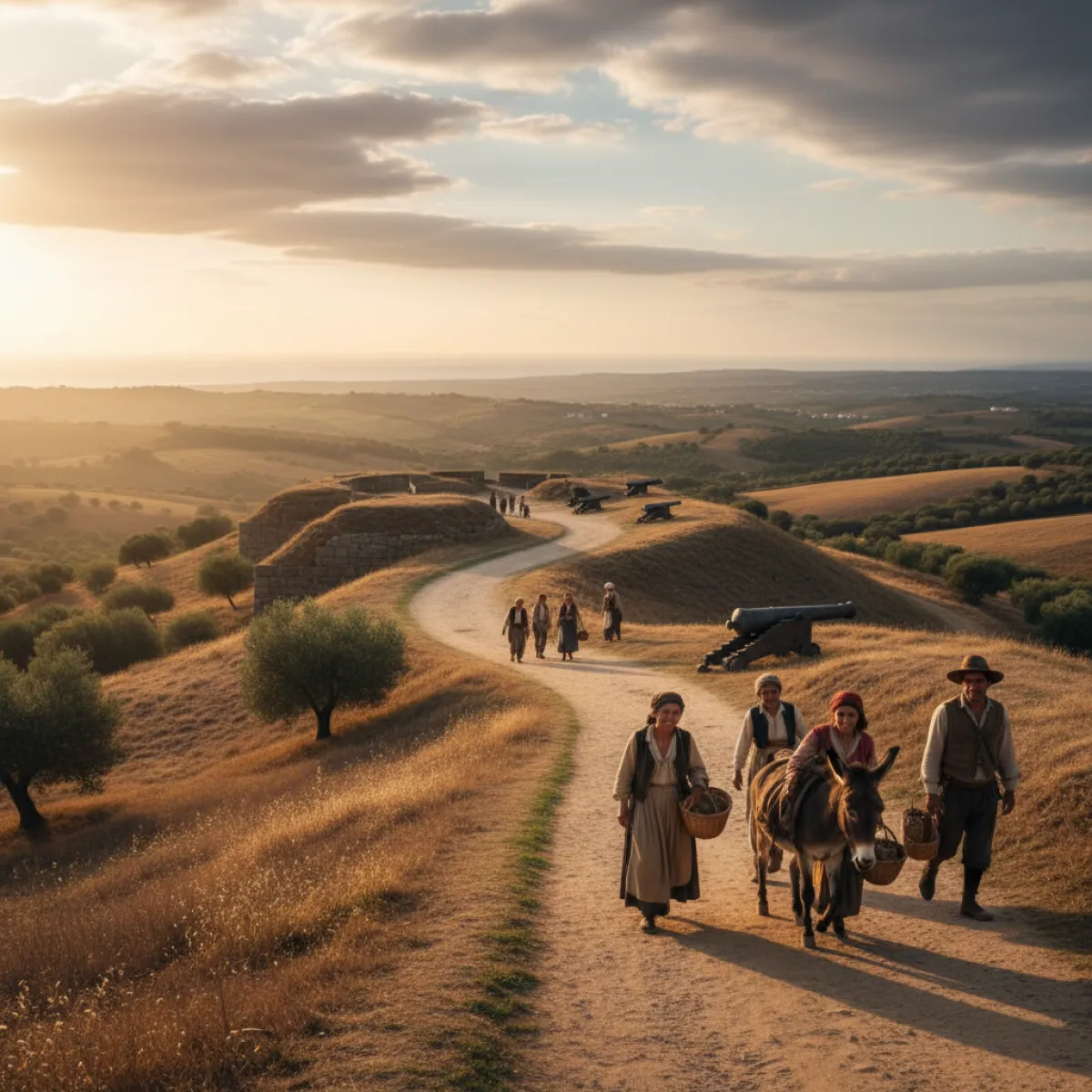
There is a specific type of silence that hangs over the hills of Torres Vedras. It is not the empty silence of abandonment, but the heavy stillness of a landscape that was once Europe’s most ambitious and secret military engineering project. In 1810, as Napoleon’s troops, under the command of Marshal Masséna, advanced confidently toward the South, they believed the road to Lisbon was clear. What they found was an impenetrable barrier of 152 forts, redoubts, and batteries, stretching from the Atlantic to the Tagus. Wellington did not just build defenses; he redesigned the topography of Portugal to dictate the end of French expansionism in the Iberian Peninsula.
For the contemporary traveler, traversing the Lines of Torres Vedras is an exercise in geometry and patience. Unlike the exuberant palaces found when consulting a Sintra Neighborhood Guide: Discover Every Corner of the Enchanted Town, the architecture here is austere, utilitarian, and perfectly camouflaged. The goal was effectiveness, not aesthetics. Today, this same austerity offers one of the most authentic perspectives on the West region (Oeste), a territory that resists excessive gentrification and maintains its agricultural and resilient character.
The Scorched Earth Policy
The effectiveness of the Lines depended not only on cannons but on a brutal social policy: scorched earth. Wellington ordered the entire population north of the lines to abandon their homes, taking livestock and supplies, and destroying whatever remained. The objective was to leave the French army without resources during a harsh winter. This mass evacuation shaped the identity of the region. While Local Culture in Lisbon: Traditions, Neighborhoods and the City's Soul often focuses on urban resilience and fado, in the Oeste, resilience is rural, tied to the soil and the ability to rebuild after devastation.
The logistics of this operation were colossal. Over 100,000 people took refuge in Lisbon and its surroundings, creating unprecedented demographic pressure on the capital. This historical link between the defensive belt and the city is fundamental to understanding why Torres Vedras is not just a suburb of Lisbon, but its former vital shield.
The Heart of the System: Forte de São Vicente
The ideal starting point for any tactical exploration is the Forte de São Vicente, situated on one of the hills overlooking the town of Torres Vedras. Built to house up to 4,000 soldiers and 39 pieces of artillery, it is a labyrinth of dry moats, ravelins, and bastions. Walking along its walls, one understands the logic of "crossfire": each fort was positioned to protect the flank of its neighbor, creating a web of fire impossible to penetrate.
The Interpretation Center located within the fort is exemplary. Avoid overly romantic guides; focus on the maps detailing the pointer telegraph system. In a time before electricity, Wellington could send a message from the Atlantic Ocean to the Tagus River in a mere seven minutes. It was the internet of the 19th century, and it was this superiority in communication that allowed the Luso-British army to anticipate every French move.
Sobral de Monte Agraço and the Alqueidão
If Forte de São Vicente is the human scale of war, the Forte do Alqueidão in Sobral de Monte Agraço is the divine vision. This was Wellington’s headquarters, the highest point of the first line of defense. From here, on clear days, the view stretches to the waters of the Tagus and the Serra de Montejunto. The topography here was manually altered: entire hillsides were scarped to make the climb impossible for enemy infantry.
It is on these trails that the traveler should look for the details. The stones of the redoubts, often taken from local property walls and hastily piled, tell the story of a desperate and collective war effort. Do not expect the pristine maintenance of a classic national monument; expect the rawness of a battlefield preserved by time.
Gastronomy of Resistance and Reward
A tactical exploration requires sustenance. Torres Vedras is famous for its confectionery, specifically the Pastel de Feijão (Bean Tart). Forget the industrial variations found in airports; head to Pastelaria Coroa or the Fábrica do Pastel de Feijão de Torres Vedras. The original pastry should have a thin, brittle crust and a filling of almond and white beans that is not excessively sweet, but rather dense and rich.
For lunch, Restaurante Roots offers a modern approach to local Oeste ingredients. Order the salt cod (bacalhau) or game meats, accompanied by a wine from the region. The wine of Torres Vedras (DOC Torres Vedras) is historically acidic and light, a consequence of the proximity to the Atlantic. Wellington and his officers were known to appreciate the robust reds of Alenquer and the saline whites of Bucelas, which were part of the daily military diet.
- Where to eat: Restaurante Roots (Avenida 5 de Outubro) for a sophisticated meal; Taberna do Manel for something authentic and rustic.
- What to taste: Pastel de Feijão and wines from the Adega Cooperativa de Torres Vedras.
- When to go: Spring is ideal. The hills are green, and wild flowers cover the old fortifications. Autumn offers the golden light of the harvest, but trails can become muddy after the first rains.
The Coastal and Capital Connection
Although the Lines of Torres Vedras focus on the interior, their anchor was the sea. Forte de São Vicente and the adjacent defenses ensured that, in case of defeat, the army could retreat to the embarkation ports. This relationship with the sea is explored in many Best Day Trips from Cascais: Unmissable Destinations, where the Estoril and Cascais coast served as a strategic rear-guard and escape route for the British Navy.
The difference between the experience in Torres Vedras and that of Lisbon or Cascais is the absence of artifice. Here, tourism is pedagogical and physical. It is necessary to walk, climb the slopes, and feel the biting wind of the West to understand why Napoleon’s generals, looking at these hills through their binoculars, decided that victory was impossible and began their final retreat.
Logistics and Planning
To visit the Lines efficiently, renting a car is essential. Public transport in the region is oriented toward commuters working in Lisbon, not cultural tourism between forts. Start early in Torres Vedras, visit the Interpretation Center and Forte de São Vicente. By mid-morning, drive to Sobral de Monte Agraço (about 20 minutes) for the Forte do Alqueidão. End the day with a visit to a local winery, such as Quinta da Almiara, to contextualize the economic importance of the vineyards in the region.
The budget for a day of exploration is moderate. Most forts have free access or symbolic entry fees (between €2 to €5 for interpretation centers). A quality lunch will cost between €25 and €40 per person. The biggest investment will be time and appropriate footwear: the slopes are steep, and the dirt paths can be slippery.
Conclusion: The Invisible Legacy
The Lines of Torres Vedras are a monument to the invisible. Their greatest victory was that they were never fully tested in combat; their mere existence was enough to deter the enemy. In a world that values spectacle and the obvious, visiting this defensive system is an invitation to reflect on strategy, sacrifice, and how the landscape can be a nation’s most powerful weapon. This is deep, tactical, and silent Portugal, waiting for those who prefer living history over staged folklore.
